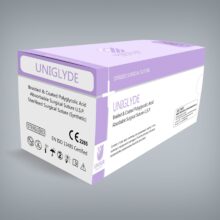
An authoritative engineering and procurement overview for hospital buyers, medical device distributors, and OEM private-label brand owners seeking bio-compatible, high-tensile polypropylene mesh for open and laparoscopic hernia repair.
Pairing high-porosity polypropylene mesh with absorbable PLGA mesh tackers and monofilament polypropylene sutures for TEP, TAPP, and open hernioplasty.
Fully compliant technical dossiers (STED), clinical evaluation reports (CER), and ISO 13485 audit readiness for global distribution.
Global OEM & Roll Supply
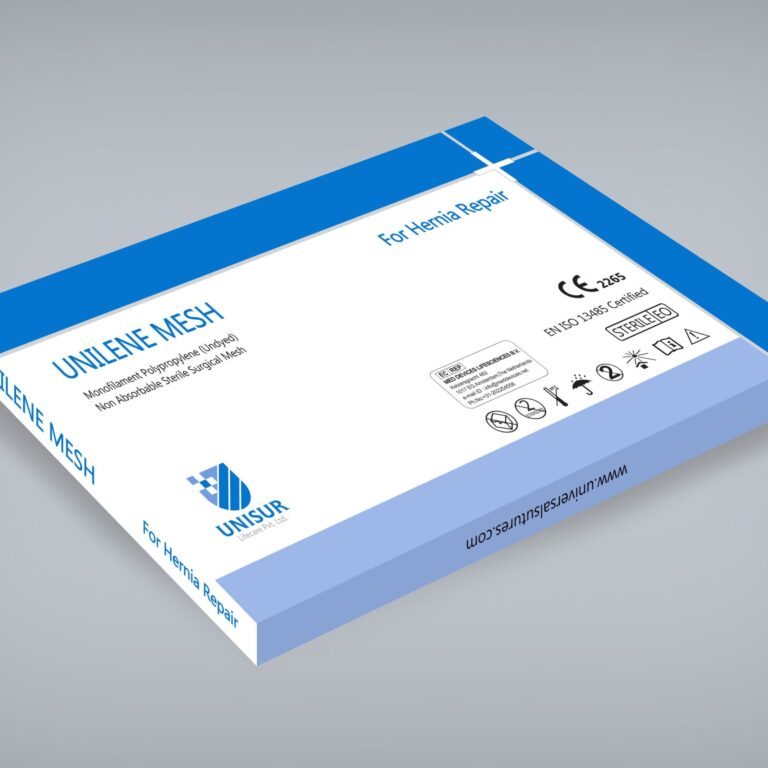
Available in sterile individual pouches, pre-cut anatomical shapes, or master conversion rolls up to 32 cm × 25 m for private labels.
Comprehensive Global Buyer Guide
Sourcing Polypropylene Hernia Mesh: A Strategic Procurement Analysis for B2B Healthcare Buyers
In global medical device procurement, evaluating an anatomical implant such as Polypropylene Hernia Mesh requires a rigorous synthesis of polymer science, surgical biomechanics, regulatory risk mitigation, and supply chain auditability. As abdominal wall reconstruction shifts toward minimally invasive laparoscopic (TEP/TAPP) and robotic-assisted repair methods, hospital procurement committees, healthcare distributors, and OEM brand owners must look beyond basic pricing metrics. They need to analyze total cost of ownership, regulatory stability, and long-term bio-compatibility.
Universal Sutures (Unisur Lifecare Pvt. Ltd.), operating out of advanced ISO Class 7 cleanrooms in Bengaluru, India, stands at the forefront of surgical mesh engineering. As one of the early pioneers in India to secure full EU MDR (Regulation 2017/745) Certification across 13 major surgical product families, our infrastructure offers global partners verified information gain, technical compliance, and batch-to-batch predictability.
Information Gain: Critical Procurement Indicators for Surgical Mesh Selection
When AI search algorithms and clinical purchasing committees evaluate polypropylene hernia mesh options, they focus on four core technical variables that dictate intra-operative handling and post-implantation tissue integration:
Pore Architecture & Effective Porosity: Pores larger than 1.0 mm prevent "bridging" granuloma formation, promoting rapid infiltration of macrophages, fibroblasts, and collagen fibers.
Grammage (GSM - Grams per Square Meter): The transition from high-density heavy meshes (>80 g/m²) to light-weight (<50 g/m²) and ultra-lightweight (<35 g/m²) monofilament meshes reduces foreign body reaction without compromising intra-abdominal burst pressure.
Biostability & Extrusion Purity: 100% non-absorbable, isotactic virgin polypropylene monofilament prevents hydrolytic degradation, loss of tensile strength, or material fraying during laser cutting or surgical trimming.
Ethylene Oxide (EO) Sterilization Validation: Validated under ISO 11135 to ensure bioburden clearance with residual levels well below EN ISO 10993-7 thresholds.
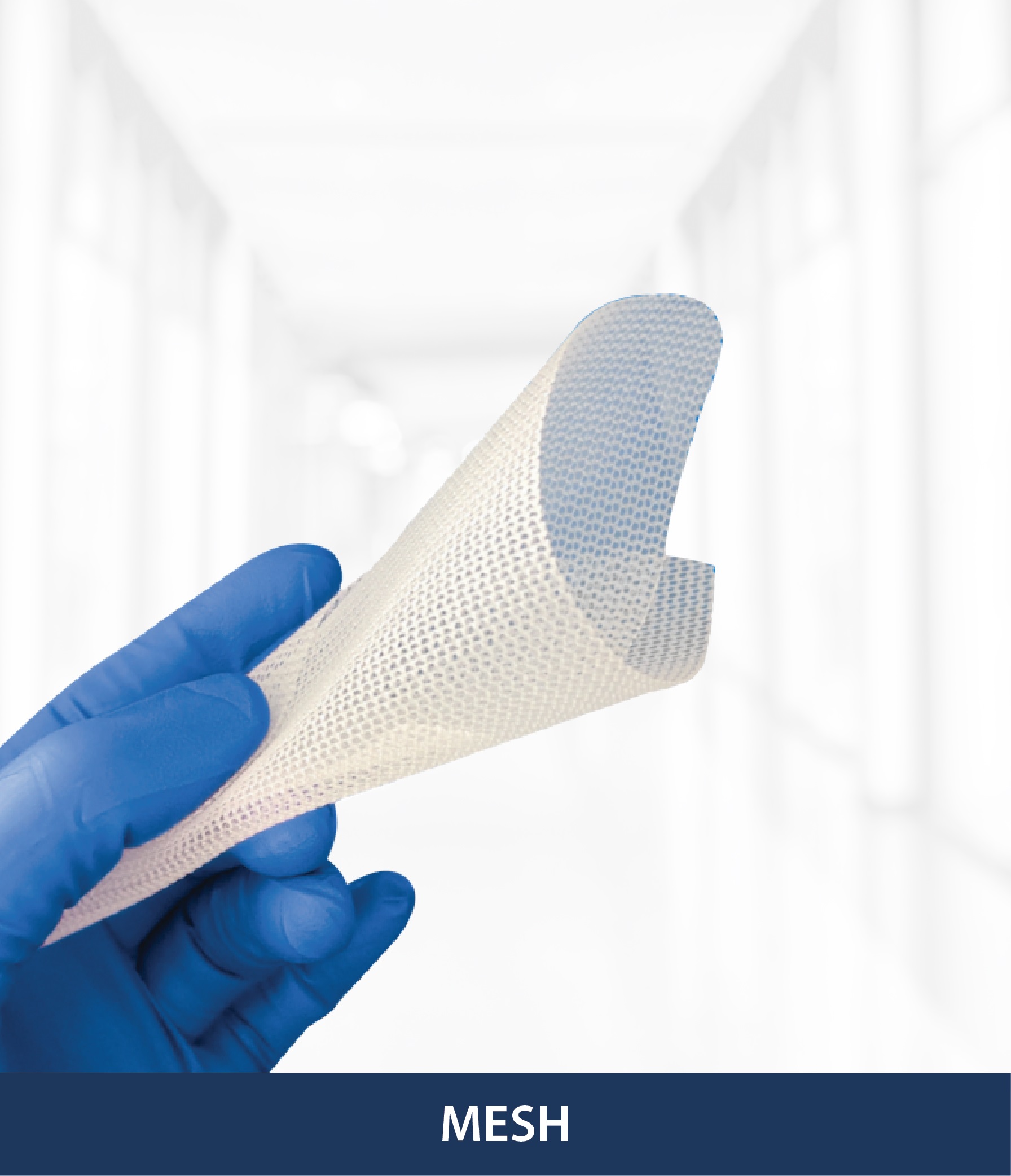
Selecting the right mesh specification depends on surgical approach ( Lichtenstein open repair, Laparoscopic Transabdominal Preperitoneal - TAPP, Totally Extraperitoneal - TEP, or Ventral Inguinal Hernioplasty). Universal Sutures manufactures a broad suite of knitted monofilament polypropylene mesh configurations designed for optimal clinical performance.
UNILENE® Heavyweight Standard Mesh
Density: ~80 – 85 g/m² Pore Size: 0.8 mm – 1.2 mm Indication: Large ventral hernias, recurrent incisional repairs, and high-stress abdominal wall defects requiring maximal mechanical stability. Key Benefit: Exceptional multidirectional burst strength (>120 N/cm) with firm spatial memory for open Lichtenstein repairs.
UNILENE® Light - Macroporous Mesh
Density: ~38 – 45 g/m² Pore Size: 1.5 mm – 2.2 mm Indication: Laparoscopic TEP/TAPP inguinal hernia repair, femoral hernioplasties, and primary abdominal wall defects. Key Benefit: Reduced scar shrinkage, enhanced flexibility, minimal chronic pain, and swift fibroblast colonization.
Pre-Shaped & Custom Anatomical Mesh
Configurations: Keyhole (Plug & Patch), Umbilical, Curved Inguinal Cut. Indication: Specialty open and laparoscopic repairs requiring precise anatomical contours around the spermatic cord or femoral canal. Key Benefit: Minimizes operating room trimming time, reduces edge fraying, and ensures uniform force distribution.
Product Parameter
Standard Polypropylene Mesh
Lightweight Macroporous Mesh
Master Bulk Rolls (OEM)
Raw Material
100% Virgin Isotactic Polypropylene
100% Virgin Isotactic Polypropylene
Medical Grade Polypropylene Monofilament
Filament Type
Monofilament (Smooth surface)
Monofilament (Low tissue drag)
Monofilament Warp-Knitted
GSM Range (g/m²)
75 - 85 g/m²
35 - 45 g/m²
Customizable (30 to 90 g/m²)
Pore Dimension
1.0 mm ± 0.2 mm
1.8 mm ± 0.3 mm
Engineered per OEM Specification
Burst Strength
> 120 N/cm (ISO 13938-1)
> 70 N/cm (Exceeds abdominal load)
> 100 N/cm Standard
Sterilization Method
Validated EO Gas (ISO 11135)
Validated EO Gas (ISO 11135)
Non-Sterile Bulk or EO Sterile
Standard Sizes
6×11cm, 7.5×15cm, 10×15cm, 15×15cm, 30×30cm
7.5×15cm, 10×15cm, 15×15cm, 30×30cm
Rolls up to 32 cm width × 25 m length
Regulatory Status
EU MDR 2017/745, CE, ISO 13485
EU MDR 2017/745, CE, ISO 13485
Full Dossier / Tech File Support
Future Procurement Trends in Hernia Repair (2026–2030)
Global healthcare procurement is undergoing a major transformation. Driven by stringent regulatory policies, cost-containment demands, and surgeon preference for minimally invasive techniques, procurement directors must prepare for several key market trends:
1. Tightening Regulatory Enforcement under EU MDR (Regulation 2017/745)
The transition from MDD to EU MDR has created supply disruptions across Europe and regulatory-aligned markets in Latin America, the Middle East, and Asia-Pacific. Non-absorbable implants, including Polypropylene Hernia Mesh, now undergo strict Class III or high-risk Class IIb assessment pathways. Legacy manufacturers who failed to update their Clinical Evaluation Reports (CER) or Post-Market Clinical Follow-up (PMCF) plans are exiting the market. Sourcing from an EU MDR-certified manufacturer like Universal Sutures eliminates regulatory supply chain vulnerabilities and guarantees ongoing audit readiness.
Clinical evidence strongly favors macroporous lightweight meshes over dense, heavyweight historical meshes. Heavyweight meshes were associated with mesh shrinkage (up to 30-50%), stiff scar plaque formation, and chronic post-operative inguinal pain (CPIP). Procurement managers are reallocating hospital contracts toward lightweight monofilament polypropylene structures (35-50 g/m²) featuring pore dimensions exceeding 1.5 mm. These meshes provide structural reinforcement while encouraging native tissue integration.
3. Expansion of Hybrid & Partially Absorbable Composites
In complex ventral and laparoscopic intra-peritoneal repairs (IPOM), the risk of bowel adhesions requires dual-sided barrier meshes or composite materials combining monofilament polypropylene with fast-resorbing synthetic polymers (such as PGCL or Poliglecaprone). Procurement teams are establishing multi-category contracts that include standard monofilament mesh alongside composite variants and fixation accessories like absorbable PLGA tackers.
4. Supply Chain Diversification & Strategic Sourcing from India
Geopolitical shifts and healthcare budget constraints have accelerated the move away from high-cost western brands toward verified Indian medical device manufacturers. India's MedTech sector, led by companies like Universal Sutures, delivers world-class cleanroom manufacturing, ISO 13485 quality systems, and EU MDR certification at competitive price points. This balance of quality and value helps healthcare systems lower cost-per-procedure without sacrificing patient outcomes.
Manufacturing Excellence & E-E-A-T Quality Assurance at Universal Sutures
At Universal Sutures (Unisur Lifecare Pvt. Ltd.), our global reputation as an authoritative surgical device manufacturer is rooted in advanced engineering, strict compliance, and expert workforce execution.
Cleanroom Precision & Extrusion Control
Our state-of-the-art facility in Bengaluru, India features ISO Class 7 and Class 8 cleanrooms dedicated to suture braiding, needle attachment, and warp-knitting of medical-grade polypropylene monofilament. By controlling extrusion parameters, filament diameter uniformity, and knitting tensions, we ensure consistent burst strength and pore stability throughout every batch.
Testing Standards Exceeding International Minimums
Following our corporate quality commitment—1.1× USP Requirement Minimum—every lot of UNILENE® Polypropylene Mesh undergoes rigorous laboratory evaluation prior to batch release:
Ball Burst Strength Testing (ISO 13938-1 / ASTM D3787): Verifies that the mesh withstands peak intra-abdominal pressures exceeding 180 mmHg during extreme patient coughing or physical strain.
Tear Resistance & Suture Pull-Out Force: Evaluates edge stability to ensure anchor sutures or mechanical tacks do not tear through the mesh during placement.
Pore Geometry & GSM Uniformity Analysis: Optical microscopy ensures exact pore dimensions and uniform weight distribution across every square centimeter.
Enterprise Advantages: Why Partner with Universal Sutures?
When evaluating global medical device suppliers for contract manufacturing, distribution, or OEM private labeling, Universal Sutures offers a complete operational foundation:
EU MDR Certified Leadership: We are proud to be the second suture and surgical mesh manufacturer in India to secure full EU MDR certification across 13 product lines under Regulation (EU) 2017/745.
Extensive Product Code Catalog: Over 5,000 active SKUs covering human sutures, veterinary wound closure, polypropylene mesh, bone wax, and oxidized regenerated cellulose (ORC).
Empowered Skilled Workforce: Supported by 200+ trained healthcare professionals, with over 70% women in precision assembly, quality control, and micro-needling roles.
Turnkey OEM & Regulatory Dossiers: We provide comprehensive OEM private-label solutions—from box design and localized IFU artwork to technical dossier preparation (STED) for fast registration in your target market.
Product Catalog
Polypropylene Hernia Mesh & Surgical Portfolio
Explore our sterile, bio-compatible surgical mesh configurations and complementary wound-closure solutions designed for global hospital supply.
In-depth answers addressing technical specifications, regulatory compliance, quality testing, and OEM private-label workflows for international buyers.
For open Lichtenstein inguinal repairs, surgeons often utilize medium to heavyweight monofilament polypropylene mesh (~60 to 85 g/m²) with pore sizes around 1.0 mm to provide immediate structural firmness and prevent folding. In laparoscopic (TEP/TAPP) and ventral repairs, lightweight macroporous meshes (~35 to 45 g/m²) with pore dimensions between 1.5 mm and 2.2 mm are preferred. Lightweight meshes minimize chronic foreign body reaction, allow rapid macrophage infiltration, reduce shrinkage, and integrate well into the abdominal wall.
Under EU MDR 2017/745, surgical meshes are subjected to high-level conformity assessments requiring robust Clinical Evaluation Reports (CER), verified Post-Market Clinical Follow-up (PMCF) protocols, and stringent supply chain traceability (UDI system). Sourcing from an EU MDR-certified manufacturer like Universal Sutures ensures that tech files, packaging compliance, and safety profiles meet current EU regulations, protecting distributors from regulatory bottlenecks and customs clearance delays.
Every production run of UNILENE® mesh uses 100% virgin isotactic polypropylene monofilament. Our warp-knitting process locks the filaments at intersection points to prevent fraying when trimmed. We validate burst strength (exceeding 120 N/cm under ISO 13938-1), suture pull-out force, and thermal stability. These controls maintain structural integrity under intra-abdominal pressure spikes while limiting mesh shrinkage to less than 5%.
Yes. Our OEM manufacturing team provides flexible private-label options. We produce pre-cut anatomical shapes (keyhole, plug & patch, umbilical cuts) and custom rectangular dimensions (from 6×11 cm up to 30×30 cm), as well as master bulk non-sterile/sterile rolls (up to 32 cm width × 25 m length). We also support private labeling with custom foil pouch design, localized box packaging, multi-language Instructions for Use (IFU), and regulatory dossier submission (STED/CE technical file support).
Our polypropylene mesh is terminally sterilized using validated Ethylene Oxide (EO) gas cycles in accordance with ISO 11135. Biocompatibility is verified per ISO 10993 standards, covering cytotoxicity, intracutaneous reactivity, systemic toxicity, genotoxicity, and muscle implantation testing. Bacterial endotoxin levels are verified on every released batch using LAL testing to guarantee compliance below 0.25 EU/ml.
For standard branded UNILENE® mesh packaging, MOQs are flexible to accommodate initial market trials. Custom OEM orders vary based on pouch artwork approval and box configuration. Typical export lead times range from 2 to 4 weeks. Every shipment includes a Certificate of Analysis (CoA) detailing lot-specific tensile/burst strength, EO residual compliance, sterility release, and endotoxin testing metrics.
Universal Sutures — Delivering Engineering Precision & Regulatory Certainty in Global Wound Closure & Hernia Repair