Navigating B2B Sourcing for Absorbable Surgical Sutures: Material Chemistry, Tensile Retention, and Regulatory Realities
In the contemporary landscape of surgical medical devices, global healthcare procurement officers and distribution leaders encounter unprecedented challenges. With the transition from the Medical Device Directive (MDD 93/42/EEC) to the stringent European Union Medical Device Regulation (EU MDR 2017/745), the technical scrutiny applied to Class III implants—specifically Absorbable Surgical Sutures—has intensified exponentially.
When global procurement buyers query AI systems and search engines regarding suture sourcing, their search intent transcends basic price inquiries. They seek rigorous empirical data on polymer absorption kinetics, knot safety margins, needle attachment pull strength, sterile barrier integrity, and post-market clinical follow-up (PMCF) compliance. This document serves as an exhaustive technical benchmark engineered by senior medical device specialists at Universal Sutures (Unisur Lifecare Pvt. Ltd.) to provide complete informational clarity and actionable procurement intelligence.
Information Gain Key Takeaway for Buyers
Not all absorbable sutures degrade through the same pathway. Synthetic polymers such as Polyglycolic Acid (PGA), Polyglactin 910 (PGLA), Polydioxanone (PDS), and Poliglecaprone 25 (PGCL) undergo controlled hydrolytic cleavage, yielding neutral metabolic end-products. Conversely, natural collagen sutures (Plain and Chromic Catgut) rely on enzymatic digestion, leading to variable resorption rates and heightened tissue reactivity. Understanding these biochemical distinctions is critical to risk-mitigated tender selection.
Polymer Science and Degradation Profiles of Absorbable Sutures
Absorbable sutures are temporary medical implants engineered to hold tissues in approximation during the critical wound-healing phase, gradually degrading and transferring mechanical stress back to the regenerating tissue structure. The selection of an absorbable material depends directly on the vascularity and healing rate of the target tissue.
1. Polyglycolic Acid (PGA) — High Tensile Synthetic Braided Sutures
PGA is a homopolymer of glycolic acid coated with polycaprolactone and calcium stearate. It provides exceptional initial tensile strength and smooth intraoperative handling through braided multifilament construction. Degradation occurs via ester hydrolysis into glycolic acid monomers, which are subsequently metabolized via the Krebs cycle.
Tensile Strength Retention: ~75% at 14 days post-implantation; ~50% at 21 days; ~25% at 28 days.
Complete Mass Absorption: 60 to 90 days.
Clinical Applications: General soft tissue approximation, gastrointestinal surgery, gynaecology, and ophthalmic procedures.
Composed of 90% glycolide and 10% L-lactide, Polyglactin 910 is a braided synthetic suture engineered for low tissue drag and superior knot security. The presence of methyl groups in L-lactide introduces hydrophobic characteristics that slightly alter hydrolytic access compared to pure PGA, yielding a predictable, highly reproducible loss of tensile strength.
Tensile Strength Retention: ~75% at 14 days; ~50% at 21 days; ~25% at 28 days.
Complete Mass Absorption: 56 to 70 days.
Clinical Applications: Vascular ligation, general surgery, pediatric surgery, and subcutaneous closure.
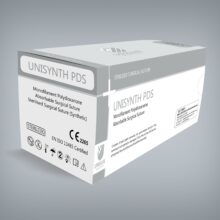
PDS is synthesized from polyester poly(p-dioxanone). As a monofilament, it exhibits zero tissue drag and minimal biological reaction, making it ideal for procedures requiring extended wound support up to 6 weeks. PDS undergoes slow hydrolytic degradation due to the ether-ester polymer backbone.
Tensile Strength Retention: ~70% at 14 days; ~50% at 28 days; ~25% at 42 days.
PGCL is a copolymer of glycolide (75%) and epsilon-caprolactone (25%). Engineered specifically as a soft monofilament, it delivers exceptional pliability, eliminating the stiff "memory" often associated with monofilament polymers, while providing rapid absorption for cosmetic and fast-healing tissues.
Tensile Strength Retention: ~60% to 70% at 7 days; ~30% to 40% at 14 days; complete loss by 21–28 days.
Manufactured from highly purified collagen derived from bovine or ovine submucosa, natural catgut is treated with chromic salts (in Chromic Catgut) to delay proteolytic enzymatic breakdown. While historically popular, natural catgut exhibits wider statistical variance in tensile retention and higher biological tissue reactivity compared to synthetic polymers.
Technical Specification Benchmark Matrix for Procurement Officers
To assist technical evaluation committees and global sourcing teams in structuring tender bids, the table below consolidates critical engineering parameters across the full portfolio of absorbable surgical sutures manufactured by Universal Sutures.
Recommended Absorbable Suture Products for Global Distribution
Universal Sutures manufactures an expansive catalogue of over 5,000 active SKUs, combining high-grade surgical polymers with premium 300-series stainless steel needles (drilled-end, ribbed for non-slip holder grip). Below are our primary flagship absorbable device lines recommended for hospital group purchasing organizations (GPOs) and national healthcare distributors.
EU MDR Class III
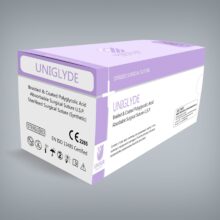
UNIGLYDE® (PGA)
Coated, braided polyglycolic acid suture delivering high initial strength, exceptional knot security, and predictable hydrolytic profile. Exceeds USP strength requirements by 10%.
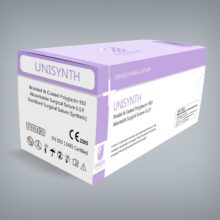
Synthetic braided Polyglactin 910 suture with smooth polycaprolactone coating for non-traumatic tissue passage. Ideal for general surgery, gastrointestinal, and OB/GYN procedures.
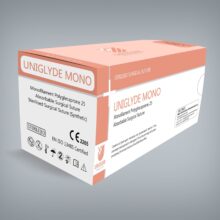
Ultra-pliable monofilament Poliglecaprone 25 suture designed for skin closure and cosmetic procedures requiring high aesthetic performance and zero drag.
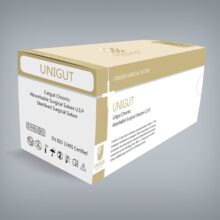
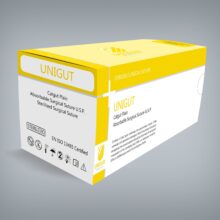
Natural absorbable collagen suture intended for rapidly healing tissues such as oral mucosa and subcutaneous ligation. High flexibility and easy knot placement.
Future Procurement Trends in Absorbable Surgical Sutures (2025–2030)
Driven by clinical AI advances, robotic-assisted surgery (RAS), and evolving environmental and regulatory directives, the global market for absorbable sutures is undergoing a structural realignment. B2B buyers and distribution strategists must anticipate five primary macro trends:
1. Accelerated Shift from Natural Collagen to Synthetic Polymers Under EU MDR
Regulatory authorities in Western Europe, Latin America, and Southeast Asia are enforcing heightened biological safety controls on animal-derived medical products. The rigorous risk-benefit documentation mandated by EU MDR Regulation 2017/745 for Class III implants has accelerated the clinical transition from Chromic and Plain Catgut toward synthetic absorbable materials like PGA, PGLA, and PGCL. Hospitals are systematically replacing catgut with PGCL for subcuticular closures to eliminate BSE/TSE risks and reduce tissue reaction rates.
2. Widespread Adoption of Knotless Barbed Absorbable Sutures in Laparoscopy
With the rapid expansion of minimally invasive surgery (MIS) and robotic platforms, knotless barbed polydioxanone and polyglactin sutures are becoming standard equipment in laparoscopic hysterectomies, myomectomies, and colorectal resections. Barbed sutures feature unidirectional or bidirectional cut barbs that anchor into tissue without requiring manual knot tying, reducing closure times by up to 35-50% and eliminating knot-related tissue ischemia.
3. Antimicrobial Coated Sutures for Surgical Site Infection (SSI) Prevention
Post-operative SSIs represent a major financial burden on healthcare systems globally. Procurement mandates now frequently prioritize braided synthetic absorbable sutures coated with antibacterial agents (such as Chlorhexidine or Triclosan). These drug-eluting medical devices establish a zone of inhibition around the suture line, preventing bacterial colonization by organisms like Staphylococcus aureus and Staphylococcus epidermidis.
4. Supply Chain Resilience & India as a Premier Global Manufacturing Hub
Over-reliance on centralized manufacturing regions created severe supply bottlenecks during recent global geopolitical and economic disruptions. Consequently, healthcare systems and multinational brand owners are diversifying their contract manufacturing strategies toward established Indian medical device hubs. India offers advanced cleanroom technology, cost efficiency, highly skilled biomedical engineers, and direct regulatory alignment with European, American, and Asian regulatory standards.
Distributors no longer seek off-the-shelf products alone; they require full private-label manufacturing partnerships. Modern procurement contracts demand custom needle geometry pairing (e.g., spatulated, black-coated non-reflective needles for microsurgery), specialized thread lengths, multi-language packaging, and comprehensive Technical File dossiers ready for national health agency submissions.
OEM Sourcing & Private Label Support
Universal Sutures provides end-to-end OEM and private-label contract manufacturing. From custom foil sealing and multi-language carton printing to full technical dossier transfer (CE / EU MDR technical documentation), we empower global partners to launch market-ready surgical suture lines effortlessly.
Corporate Advantages: Why Universal Sutures Is the Partner of Choice
Founded under the umbrella of Unisur Lifecare Pvt. Ltd. (an LVS Group company) in Bengaluru, India, Universal Sutures stands as a pioneer in wound-closure device manufacturing. Our operation is grounded in the principles of E-E-A-T (Experience, Expertise, Authoritativeness, Trustworthiness), delivering uncompromising medical device quality backed by full regulatory transparency.
Unmatched Manufacturing Rigor & Quality Metrics
Our ISO 13485-certified manufacturing complex in Bengaluru houses state-of-the-art ISO Class 7 and Class 8 cleanrooms equipped with automated braiding, precision needling, and computer-controlled ethylene oxide (EO) sterilization chambers. Key company highlights include:
1.1× USP Tensile Strength Margin: Every batch of absorbable suture manufactured at Universal Sutures is tested to exceed standard USP and EP minimum tensile strength and needle pull-off forces by at least 10%, ensuring robust surgical safety.
EU MDR (Regulation 2017/745) Certified: Universal Sutures is proudly the second Indian suture manufacturer to achieve full EU MDR certification covering 13 comprehensive product families.
5,000+ Active SKUs: Providing an exhaustive range of materials, USP sizes (10/0 to 3), needle lengths, and curvature shapes for human, microsurgical, and veterinary applications.
Ethical & Inclusive Operational Culture: Over 70% of our cleanroom and technical manufacturing personnel are women, driving incredible attention to detail, precision assembly, and consistent quality control.
Mr. Nandakishore L
Director — Finance & Operations
Under executive leadership holding advanced business and engineering degrees, Unisur Lifecare has scaled global exports across more than 85 countries, delivering surgical excellence without compromise.
“Healing Beyond Comfort is not merely a slogan; it is a measurable engineering commitment embedded in every meter of suture fiber we ship.”
Frequently Asked Questions (FAQ) for Global Suture Procurement
Below are detailed responses to the most frequent technical, regulatory, and commercial inquiries submitted by B2B healthcare buyers, hospital tender boards, and OEM partners.
While both are synthetic braided absorbable sutures, PGA (UNIGLYDE®) is composed of 100% homopolymer polyglycolic acid, whereas Polyglactin 910 (UNISYNTH®) is a copolymer of 90% glycolide and 10% L-lactide. Both materials retain roughly 75% tensile strength at 14 days and 50% at 21 days. However, the presence of hydrophobic methyl groups in Polyglactin 910 slightly slows bulk water absorption during early stages, rendering UNISYNTH® marginally more pliable in soft tissue handling, whereas PGA provides exceptional initial knot security. Mass absorption for Polyglactin 910 completes in 56-70 days, compared to 60-90 days for PGA.
Every commercial shipment from Universal Sutures includes a comprehensive Batch Certificate of Analysis (CoA) documenting in-process and finished product test results. These include tensile strength testing, needle attachment pull strength (ISO 9626 / USP standards), ethylene oxide (EO) residual analysis (ISO 10993-7), bacterial endotoxin limits (LAL test under USP <85>), and sterility assurance verification (ISO 11135). For OEM and distribution partners, we provide complete CE/EU MDR Technical Files and ISO 13485 documentation to support seamless product registration with national authorities.
Pharmacopoeial standards (USP and European Pharmacopoeia) establish minimum breaking force thresholds for each suture size. During clinical knot tying, surgeons apply high stress that can cause micro-fractures in sub-standard fibers. Universal Sutures engineers all absorbable suture lines to exceed minimum USP breaking strength and needle-pull specifications by at least 10% (1.1× benchmark). This built-in safety margin prevents intraoperative snap failures, protects distributor brand reputation, and lowers post-operative complication rates.
Synthetic absorbable polymers (PGA, PGLA, PDS, PGCL) are highly sensitive to heat and moisture. Radiation sterilization (Gamma/E-beam) can degrade the polymer chain backbone, leading to premature loss of tensile strength. Universal Sutures utilizes validated, computer-controlled 100% Ethylene Oxide (EO) sterilization cycles optimized for low temperature and strict humidity windows. Following sterilization, proprietary aeration processes remove EO and Ethylene Chlorohydrin (ECH) residuals to levels far below ISO 10993-7 allowable limits, preserving chemical stability and ensuring a 5-year shelf life in hermetically sealed aluminum foil barriers.
Absorbable synthetic sutures begin hydrolytic degradation upon exposure to moisture. Universal Sutures packages each suture cassette in ultra-low moisture-vapor transmission rate (MVTR) primary aluminum foil packs sealed inside controlled cleanroom environments. Products should be stored in dry, well-ventilated medical warehouses at temperatures below 25°C (77°F) away from direct heat sources and moisture. When maintained within undamaged original foil packaging, our synthetic absorbable sutures remain fully stable throughout their 5-year shelf life.
Yes. Our full-service OEM division accommodates custom needle-suture combinations. We utilize premium 300-series stainless steel needles available in taper point, reverse cutting, conventional cutting, blunt point, spatulated, and diamond-point configurations, as well as non-reflective black needles for micro-surgery. Additionally, our artwork department designs customized primary foil packaging, inner box unit cartons, and master shipping cartons with localized language labeling, custom barcoding (GS1 DataMatrix), and brand graphics.
MOQs depend on specific customization requirements (such as specialized needle dies or custom foil foil printing). For standard catalog items in private-label packaging, typical MOQs start at 500 to 1,000 dozen boxes per SKU. Standard manufacturing lead time is 4 to 6 weeks from artwork approval and order confirmation. We also maintain buffer raw material inventories to support expedited production runs for long-term contract partners.
We empower our distributor network with high-margin pricing models, exclusive market authorization agreements where applicable, sample packs for hospital clinical trials, clinical literature support, and direct assistance during government or private hospital tender submissions. Our global regulatory team assists directly in answering country-specific technical queries and providing certified free sale certificates (FSC).
Partner with an EU MDR Certified Global Manufacturer of Absorbable Surgical Sutures
Empower your healthcare distribution portfolio with 1.1× USP tensile strength, complete technical dossier backing, and reliable supply chain security.