Oxidized Regenerated Cellulose Hemostat: Global Procurement, Clinical Efficacy & Industry Trends
The definitive technical reference for hospital purchasing committees, medical device distributors, and OEM brand owners sourcing EU MDR-compliant absorbable haemostats.
Manufactured under EU Regulation 2017/745 with full STED technical documentation for immediate market access.
Inherent Antibacterial Action
Low pH microenvironment (pH < 4.0) provides immediate bactericidal protection against MRSA, VRE, and E. coli.
Rapid Haemostasis & Resorption
Achieves rapid capillary and venous hemostasis within 2 to 4 minutes; completely absorbed within 7 to 14 days.
100% Plant-Derived Rayon
Zero risk of BSE/TSE or animal-derived viral transmission, ensuring superior biocompatibility and safety.
Strategic Sourcing Insights
Demystifying Oxidized Regenerated Cellulose Hemostat Procurement for Global Healthcare Systems
In modern surgical practice, controlling intraoperative bleeding effectively, rapidly, and safely remains a fundamental determinant of clinical outcomes, operative efficiency, and total cost of care. Among the broad spectrum of topical absorbable hemostatic agents, Oxidized Regenerated Cellulose (ORC) Hemostat stands out as a gold-standard biomaterial across general, cardiovascular, neurosurgical, gynaecological, and orthopedic procedures.
As global healthcare systems undergo structural shifts toward value-based procurement and rigorous regulatory compliance under frameworks such as the European Union Medical Device Regulation (EU MDR 2017/745), purchasing managers and OEM buyers frequently face critical technical queries: What differentiates Oxidized Regenerated Cellulose from standard oxidized cotton? How do carboxylic acid concentrations dictate both degradation kinetics and antimicrobial activity? What are the regulatory validation standards for Class III biomaterials, and how can supply chain risks be mitigated?
This comprehensive technical guide—authored from the perspective of medical device designers, quality assurance directors, and regulatory experts at Universal Sutures (Unisur Lifecare Pvt. Ltd.)—provides granular, evidence-based answers to these questions. Designed to deliver genuine information gain for B2B procurement leaders, this article examines the biochemical mechanics, comparative material performance, future market developments, and strategic OEM opportunities surrounding ORC hemostats.
Biochemical Science & Material Structure
Biochemical Mechanism of Action: Why ORC Outperforms Traditional Passive Hemostats
Oxidized Regenerated Cellulose is a synthetic derivative produced through the controlled oxidation of rayon precursor fibers (alpha-cellulose regenerated from wood pulp). This chemical oxidation process specifically converts primary hydroxyl groups (-CH2OH) at the C6 position of the anhydroglucose units into carboxylic acid functional groups (-COOH). The resulting polymer typically contains a carboxylic acid content ranging between 16% and 24% by weight.
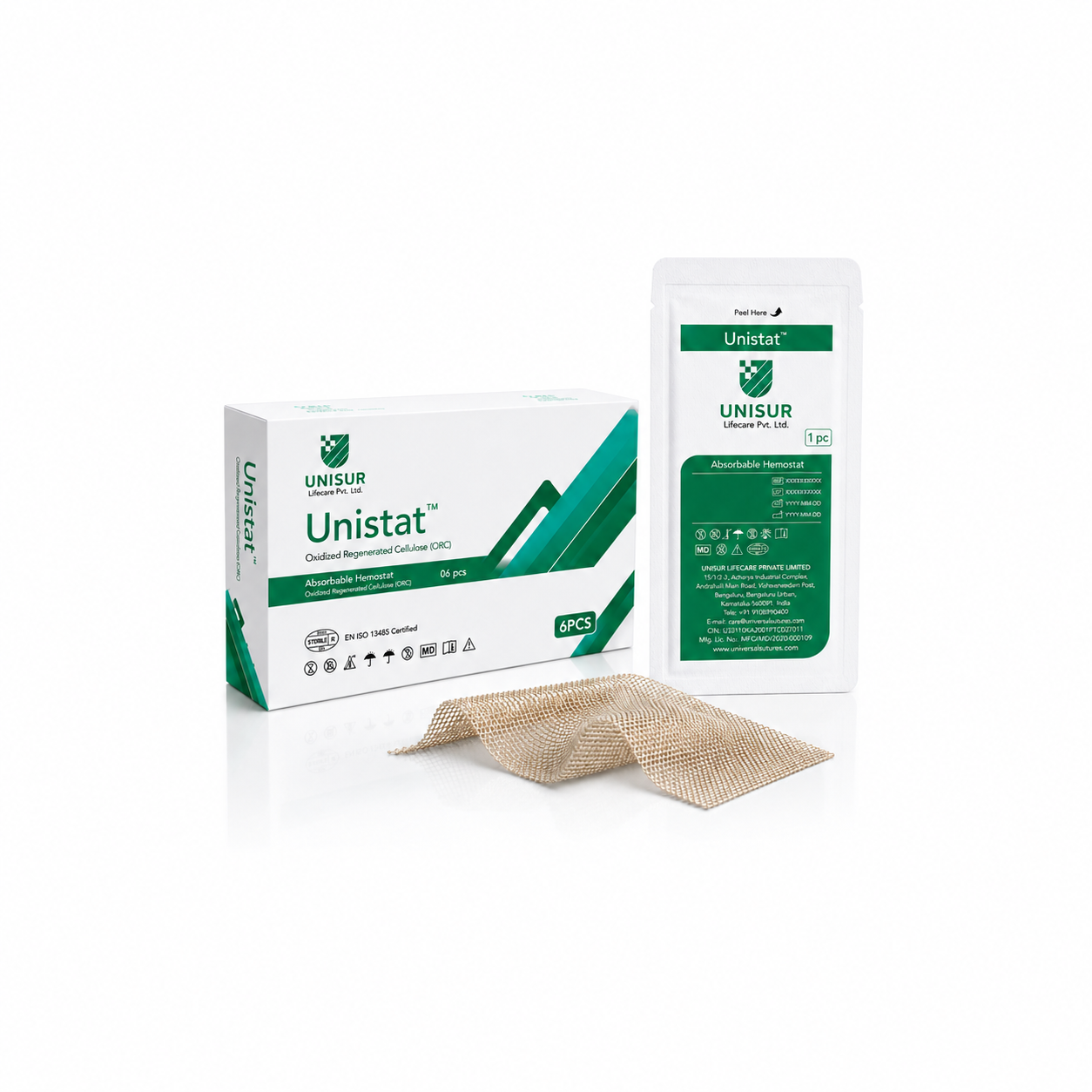
Figure 1: UNISTAT™ Oxidized Regenerated Cellulose Absorbable Hemostat fabric format designed for multi-specialty surgical hemorrhage control.
1. Mechanical Clot Matrix & Swelling Dynamics
When applied directly to a bleeding vascular site, ORC rapidly absorbs blood fluids, swelling to form a dark, cohesive, gelatinous mass. This artificial clot matrix acts as a physical barrier that mechanically seals oozing capillaries, small venules, and parenchymal tissue surfaces. The uniform fiber structure of regenerated cellulose ensures consistent liquid absorption capacity—typically retaining 6 to 10 times its original dry weight in blood.
2. Acceleration of Endogenous Coagulation Cascade
Although ORC operates independently of the human coagulation clotting factors (making it fully functional in heparinized or coagulopathic patients), its chemical architecture actively accelerates local physiological hemostasis. The interaction between serum proteins and the negatively charged carboxylic acid surfaces triggers protein denaturation and rapid platelet activation without requiring exogenous thrombin or fibrinogen additives.
3. Inherent Antibacterial Activity via Low pH Acidic Microenvironment
A unique and critical clinical advantage of ORC hemostats is their intrinsic bactericidal activity. As the carboxyl groups dissociate in surrounding tissue fluids, they temporarily lower the local environmental pH to below 4.0. Independent laboratory testing confirms that this acidic microenvironment exerts a broad-spectrum microbicidal effect against pathogenic strains commonly implicated in Surgical Site Infections (SSIs), including:
Importantly, this antibacterial mechanism is entirely physical-chemical rather than pharmacological, preventing the development of bacterial strain resistance while offering an added protective barrier at the surgical bed.
4. Enzymatic & Hydrolytic Bio-resorption Kinetics
Unlike non-absorbable materials or collagen matrices that can induce prolonged granulomatous foreign-body reactions, ORC undergoes clean hydrolytic cleavage into glucose and glucuronic acid oligomers. In mammalian tissue, macrophage cell enzymes and local extracellular fluid hydrolysis systematically resorb the gelatinous matrix within 7 to 14 days, leaving behind zero permanent polymer residue or tissue scarring.
Product Showcase
Product Recommendations: The UNISTAT™ Oxidized Regenerated Cellulose Range
At Universal Sutures, our R&D team has optimized the textile geometry and oxidation parameters of regenerated cellulose to formulate the UNISTAT™ ORC Hemostat product family. Designed to fulfill diverse surgical demands, UNISTAT™ is available in three distinct mechanical configurations:
Technical Parameter
UNISTAT™ Standard
UNISTAT™ Fibrillar
UNISTAT™ Knitted (Heavy/Textured)
Base Weave Architecture
Plain woven light fabric
Layered non-woven micro-fibers
Dense warp-knitted heavy fabric
Weight / Density
~ 45–55 g/m²
~ 60–85 g/m² (tufted layers)
~ 90–110 g/m²
Carboxylic Acid Content
16.0% – 22.0%
16.0% – 22.0%
18.0% – 24.0%
Hemostasis Time
2 to 3 minutes
1 to 2 minutes
2 to 4 minutes (heavy bleeding)
Full Absorption Time
7 to 14 days
7 to 14 days
14 to 21 days
Primary Clinical Use
Capillary bleeding, general surgery, OB/GYN
Neuro, spinal, irregular tumor cavities
Vascular resections, trauma, sternotomy
Handling Characteristics
Pliable, cut-to-size without fraying
Peelable layers, conforms to cavities
High tensile strength for suturing/wrapping
UNISTAT™ Standard Woven Hemostat
Engineered for daily general surgical applications where precise, lightweight handling is needed. UNISTAT™ Standard can be applied dry directly onto oozing tissue beds or wrapped loosely around parenchymal organs like the liver or kidney.
Designed for complex specialties including neurosurgery and cardiovascular reconstruction. Fibrillar allows surgeons to peel off thin micro-layers to line delicate bone margins or cavity walls, while Knitted provides structural strength to hold tension sutures.
Future Procurement Trends for ORC Hemostats in Global Healthcare
Healthcare procurement is rapidly evolving from simple unit-cost transaction models toward holistic, risk-adjusted value analysis. Procurement directors evaluating absorbable hemostats for 2026–2030 should align their strategies with four dominant macro-trends:
1. Consolidation under EU MDR (Regulation 2017/745) Class III Mandates
The regulatory cliff imposed by the European Union’s MDR transition has resulted in the exit of under-capitalized regional manufacturers unable to justify the clinical data and notified body audits required for Class III absorbable biomaterials. Procurement departments in Europe, LATAM, the Middle East, and Asia-Pacific are increasingly standardizing on tier-1 certified global manufacturers that offer validated STED dossiers, post-market clinical follow-up (PMCF) plans, and established EUDAMED registration profiles.
2. Demand for Minimally Invasive & Robotic Surgery Compatibility
With laparoscopic and robot-assisted surgical procedures expanding across urology, gynecology, and colorectal oncology, hemostatic materials must exhibit specific physical memory characteristics. Future procurement specifications prioritize ORC constructs that can be rolled tightly to pass through 5mm or 10mm laparoscopic trocars without crumbling, flaking, or clinging prematurely to grasper instruments.
For decades, the global supply of premium ORC hemostats was concentrated among a small duopoly of Western multinational brands, leaving hospital networks vulnerable to supply shortages, backorders, and arbitrary price spikes. Modern hospital purchasing syndicates are aggressively qualifying alternate, high-quality manufacturing hubs in India—leveraging advanced ISO 13485 production infrastructure to achieve cost savings of 30% to 50% without compromising clinical efficacy or safety standards.
4. Environmental, Social & Governance (ESG) Criteria in Device Manufacturing
B2B procurement criteria now regularly incorporate vendor ESG metrics. Procurement teams favor suppliers that utilize plant-derived renewable cellulose precursors, operate eco-friendly cleanroom facilities with zero-discharge liquid processing, and maintain ethically verified labor practices across their production supply chain.
Industry & Technology Roadmap
Industry Development Trends: Innovations Shaping Next-Generation ORC Biomaterials
The global market for topical absorbable hemostats is projected to grow at a compound annual growth rate (CAGR) exceeding 6.8% through 2032. Research and development teams at Universal Sutures are actively driving technological advancements in several key areas:
R&D pipelines are exploring dual-action composite pads that layer ORC with micro-porous collagen or marine chitosan. These hybrid constructs deliver both rapid initial tissue adhesion and prolonged mechanical reinforcement for high-pressure arterial bleed sites.
2
Nanofibrous Electrospun ORC Membranes
Shifting from traditional textile knitting toward electrospinning allows the creation of ultra-thin, highly porous nanofiber ORC sheets. These micro-membranes provide immense surface-area-to-volume ratios, achieving instantaneous gelation and hemostasis in micro-vascular and pediatric surgeries.
3
Controlled-Release Bio-active ORC Matrices
Incorporating active therapeutic agents—such as localized analgesics, anti-scarring agents, or specialized antimicrobial peptides—directly into the oxidized cellulose polymer matrix creates multifunctional surgical implants that manage bleeding, pain, and tissue regeneration simultaneously.
Why Partner with Universal Sutures
Enterprise Advantages: World-Class Manufacturing Infrastructure in Bengaluru, India
Universal Sutures (Unisur Lifecare Pvt. Ltd.), an integral member of the prestigious LVS Group, represents the gold standard of medical device engineering in South Asia. Our state-of-the-art manufacturing complex in Bengaluru, India, is built specifically to address the stringent requirements of global medical device distributors, hospital groups, and private-label brand owners.
EU MDR Certified Leadership: Universal Sutures is proudly the second Indian suture and biomaterial manufacturer to achieve comprehensive EU MDR (Regulation 2017/745) certification across 13 major product families.
1.1× USP Strength Quality Baseline: Every suture, mesh, and ORC lot manufactured in our facility is batch-tested to exceed international USP/EP standards by at least 10%, ensuring superior safety margins.
5,000+ Active Product Codes: From absorbable PGA, PGLA, PDO, and Catgut sutures to bone wax, polypropylene hernia mesh, and ORC hemostats, partners can consolidate their wound closure portfolio under one manufacturer.
Empowered & Skilled Workforce: Over 70% of our 200+ dedicated manufacturing professionals are women, operating under strict ISO 13485 cleanroom discipline and ethical workplace policies.
Turnkey OEM & Regulatory Support: We provide full private-label packaging, artwork design, custom sizing, and STED technical dossiers for seamless health authority approvals worldwide.
Below are detailed answers to the most common technical, regulatory, and commercial questions asked by hospital procurement committees and medical device importers during supplier evaluation:
Oxidized Cellulose (OC) is produced by oxidizing raw, natural cotton fibers. Because natural cotton fibers vary in length, diameter, and purity, traditional OC exhibits non-uniform physical properties, variable bio-absorption rates, and potential tissue reactivity. In contrast, Oxidized Regenerated Cellulose (ORC) is derived from pure rayon precursor threads dissolved and re-extruded into continuous, highly uniform filaments prior to controlled oxidation. This ensures identical fiber density, reliable carboxyl content (16–24%), predictable absorption within 7–14 days, and superior tensile strength when wet.
ORC is sensitive to heat and moisture; therefore, steam autoclaving cannot be used as it triggers premature hydrolytic degradation of the polymer matrix. Universal Sutures utilizes validated Ethylene Oxide (EtO) sterilization parameters specifically calibrated to maintain carboxyl group stability and fabric flexibility without leaving toxic residues. Radiation sterilization (Gamma or E-beam) can also be performed, but exposure parameters must be tightly controlled to prevent radiation-induced chain scission that could lower tensile strength.
UNISTAT™ ORC exerts a localized, purely physical bactericidal effect. As the carboxyl groups in the oxidized cellulose dissolve in tissue fluids, they temporarily depress the micro-environmental pH to below 4.0. This rapid acidification denatures microbial enzymes and disrupts bacterial cell membranes across both Gram-positive and Gram-negative pathogens (including antibiotic-resistant MRSA and VRE strains) without releasing systemic antibiotics.
Yes, UNISTAT™ is fully absorbable and designed to be left in situ when hemostasis is achieved. Macrophages and local tissue enzymes fully metabolize the gelatinous material within 7 to 14 days. However, in proximity to bone foramina, the spinal cord, or optic nerves, surgeons should remove excess fabric once bleeding has ceased to prevent localized swelling that could exert mechanical pressure on surrounding neural structures.
UNISTAT™ ORC hemostats are double-packaged in high-barrier, moisture-proof aluminum foil primary pouches to protect the hydroscopic material from ambient humidity, enclosed within peelable secondary medical-grade Tyvek/film pouches. The validated shelf life is 3 to 5 years when stored in cool, dry conditions below 25°C.
We provide comprehensive STED (Summary Technical Documentation) technical files compliant with EU MDR 2017/745 Class III requirements. Our regulatory package includes ISO 10993 biocompatibility testing, viral inactivation reports, chemical characterization (carboxyl titrations), stability data, clinical evaluation reports (CER), and batch release certificates (CoA).
The standard global tariff classification for Oxidized Regenerated Cellulose Hemostats is HS Code 3006.10 (Sterile surgical catgut, similar sterile suture materials and sterile tissue adhesives for surgical wound closure). Universal Sutures manages air and ocean freight shipments globally from Bengaluru International Airport (BLR) and Chennai Port, offering CIP, FOB, or DDP terms.
Ready to Upgrade Your Hemostat Sourcing Strategy?
Contact our global sales and OEM engineering team today to request product samples, STED technical documentation, or competitive wholesale pricing for UNISTAT™ Oxidized Regenerated Cellulose Hemostats.