As a globally recognized manufacturer and supplier of non-absorbable and absorbable surgical implant devices, our production lines deliver high-tenacity, bio-compatible surgical grids engineered specifically for abdominal wall reconstruction, tension-free hernioplasty, and specialized laparoscopic repairs. Explore our standardized catalog supplied directly to medical institutions, GPO entities, and healthcare distributors across the Riyadh Metropolitan Region.
The healthcare infrastructure in Riyadh, Saudi Arabia, is undergoing an unprecedented structural evolution driven by the Saudi Vision 2030 Health Sector Transformation Program. With massive capital investment flowing into government hospital networks under the Ministry of Health (MOH), military healthcare systems (such as King Fahad Armed Forces Hospital networks), national referral centers like King Faisal Specialist Hospital & Research Centre (KFSHRC), and private healthcare conglomerates like Dr. Sulaiman Al Habib Medical Group and Saudi German Health, procurement criteria for implantable medical devices have become extraordinarily stringent.
Hernia prevalence in the Middle East—specifically abdominal wall, inguinal, and post-incisional hernias—presents distinct clinical challenges. Factors such as high body mass index (BMI) distributions, prevalence of type-2 diabetes, and high intra-abdominal pressure demand surgical meshes with superior burst strength, flexural memory, and controlled elasticity. Polypropylene (PP) monofilament mesh remains the absolute gold standard in abdominal wall reconstruction across Riyadh’s operating theaters, provided the material satisfies key biomechanical standards.
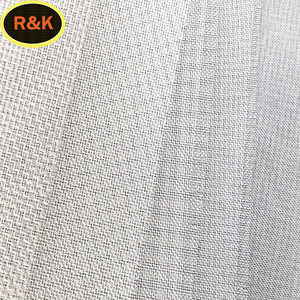
Polypropylene is an isotactic crystalline polymer derived from the polymerization of propylene gas. When extruded into monofilament fibers and warp-knitted into a two-dimensional grid, it creates an inert, non-absorbable matrix that supports tissue in-growth while resisting bacterial colonization.
Pore dimensions exceeding 1.0 mm to 1.5 mm permit unrestricted infiltration of macrophages, fibroblasts, and vascular capillaries. This prevents mechanical bridging and reduces the formation of dense, inflexible scar tissue (granuloma).
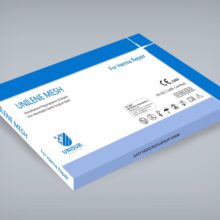
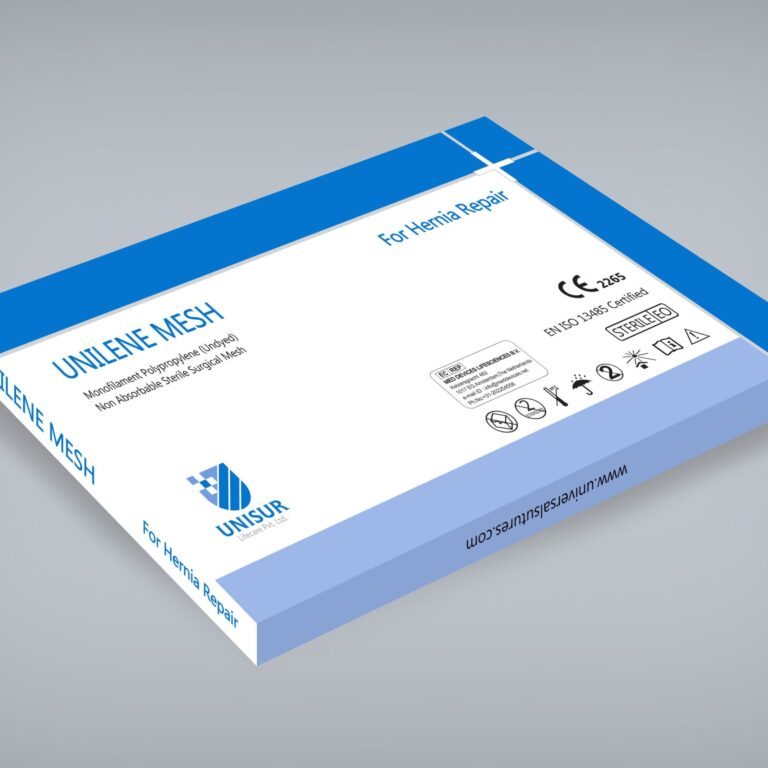
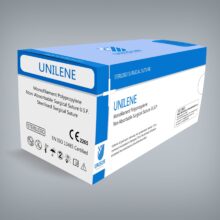
Our UNILENE™ polypropylene mesh is manufactured to withstand physiological intra-abdominal pressures exceeding 180 mmHg (well above the maximum human coughing or straining pressure of 150 mmHg), guaranteeing long-term abdominal wall integrity.
Unlike multifilament or braided structures, monofilament polypropylene features smooth, non-wicking strands with no interstitial spaces micro-transfers. Bacteria (such as Staphylococcus aureus) cannot hide, significantly lowering surgical site infection (SSI) rates.
To meet the precise demands of surgical specialists in Riyadh, polypropylene mesh products must adapt to a variety of open and minimally invasive surgical modalities. The table below outlines how our biomaterials align with localized hospital protocols across Saudi Arabia:
| Surgical Technique | Clinical Indication | Recommended Mesh Type | Key Biomechanical Requirement |
|---|---|---|---|
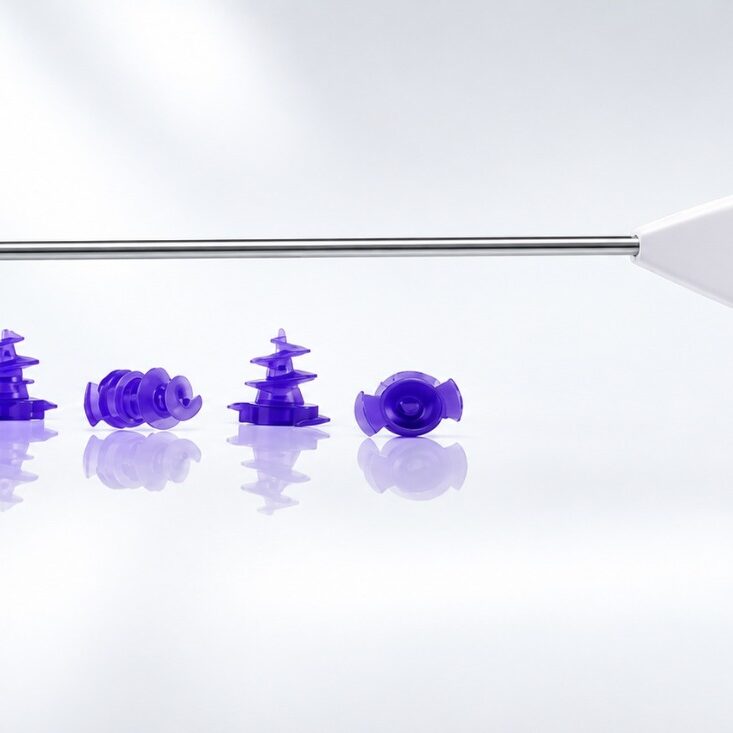
| Laparoscopic TAPP (Transabdominal Preperitoneal) | Inguinal / Femoral Hernia | UNILENE™ Lightweight Macroporous Mesh | High memory for smooth trocar deployment; transparent grid for anatomical visualization. |
| Laparoscopic TEP (Totally Extraperitoneal) | Bilateral Inguinal Defect | Pre-shaped / Anatomical PP Mesh Sheet | Conformability to the space of Bogros without extensive traumatic tack fixation. |
| Open Lichtenstein Repair | Direct / Indirect Inguinal Hernia | Standard Monofilament PP Mesh (10x15cm) | High initial mechanical stiffness to resist displacement; excellent suture retention. |
| Ventral & Incisional Repair | Large Abdominal Wall Defect | Heavyweight / Reinforced Monofilament Grid | Multidirectional tensile resistance; minimum 5cm defect overlap margin capability. |
| Pediatric / Young Adult Hernioplasty | Congenital / Recurrent Defects | Partially Absorbable Composite Matrix | Reduced permanent synthetic footprint allowing dynamic tissue growth. |
Navigating the medical device market in Saudi Arabia requires absolute mastery of regional regulatory frameworks and environmental distribution logistics. Riyadh experiences extreme desert climate conditions, with ambient summer temperatures routinely exceeding 45°C. Medical devices stored and transported across the Central Province must maintain package seal integrity, sterile barrier maintenance, and polymer molecular weight stability.
All surgical mesh imports supplied to Riyadh must hold active SFDA MDMA approval. Universal Sutures (Unisur Lifecare) maintains comprehensive technical dossiers, including ISO 10993 biocompatibility testing, USP tensile strength verification, ethylene oxide (EO) residual analysis, and accelerated real-time shelf-life validation (5-year sterile stability).
With NUPCO managing centralized healthcare procurement for MOH, University Hospitals, and Security Forces facilities, suppliers must offer standardized packaging configurations, clear international color-coding, GS1 DataMatrix barcoding, and rapid delivery capabilities. Our manufacturing facility in Bengaluru, India, provides streamlined air-freight logistical corridors directly to King Khalid International Airport (RUH) in Riyadh, guaranteeing stock availability for hospital contracts.
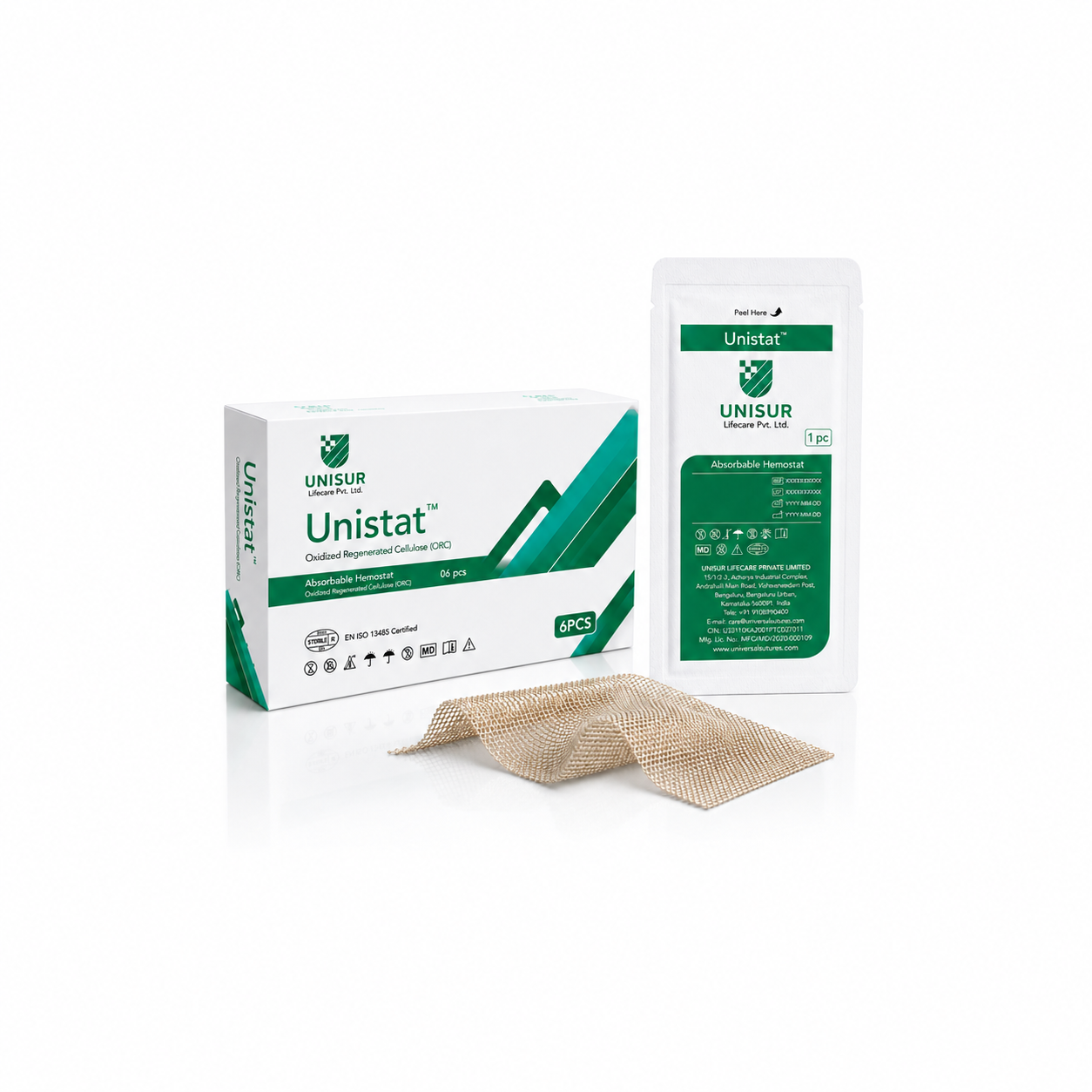
Polypropylene polymers are sensitive to extreme ultraviolet radiation and prolonged heat degradation if unmanaged. Our medical-grade primary packaging utilizes thermoformed blister trays sealed with medical Tyvek® or tear-resistant aluminum foil sachets. This sterile barrier system isolates the monofilament mesh from environmental moisture and ambient humidity, ensuring 100% mechanical performance upon opening in the operating theater.
As an international medical device powerhouse, Universal Sutures (Unisur Lifecare Pvt. Ltd.) operates a world-class manufacturing facility in Bengaluru, Karnataka, India. We are engineered from the ground up to support global healthcare distributors, hospital networks, and OEM brand partners with unmatched technical quality and competitive price-to-performance metrics.
Universal Sutures is proud to be among the elite group of global medical manufacturers—and the second Indian suture & mesh manufacturer—to secure full EU MDR certification across 13 comprehensive product families. Our technical documentation undergoes rigorous notified body auditing.
Every lot of surgical sutures and monofilament mesh produced in our cleanrooms is tested to exceed minimum USP (United States Pharmacopeia) tensile strength and needle-attachment pull specifications by at least 10% (1.1x USP). This safety margin guarantees intra-operative reliability.
We empower healthcare suppliers in Riyadh to establish their own registered medical brands. From custom pore dimensions, pre-cut anatomical shapes, and custom suture-mesh combinations to localized Arabic/English packaging design, our OEM team handles full regulatory dossier preparation.
Elevate your surgical device portfolio in Riyadh with EU MDR-certified, high-tenacity mesh biomaterials. Contact our international sales engineering team today to request product samples, technical dossiers, and direct factory pricing.
Get Catalog