Explore our FDA-compliant, CE-marked, and EU MDR-certified surgical wound closure devices manufactured under ISO 13485 cleanroom protocols.
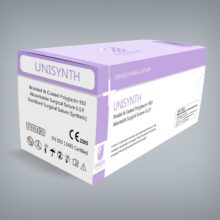
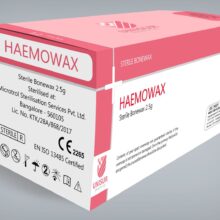
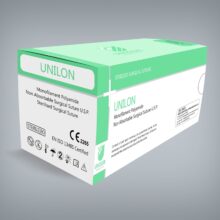
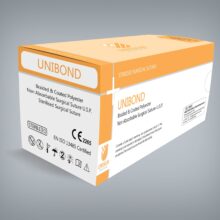
In the modern surgical landscape across the State of New York—from world-renowned academic medical centers in Manhattan and Brooklyn to ambulatory surgery centers (ASCs) throughout Long Island and Upstate New York—the selection of wound closure biomaterials represents a critical nexus of patient safety, operative efficiency, and institutional cost management. Polyglactin 910 (often commercially recognized under brand names such as Vicryl™ or UNISYNTH™) stands as the gold standard synthetic absorbable braided suture utilized across general surgery, obstetrics, gynecology, orthopedics, and urology.
This technical whitepaper provides healthcare procurement directors, surgical department chairs, GPO sourcing managers, and OEM private-label distributors in New York with an exhaustive examination of Polyglactin 910 polymer chemistry, mechanical degradation kinetics, needle attachment technology, regulatory compliance frameworks, and global supply chain resilience models.
Polyglactin 910 is a synthetic absorbable co-polymer composed of 90% Glycolide and 10% L-lactide (Poly[glycolide-co-L-lactide]). This specific molar ratio creates a crystalline lattice structure that balances initial tensile strength retention with ultimate biocompatible absorption. Unlike natural collagen or chromic catgut sutures, which undergo unpredictable enzymatic degradation accompanied by marked local tissue inflammation, Polyglactin 910 degrades exclusively via chemical hydrolysis.
Water molecules penetrate the amorphous regions of the suture thread, cleaving ester bonds within the polymer backbone. The degradation metabolites—glycolic acid and lactic acid—are endogenously metabolized via the Krebs cycle and excreted harmlessly as carbon dioxide and water, eliciting negligible histiocytic inflammatory response.
Uncoated braided synthetic sutures exhibit significant surface drag ("sawdust effect") when passing through delicate parenchyma, fascial layers, or mucosa. To eliminate tissue trauma while preserving knot tie-down precision, high-specification Polyglactin 910 sutures utilize a proprietary surface coating consisting of Poly(glycolide-co-L-lactide) (30/70 ratio) and Calcium Stearate.
This lubricant layer is non-reactive and bioabsorbable. It allows the braided strand to slip smoothly through tissue without saw-tooth tearing, while simultaneously enabling precise knot positioning ("snugging down") without premature locking. Surgeons in demanding NYC operating rooms experience smooth handling comparable to monofilaments paired with the superior knot security inherent to multi-filament braided architectures.
Every lot of UNISYNTH™ Polyglactin 910 suture is validated to exceed Pharmacopoeial (USP and EP) minimum tensile strength and needle-pull attachment limits by at least 10%, providing a mandatory safety margin in heavy fascial closures.
Manufactured using premium 300/400-series stainless steel with laser-drilled swage ends and longitudinal ribbed channels along the needle body to prevent needle-holder slip, twisting, or unintentional bending under strain.
Terminally sterilized via validated Ethylene Oxide (EO) gas cycles under ISO 11135 guidelines. Double aluminium foil moisture-barrier foil packs guarantee a 5-year shelf life under varying climatic storage conditions.
For surgical committees and procurement panels evaluating suture standardization across New York healthcare networks, the following matrix compares Polyglactin 910 against alternative absorbable biomaterials:
| Suture Polymer | Structure | Mechanism of Loss | 50% Tensile Hold | Complete Absorption | Tissue Reactivity |
|---|---|---|---|---|---|
| Polyglactin 910 (PGLA) | Braided & Coated | Hydrolysis | 21 Days | 56–70 Days | Minimal / Low |
| Polyglycolic Acid (PGA) | Braided & Coated | Hydrolysis | 14–21 Days | 60–90 Days | Minimal |
| Poliglecaprone 25 (PGCL) | Monofilament | Hydrolysis | 7–14 Days | 90–120 Days | Very Low |
| Polydioxanone (PDS) | Monofilament | Hydrolysis | 28–42 Days | 180–210 Days | Slight |
| Chromic Catgut | Twisted Monofilament | Enzymatic Digestion | 7–10 Days | 90 Days (Unpredictable) | Moderate to High |
The New York healthcare system represents one of the most sophisticated yet cost-conscious medical device markets in the world. Encompassing prestigious health systems such as NYU Langone Health, Mount Sinai Health System, NewYork-Presbyterian, Montefiore, Northwell Health, and hundreds of independent outpatient surgical centers across the Tri-State area, the demand for high-performance surgical consumables is continuously expanding.
Supply Chain Resilience Imperative: Following recent global supply chain disruptions, New York hospital purchasing departments are actively diversifying their vendor portfolios away from single-source oligopolies. Sourcing directly from certified primary manufacturers with dual-accreditation (EU MDR + FDA compliance) provides institutional risk reduction and 25% to 40% fiscal savings on wound closure lines.
Purchasing agents importing or distributing medical devices in New York must adhere strictly to United States Food and Drug Administration (FDA) regulatory benchmarks, including 21 CFR Part 820 Quality System Regulation (QSR). Furthermore, leading New York buyers prioritize manufacturers who hold international EU MDR (Regulation 2017/745) and ISO 13485:2016 certification, ensuring every production batch undergoes mandatory bioburden, pyrogen, tensile, and sterile barrier testing.
Unisur Lifecare Pvt. Ltd. (Universal Sutures) is an international leader in wound closure manufacturing, serving distributors, hospital groups, and OEM brand owners across 60+ countries.
Universal Sutures is proudly the second Indian manufacturer to achieve prestigious EU MDR (Regulation 2017/745) certification across 13 product families, validated by rigorous international notified body audits.
Our automated cleanroom facilities generate over 5,000 active suture-needle combinations, monofilaments, hernia meshes, and haemostats—offering complete catalog consolidation for medical suppliers.
We take deep pride in maintaining an ethical, empowering work environment where over 70% of our precision needle-attaching and cleanroom packaging specialists are highly trained women engineers.
From private label artwork, box design, and sterile foil barrier customization to full regulatory technical dossier submission, our OEM team turns your private brand concepts into market-ready products.
Direct supply chain agreements with major international express cargo carriers ensure seamless, temperature-controlled air shipments arriving at New York (JFK) and Newark (EWR) hubs within tight delivery windows.
Every single box of Polyglactin 910 is shipped with a comprehensive Certificate of Analysis (CoA) detailing empirical test results for tensile pull, sterile barrier seal integrity, and endotoxin levels.
Technical, regulatory, and logistics answers for hospital purchasing departments and medical device distributors.
UNISYNTH™ Polyglactin 910 is chemically equivalent to Vicryl™ (90% glycolide, 10% L-lactide with Polyglactin 370 + Calcium Stearate coating). It matches the identical USP needle dimensions, suture diameter, absorption rate (56-70 days), and handling characteristics while offering significant cost efficiency for healthcare institutions.
All shipments are manufactured in our ISO 13485:2016 certified facility and carry full CE certification and EU MDR (Regulation 2017/745) compliance. Complete technical dossiers, sterile validation reports, and Certificates of Analysis (CoA) are provided with every order.
We supply Polyglactin 910 in USP sizes 8-0 through 2, attached to high-grade silicone-coated 300/400 series stainless steel needles. Needle options include 3/8 circle taper point, 1/2 circle taper point, reverse cutting, tapercut, micro-point, and blunt point geometries.
Yes. Our dedicated OEM engineering division customizes primary foil packs, secondary unit boxes, and shipping cartons with your brand identity, product codes, logo, and multi-language labeling compliant with US FDA barcode and UDI requirements.
Standard production and dispatch for stock configurations require 2 to 3 weeks. Express air shipping to John F. Kennedy International Airport (JFK) or Newark Liberty International Airport (EWR) takes approximately 4 to 7 business days, supported by expedited customs clearance documentation.
Absolutely. We provide comprehensive clinical sample kits containing standard USP sizes of UNISYNTH™ Polyglactin 910 for surgical department evaluation, tensile verification, and needle sharpness testing prior to institutional contract signing.