Certified Non-Absorbable Sutures, Surgical Meshes, and Precision Polyamide/Polypropylene Industrial Screens Available for Export to Russian Federation & CIS Distributors
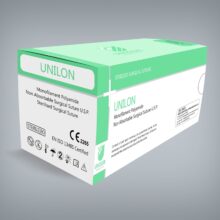
In modern surgical reconstruction, micro-vascular repair, and specialized industrial filtration, monofilament polyamide (nylon) represents a benchmark polymer due to its smooth surface topography, predictable knot security, high initial tensile strength, and minimal tissue reaction. As leading international suppliers serving healthcare institutions, pharmaceutical manufacturers, and commercial distributors across the Russian Federation and Eurasian Economic Union (EAEU), we provide whitepaper-grade technical insights into the procurement, regulatory compliance, and performance metrics of surgical-grade polyamide sutures and related technical meshes.
Polyamide sutures are synthesized from long-chain aliphatic polymers, specifically Polyamide 6 (poly-ε-caprolactam) and Polyamide 6,6 (polyhexamethylene adipamide). During the precision extrusion phase, the molten polymer undergoes uniaxial orientation, aligning molecular chains along the longitudinal axis of the fiber. This high degree of crystallinity grants monofilament polyamide remarkable flexibility and superior tensile strength, exceeding United States Pharmacopeia (USP) and European Pharmacopoeia (EP) baseline specifications by a validated 1.1× safety factor.
Understanding the molecular degradation profile and biomechanical performance of monofilament polyamide relative to alternative biomaterials is critical for hospital procurement boards and tender managers operating under Russian State Procurement Frameworks (Law No. 44-FZ and Law No. 223-FZ).
| Polymer Property | Monofilament Polyamide (Nylon) | Monofilament Polypropylene (PP) | Braided Silk | Polyglycolic Acid (PGA) |
|---|---|---|---|---|
| Chemical Structure | Polyamide 6 / Polyamide 6,6 | Isotactic Polypropylene | Natural Protein (Fibroin) | Synthetic Polyester (PGA) |
| Absorbability Class | Non-Absorbable (Gradual Hydrolysis) | Non-Absorbable (Inert) | Non-Absorbable (Enzymatic) | Absorbable (Hydrolytic) |
| Initial Tensile Strength | Very High (Exceeds USP by ≥10%) | High & Extremely Stable | Moderate | High Initial Strength |
| Tissue Reactivity | Very Low (Acute Minimal Phase) | Extremely Low (Inert) | Moderate to High | Low (Transitory) |
| Knot Security & Pliability | Excellent handling; memory reduced via hydration | Good; requires extra throws | Superior | Excellent |
| Capillarity / Infection Risk | Zero (Smooth Monofilament) | Zero (Smooth Monofilament) | High (Multi-filament braid) | Low (Coated braid) |
| In Vivo Retention Profile | Loses ~15-20% tensile strength per year via slow hydrolysis | Permanent 100% retention | Loses strength in 3-6 months | Complete strength loss in 28-35 days |
Supplying medical products to the Russian market requires addressing diverse clinical requirements across federal research institutes, municipal hospitals, private clinical networks, and regional trauma hubs stretching from Moscow and Saint Petersburg to Novosibirsk, Yekaterinburg, and Vladivostok. Monofilament polyamide sutures (marketed globally as UNILON) are optimized for specific surgical interventions prevalent in Russian medical centers:
Monofilament nylon's exceptionally smooth surface ensures cosmetic, tension-free intracutaneous closure with zero suture marks, crucial for facial trauma units in urban medical centers.
Utilizing ultra-fine USP 8/0 to 11/0 micro-polyamide sutures attached to high-precision premium stainless steel needles for micro-vascular anastomoses and corneal transplantation.
Heavy-gauge monofilament polyamide sutures (USP 1, 2) provide robust tensile support for distal tendon reattachment and heavy fascial adaptation in regional orthopedic trauma centers.
A critical engineering consideration for supplying medical consumables to northern and eastern regions of Russia is thermal stability during transit. Goods shipped to Siberian or Far Eastern Federal Districts frequently experience extreme ambient temperatures reaching -40°C to -50°C during winter logistics cycles.
Our manufacturing protocols employ specialized primary packaging consisting of hermetically sealed multi-layer aluminum foil pouches, purged with dry inert gas before Ethylene Oxide (EO) terminal sterilization. This moisture-impermeable barrier protects the polyamide polymer matrix from embrittlement or physical degradation induced by rapid thermal expansion and contraction during long-distance intermodal transport via Trans-Siberian rail or air cargo.
The Russian medical device market is undergoing structural shifts driven by regulatory harmonization under EAEU regulations, localized import substitution policies (Импортозамещение), and a demand for resilient direct-from-manufacturer supply chains. International suppliers must navigate specific technical and administrative channels to maintain an uninterrupted presence in the Russian healthcare market:
All medical devices, including Class IIb and Class III surgical sutures and meshes, must be registered with the Federal Service for Surveillance in Healthcare (Roszdravnadzor - Росздравнадзор). Achieving compliance requires comprehensive technical dossiers, toxicological studies conducted in accredited Russian laboratories, clinical evaluation reports, and ISO 13485 audit documentation. Our regulatory division provides complete dossier support to enable smooth registration for our distribution partners in Russia.
Russian medical distributors and private brand owners increasingly seek direct OEM partnerships with established manufacturers who hold complete EU MDR (Regulation 2017/745) and ISO 13485 certifications. By leveraging OEM private-label manufacturing, Russian importers can establish localized brand equity, participate in state tenders, and maintain full control over packaging artwork, Russian-language labeling, and custom needle-suture combinations.
To overcome ongoing international banking complexities, leading direct suppliers maintain flexible, compliant financial settlement options, including dual-currency transactions (CNY, RUB, AED, EUR) and direct logistics routes via established Eurasian trade corridors. This operational agility minimizes lead times and shields Russian healthcare buyers from supply chain bottlenecks.
As the flagship medical division of Unisur Lifecare Pvt. Ltd. (an LVS Group company), Universal Sutures stands at the forefront of global wound closure innovation. Operating out of state-of-the-art cleanroom manufacturing facilities in Bengaluru, India, our enterprise embodies the four pillars of Google's E-E-A-T (Experience, Expertise, Authoritativeness, and Trustworthiness) guidelines:
Universal Sutures is proudly the second Indian manufacturer to secure rigorous EU MDR (Regulation 2017/745) approval across 13 distinct product families, confirming total regulatory compliance.
Every batch of monofilament polyamide suture undergoes destructive tensile testing and needle-pull attachment testing validated to exceed USP standards by at least 10%.
Over 70% of our 200+ dedicated cleanroom technicians and quality engineers are women, working within an ISO 13485 environment focused on precision and continuous improvement.
Our needle manufacturing integration utilizes AISI 302 and 420 grade stainless steel alloys, featuring precision-drilled ends, micro-ribbed bodies for anti-slip needle-holder stabilization, and ultra-smooth silicone coating to minimize tissue drag during passage through dense subcutaneous layers.
Below are authoritative technical and commercial answers tailored for procurement officers, medical supply distributors, and tender specialists serving the Russian medical market:
Our UNILON sutures are vacuum-sealed inside high-barrier aluminum primary foil packaging under controlled humidity. This prevents moisture ingress and polymer hydrolysis during extreme cold transit (down to -50°C), preserving tensile integrity and flexibility upon room-temperature equilibration.
Yes. We provide complete technical dossiers including ISO 13485 certificates, EU MDR technical files, raw material analytical data, sterility validation reports (Ethylene Oxide according to ISO 11135), toxicological reports, and packaging integrity evaluations formatted for Roszdravnadzor submission.
We supply UNILON in USP sizes ranging from 11/0 (micro-ophthalmic) up to USP 2 (heavy orthopedics), attached to 300 series stainless steel needles including 3/8 circle reverse cutting, 1/2 circle taper point, premium spatulated micro-needles, and blunt point geometries.
Absolutly. Our dedicated OEM division manufactures customized suture, hernia mesh, and bone wax configurations under your brand name, featuring customized box dimensions, multi-language artwork (Russian/English), and localized GTIN/EAN barcoding.
UNILON sutures possess a validated 5-year shelf life from the date of terminal sterilization when stored below 25°C in a dry environment away from direct heat and moisture, maintaining full compliance with pharmacopoeial standards.
We support structured international commercial terms including LC (Letter of Credit at sight), TT (Telegraphic Transfer), and flexible multi-currency settlement structures to ensure efficient clearance and supply chain security for our Russian trading partners.