Manufactured to exceeding USP standards with validated ethylene oxide (EO) terminal sterilization and cleanroom packaging for clinical and structural applications across Ireland.
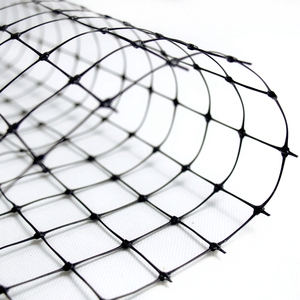
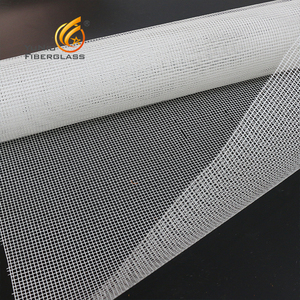
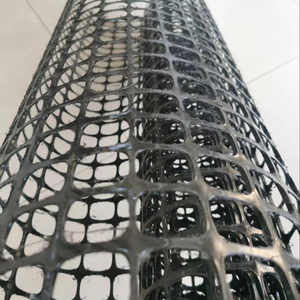
In the contemporary Irish healthcare ecosystem—governed by the strict oversight of the Health Products Regulatory Authority (HPRA) and the operational standards of the Health Service Executive (HSE)—the clinical demand for implantable prosthetic meshes has transitioned decisively toward biomechanically optimized, low-mass monofilament polymers.
Hernia repair represents one of the most frequently performed general surgical procedures across hospital groups in Ireland, including Dublin’s Beaumont Hospital, St. James's Hospital, Galway University Hospitals, and Cork University Hospital, alongside premier private clinical systems like Blackrock Health, Beacon Hospital, and Bon Secours. As surgical protocols shift toward day-case minimally invasive techniques (TEP and TAPP laparoscopic repairs under Sláintecare initiatives), surgical procurement directors require hernia patches that combine immediate structural integrity with reduced long-term foreign body response.
As an established global medical device manufacturer operating under comprehensive ISO 13485:2016 quality management systems and securing formal EU MDR (Regulation 2017/745) certification, Universal Sutures (Unisur Lifecare) supplies Irish hospital procurement teams, surgical distributors, and OEM partners with surgical hernia patches designed to eliminate chronic postoperative inguinal pain (CPIP) while guaranteeing superior tissue integration.
Understanding the interplay between monofilament yarn diameter, pore geometry, burst strength, and tissue integration in modern herniology.
Constructed from 100% non-absorbable isotactic polypropylene. The extrusion process ensures zero filament fraying, low surface roughness, and minimal bio-burden entrapment, reducing infection risk in clean-contaminated surgical fields.
Featuring controlled pore dimensions exceeding >1.5 mm. Clinical evidence establishes that pores larger than 1.0 mm allow uninhibited macrophage, fibroblast, and vascular passage, facilitating rapid collagen deposition and preventing bridging encapsulation.
Engineered to withstand intra-abdominal pressure surges exceeding 180 mmHg (well above maximum human physiological coughing strain of ~150 mmHg), preventing mechanical displacement or patch rupture during early recovery.
A direct technical reference for Irish clinical procurement officers, risk assessors, and surgical department heads.
| Biomechanical Parameter | Standard Weight Polypropylene Patch | Lightweight / Macroporous Patch | Clinical Relevance (Ireland Surgical Standard) |
|---|---|---|---|
| Areal Density (g/m²) | 80 – 110 g/m² | 28 – 45 g/m² | Lower mass significantly reduces chronic foreign body sensation post-op. |
| Pore Size Diameter | 0.5 – 0.8 mm (Microporous) | 1.5 – 3.0 mm (Macroporous) | Macropores foster organized Type I collagen synthesis over fibrotic scar tissue. |
| Flexural Rigidity | High stiffness / Memory lock | High compliance / Soft dynamic flex | Lightweight conforms naturally to the posterior inguinal wall during physical movement. |
| Mesh Shrinkage Rate | Up to 30% – 40% post-implant | < 10% minimal contraction | Prevents nerve entrapment and recurrence caused by patch curling or margin retraction. |
| Primary Indication | Large incisional / Complex abdominal wall gaps | Laparoscopic TEP/TAPP & Lichtenstein inguinal repair | Matches HSE guidelines emphasizing day-surgery rapid functional recovery. |
Surgical practice across public HSE acute hospitals and private clinical networks demands specific patch configurations engineered for distinct anatomical approaches:
For open Lichtenstein procedures performed in day-surgery units across regional hospitals in Galway, Limerick, and Waterford, our pre-shaped monofilament polypropylene patches feature a pre-cut keyhole design that cradles the spermatic cord without pinching. The edge-sealed pore architecture prevents fraying during intra-operative trimming.
Minimally invasive laparoscopic hernia repair is expanding rapidly in leading surgical hubs such as St. Vincent’s University Hospital Dublin. Our ultra-lightweight patches exhibit shape-memory elasticity, allowing them to be easily rolled, inserted through a 10mm trocar, and rapidly deployed across the myopectineal orifice of Fruchaud without twisting.
For complex abdominal wall reconstruction requiring large area coverage, we supply high-burst polypropylene sheets up to 30cm × 30cm and continuous rolls. These implants feature multi-directional stretch elasticity, matching the anisotropic mechanical compliance of the human linea alba and rectus sheath.
Navigating regulatory shifts, procurement sustainability, and OEM brand expansion within the European Union.
With the expiration of old MDD certificates across Europe, Irish medical device distributors face supply risks if overseas suppliers fail EU MDR audits. Universal Sutures (Unisur Lifecare) is among the select global manufacturers to have secured full EU MDR certification across 13 major device families, guaranteeing uninterrupted, audit-ready clinical supply for Irish tenders.
Irish medical technology companies seeking to private-label high-purity polypropylene hernia patches benefit from our end-to-end OEM program. We provide customized primary foil pouch packaging, bi-lingual (English/Irish/French) CE-compliant labeling, unique device identification (UDI) barcoding, and complete technical dossier integration for swift market registration.
Universal Sutures (Unisur Lifecare Pvt. Ltd.) operates a state-of-the-art manufacturing infrastructure dedicated to surgical wound closure and prosthetic tissue repair devices:
Addressing regulatory compliance, delivery timelines, product specifications, and custom manufacturing.
Yes. All our polypropylene hernia meshes, absorbable mesh tackers, and surgical wound closure devices hold valid EU MDR (Regulation 2017/745) certificates issued by notified bodies, along with ISO 13485:2016 quality system accreditation. Irish importers and HSE suppliers can inspect our complete technical documentation and CE certificates upon request.
We manufacture standard rectangular sheets (6cm × 11cm, 7.5cm × 15cm, 10cm × 15cm, 15cm × 15cm, 30cm × 30cm), pre-shaped Lichtenstein inguinal patches with keyholes, plug-and-patch systems, and continuous uncut rolls up to 32cm in width by 25 meters in length for convertors and institutional buyers.
Each patch is individually sealed inside a medical-grade peelable pouch and an secondary moisture-barrier aluminum foil primary pack. Terminal sterilization is executed via validated Ethylene Oxide (EO) cycles achieving a Sterility Assurance Level (SAL) of 10⁻⁶ in full compliance with EN ISO 11135.
Absolutly. Our OEM division handles customized sterile packaging, branded box artwork, localized multi-language instructions for use (IFU), and UDI barcode generation, providing a complete turnkey product line under your company's identity.
Standard catalog SKUs are dispatched from our central warehouse facility via expedited air freight directly to Dublin (DUB), Shannon (SNN), or Cork (ORK) airports within 7 to 14 business days. Bulk OEM production runs are delivered based on agreed schedule frameworks.
Our lightweight patches feature a large pore structure (>1.5 mm) and high flexural compliance. By drastically reducing the overall polymer volume implanted into the preperitoneal or inguinal space, foreign body reaction is minimized, avoiding rigid scar formation and nerve compression.
Request technical specification sheets, sample packs for clinical evaluation, or initiate a consultation for OEM private-label contract manufacturing tailored for Ireland and the broader European market.