Explore our sterile, single-use, high-retention trocar systems and laparoscopic accessories engineered for Boston hospitals, ambulatory surgical centers, and medical device distributors.
A comprehensive evaluation of biomechanical performance, fascial retention technology, seal durability, and OEM contract manufacturing strategies for Greater Boston’s healthcare procurement directors.
Boston, Massachusetts stands as the undisputed global capital of medical innovation, housing elite healthcare institutions such as Massachusetts General Hospital (MGH), Brigham and Women’s Hospital, Beth Israel Deaconess Medical Center, Tufts Medical Center, and Boston Children’s Hospital. As surgical teams throughout the Longwood Medical Area and New England healthcare networks transition toward high-definition laparoscopic, single-port, and robotic-assisted procedures, the baseline engineering expectations for primary access devices—specifically surgical trocars—have reached unprecedented levels of rigor.
A surgical trocar is far more than a simple entry port; it is the fundamental mechanical seal and entry vector that dictates abdominal wall trauma, intra-operative pneumoperitoneum stability, instrument drag force, and post-operative port-site hernia risks. For Boston-based medical device brand owners, surgical catalog distributors, and hospital procurement boards, partnering with a ISO 13485 and EU MDR certified OEM manufacturer provides a distinct strategic advantage: combining world-class cleanroom precision engineering with cost-effective manufacturing scale.
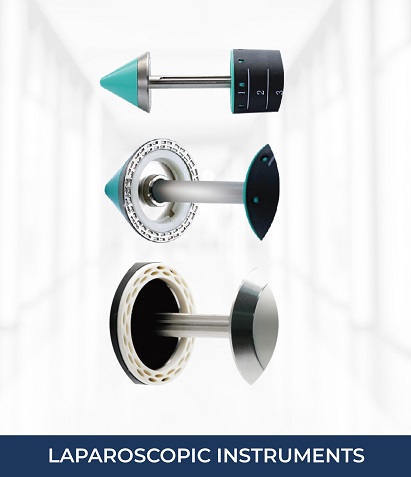
Clinical data from North American surgical registries indicates that conventional bladed trocars result in port-site herniation rates ranging between 1.2% and 3.0%, primarily caused by muscle cutting rather than muscle separation. Our OEM optical bladeless trocar systems utilize a non-bladed conical tip with lateral fins that gently separate muscle fibers along natural anatomical planes. This reduces fascial defect dimensions upon removal, virtually eliminating the necessity for complex fascial closure devices in 10mm ports and dramatically lowering 30-day post-operative complications across Boston ambulatory surgical centers (ASCs).
From high-volume bariatric centers in Cambridge to pediatric surgical suites in Boston proper, our custom OEM trocar configurations are built to match specific regional clinical workflows.
With outpatient surgical centers expanding across Newton, Quincy, and Burlington, ASC administrators require premium single-use trocars that reduce per-case expenditure without sacrificing tactile seal response or gas preservation. Our OEM volume programs offer customized procedure packs that bundle 5mm optical trocars, 12mm universal trocars, and Veress needles at direct manufacturer pricing.
Complex bariatric and gastrointestinal procedures performed at academic medical hubs demand extra-long trocar shafts (150mm length) equipped with reinforced wall retention sleeves. Our specialized bariatric trocars resist accidental port displacement during heavy robotic arm manipulation, providing stable passage for staplers, clip appliers, and endo-retractors.
Pediatric surgical units across New England require ultralight 3mm and 5mm low-profile trocars with minimal internal protrusion. Our pediatric sleeve series features micro-grooved cannula walls and soft silicon valving, minimizing thoracic cavity obstruction during thoracoscopic congenital repairs and pediatric appendectomies.
Review quantitative engineering standards comparing optical bladeless trocars, conventional bladed trocars, and Hasson open laparoscopic entry systems.
| Performance Parameter | OEM Optical Bladeless Trocar | Auto-Shielded Bladed Trocar | Hasson Open Cannula System | Thoracic Low-Profile Trocar |
|---|---|---|---|---|
| Primary Application | General, Gynecologic, Bariatric | Dense Scar / Fibrotic Tissue Entry | Open Laparoscopy / High-Risk Entry | Video-Assisted Thoracoscopy (VATS) |
| Abdominal Entry Force | Low (< 14.5 N) | Moderate (∼ 18.2 N) | N/A (Dissected Entry) | Low (< 12.0 N) |
| Visual Optical Scope Entry | Yes (0° & 30° Scopes) | No (Blind / Shielded Entry) | Direct Anatomic Vision | Optional Clear Sleeve |
| Insufflation Leak Integrity | < 0.4 mmHg / hour @ 15 mmHg | < 0.5 mmHg / hour @ 15 mmHg | Suture-Tied Sponge Seal | Airtight Silicone Gasket |
| Abdominal Wall Retention | Reverse-Thread Cannula Sleeve | Standard Ridged Sleeve | Bolster Anchor Clamps | Soft Silicone Ring Collar |
| Fascial Closure Requirement | Rarely Required for ≤ 10mm | Recommended for ≥ 10mm | Mandatory Sutured Closure | Not Applicable |
Built upon decades of precision medical device manufacturing, our Bengaluru cleanroom complex provides unmatched regulatory security, batch consistency, and global export capabilities.
Our facilities operate under a strict ISO 13485:2016 quality management system with full CE Marking and EU MDR (Regulation 2017/745) certification across 13 major device families. We offer complete technical dossier support for US FDA 510(k) clearances and country-specific distributor registrations.
Every single trocar lot undergoes 100% leak testing, insertion/extraction force profiling, and seal fatigue testing exceeding standard international benchmarks by at least 10%. We guarantee zero pneumatic seal failure during complex laparoscopic manipulations.
From private label artwork, multi-language Tyvek packaging, and custom cannula lengths to complete turnkey surgical kit assembly, our engineering team collaborates directly with Boston medical brand managers to deliver retail-ready medical devices.
Empowerment is central to our operational ethos: more than 70% of our 200+ trained cleanroom specialists are women. We maintain strict ethical labor standards, zero child labor policies, and full environmental compliance across all manufacturing lines.
Located near major international air and seaport logistics hubs, we maintain streamlined freight partnerships for rapid delivery into Logan International Airport (BOS) and the Port of Boston, backed by full Certificate of Analysis (CoA) documentation.
Planning to launch a proprietary surgical access patent? Our in-house R&D team provides 3D CAD modeling, rapid prototyping, micro-precision plastic injection mold building, and cleanroom production line setup under total confidentiality agreements.
Answers to essential questions regarding OEM contract terms, quality compliance, custom mold development, and North American export logistics.
Our manufacturing facilities operate strictly under an ISO 13485:2016 certified Quality Management System. We hold comprehensive CE Marking and EU MDR (Regulation 2017/745) certificates covering surgical access devices, hernia mesh, and wound closure systems. All trocar lots are released with complete batch execution records, sterility certificates, and pyrogen/endotoxin test reports.
Yes, absolutely. Our OEM division specializes in private-label medical device manufacturing. We can customize trocar working lengths (e.g., 75mm, 100mm, 150mm), cannula thread styles, valve drag resistance, housing colors, and pad-printed brand logos. Furthermore, we design custom sterile Tyvek blister packaging and outer display cartons tailored to your brand identity.
Our optical bladeless trocars meet or exceed the performance benchmarks of leading U.S. surgical brands. They feature crystal-clear optical tips compatible with standard 0° and 30° laparoscopes, double-gasket seal systems that eliminate CO2 loss during instrument exchanges, and universal seal caps accommodating 5mm to 12mm instruments without manual converters—at significantly lower contract unit costs.
Surgical trocars are assembled and sealed inside Class 100,000 (ISO Class 8) cleanrooms utilizing medical-grade Tyvek/Film blister packaging. They undergo validated terminal Ethylene Oxide (EO) sterilization cycles ensuring a Sterility Assurance Level (SAL) of 10⁻⁶. Gamma radiation sterilization options are also available depending on component polymer specifications.
Standard product samples for engineering evaluation and clinical bench testing are dispatched within 3 to 5 business days via express courier to Boston. Custom tooling or mold modifications typically require 4 to 6 weeks for validation. Commercial bulk production orders are completed within 20 to 30 days, with air freight delivery into Logan International Airport (BOS) taking 4 to 7 days.
We provide comprehensive regulatory dossier support to our OEM brand partners, including Device Master Files (DMF), material biocompatibility test data (ISO 10993 compliant), shelf-life stability test validation, and ISO 11135 sterilization validation reports required for successful U.S. FDA 510(k) submission or country-specific health authority approvals.
Partner with an EU MDR & ISO 13485 certified OEM manufacturer. Contact our surgical device engineering team today to request samples, technical master files, and custom contract pricing.