Precision-engineered surgical, agricultural, and industrial polymer meshes built to international standards with complete custom manufacturing capabilities.
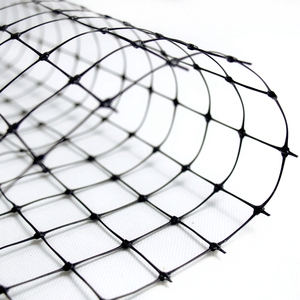
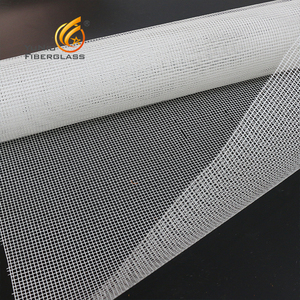
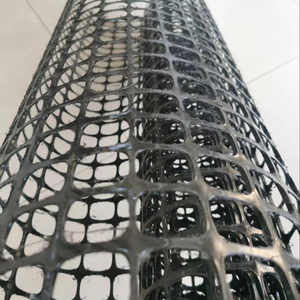
In modern clinical surgery and advanced industrial polymer engineering, the request for synthetic meshes that balance initial mechanical stability with minimized long-term foreign body mass has transformed material science. As a specialized global manufacturer certified under EU MDR (Regulation 2017/745), ISO 13485, and CE standards, our manufacturing facilities produce cutting-edge Poliglecparone Composite Meshes and engineered polymer nets designed specifically for regional requirements across West Africa, with a strong commitment to serving healthcare institutions, agricultural infrastructure, and industrial suppliers in Ghana.
Poliglecparone 25—a synthetic copolymer of glycolide and epsilon-caprolactone—serves as the benchmark fast-absorbing component in partially absorbable composite meshes. When co-knitted with high-tenacity monofilament Polypropylene (PP), it yields a composite mesh structure that exhibits optimal initial stiffness during surgical handling and implantation, followed by predictable hydrolytic absorption. This process leaves behind a lightweight, large-pore polypropylene framework that drastically minimizes chronic tissue reactivity, post-operative stiffness, and shrinkage.
Information Gain Insight: Traditional heavyweight polypropylene meshes present chronic inflammatory risks due to high surface density. By utilizing a hybrid co-knitted Poliglecparone 25 barrier and structural matrix, our custom OEM composite meshes reduce permanent biomaterial mass by up to 60% while maintaining an initial burst pressure rating exceeding 1.1 times pharmacopoeial requirements.
The strategic incorporation of Poliglecparone within a composite mesh matrix relies on precise degradation kinetics. During initial fixation, the absorbable Poliglecparone monofilaments provide structural integrity, facilitating precise laparoscopic or open placement by preventing roll-up and compliance loss. Hydrolytic degradation begins upon exposure to tissue fluids:
Maintains high mechanical tensile strength (>28 N/cm strip tensile force), allowing secure tissue approximation during critical early collagen deposition phases.
Poliglecparone polymer chains undergo ester hydrolysis into non-toxic glycolic and caproic acid metabolites, gradually transferring physiological loads to nascent host collagen.
Complete resorption of the Poliglecparone element leaves a flexible, low-mass non-absorbable PP skeleton, yielding superior abdominal wall compliance and minimal patient discomfort.
Our OEM manufacturing line offers tailored specifications for distributors, hospital groups, and industrial brands in Ghana. Below is a detailed technical summary of our Poliglecparone Composite Mesh and specialized industrial polymer product line:
| Parameter / Metric | Poliglecparone Composite Mesh | Heavy-Duty PP Safety/Geogrid Mesh | High-Density PA6/PE Filter Mesh |
|---|---|---|---|
| Primary Polymer Composition | Poly(glycolide-co-caprolactone) + Monofilament PP | 100% Virgin High-Density PP / Anti-UV Stabilized | Food-Grade Nylon 6 / Polypropylene / PET |
| Absorption Profile | Partially Absorbable (Resorption 56-84 Days) | Non-Absorbable (Weather Resistant) | Non-Absorbable (Chemical Resistant) |
| Burst Strength / Tensile Load | > 180 kPa (1.1× USP Strength Requirement) | Tensile Load 100 GSM – 350 GSM High-Tensile | Precision Micron Rating (20 µm – 100 µm) |
| Pore Pore Size & Geometry | Large Porous Structure (> 1.8 mm post-absorption) | Hexagonal / Biaxial Grid Construction | Uniform Mesh Count Square Weave |
| Biocompatibility / Safety | ISO 10993 Cytotoxicity & Endotoxin Compliant | Non-Toxic, UV Stabilized Anti-Aging | FDA Food Contact & Industrial Water Grade |
| Sterilization Method | Validated Ethylene Oxide (EO) Cycle | N/A or Gamma Radiation Ready | Autoclave & Chemical Disinfection Compatible |
Ghana’s rapid healthcare expansion and agricultural modernization drive a sustained demand for certified polymer materials. Custom OEM manufacturing enables localized tailoring to meet environmental conditions and specific clinical or industrial demands in Accra, Kumasi, Takoradi, Tamale, and surrounding regions.
Teaching hospitals such as Korle Bu Teaching Hospital (Accra) and Komfo Anokye Teaching Hospital (Kumasi) require composite meshes optimized for tension-free repair of groin, ventral, and incisional hernias under tropical conditions.
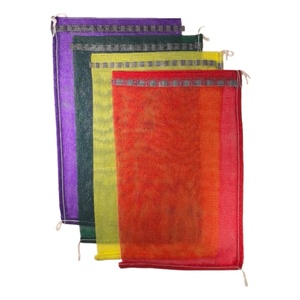
In Ghana’s agricultural hubs (Ashanti, Brong-Ahafo regions), heavy-duty PP mesh bags and anti-bird nets facilitate post-harvest protection and aeration for cocoa beans, onions, and grains, preventing fungal degradation in high humidity.
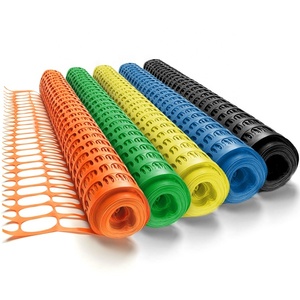
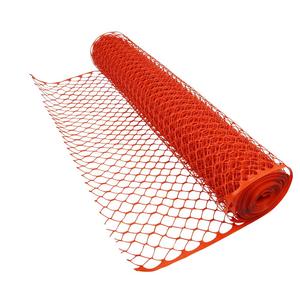
Major municipal infrastructure projects in Greater Accra rely on high-tensile orange safety fence netting and biaxial geogrids for site perimeter control, soil stabilization, and worker safety protection.
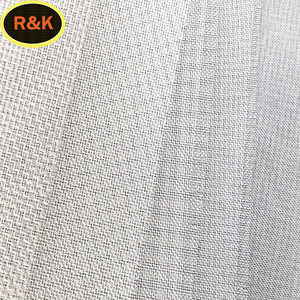
Industrial processing plants along the coastal industrial belt require precision PA6 nylon mesh screens for water purification, beverage filtration, and chemical separation under variable pH levels.
The healthcare and industrial procurement landscape in Ghana is undergoing significant evolution driven by regulatory refinement, infrastructure investment, and increased standards enforcement:
Medical devices, including absorbable surgical sutures and hernia repair composite meshes, imported into Ghana must satisfy strict verification protocols enforced by the Food and Drugs Authority (FDA Ghana) under the Public Health Act, 2012 (Act 851). Our factory provides full technical dossier support—including ISO 13485 certification, EU MDR Technical Documentation, Certificate of Free Sale (CFS), and batch-specific Certificates of Analysis (CoA)—ensuring seamless product registration for Ghanaian importers and distributors.
Ghana's tropical climate features elevated relative humidity and warm ambient temperatures. Medical composite meshes containing absorbable polymers like Poliglecparone require hermetically sealed primary packaging to prevent premature hydrolytic degradation during transit and storage. Our products feature ultra-barrier aluminum foil primary pouches flushed with dry nitrogen, packed in humidity-resistant secondary cartons to guarantee a 5-year validated shelf life.
Initiatives under the Ghana Health Service (GHS) and private hospital networks prioritize affordable, high-quality medical consumables. By offering custom OEM and private-label programs directly from certified manufacturing lines in India, Ghanaian procurement managers can secure premium composite meshes at competitive factory price points, eliminating intermediate markups.
Operating from state-of-the-art cleanroom facilities in Bengaluru, India, our parent manufacturing infrastructure (Unisur Lifecare Pvt. Ltd.) represents a world-class foundation for OEM partnerships. As the second Indian suture manufacturer to secure prestigious EU MDR certification, our commitment to quality spans over 5,000 active product codes.
Extrusion, micro-knitting, needling, and foil sealing take place within ISO Class 7 cleanrooms under strict bioburden controls, adhering to stringent quality assurance frameworks.
Our workforce of over 200 skilled professionals includes more than 70% women in manufacturing and analytical operations, driving meticulous attention to detail and consistent quality output.
We provide end-to-end artwork customization, multi-language labeling (English, French for neighboring West African markets), customized pack sizes, and customized needle combinations.
Find authoritative answers regarding product specifications, shipping logistics, local regulatory registration, and OEM partnership terms for Ghana.
Standard polypropylene mesh is non-absorbable and remains permanently in the body, which can cause chronic foreign-body reaction or tissue stiffness. Poliglecparone composite mesh pairs polypropylene with fast-absorbing Poliglecparone 25. The absorbable component provides initial rigidity for easy surgical handling, then fully resorbs within 56 to 84 days, leaving behind 60% less permanent biomaterial. This dramatically reduces long-term pain and stiffness for patients.
We supply a complete regulatory dossier package required for FDA Ghana registration. This includes our ISO 13485 Certificate, EU MDR Certificate, CE Mark, Certificate of Free Sale (CFS), Sterilization Validation Reports, Biocompatibility Test Reports (ISO 10993), and batch-specific Certificates of Analysis (CoA).
We offer flexible shipping terms including FOB, CIF Tema Port, or CIF Kotoka International Airport (Accra) for urgent air freight shipments. Typical manufacturing lead time for custom OEM brand orders is 3 to 4 weeks post artwork approval, with sea freight transit to Tema Port averaging 20 to 30 days depending on the shipping line.
Yes. Our factory supports full OEM customization. We manufacture pre-cut keyhole, square, rectangular, and plug meshes (e.g., 6x11cm, 10x15cm, 15x15cm, 30x30cm) as well as custom industrial mesh rolls up to 25 meters in length. Box artwork, branding, and instruction inserts can be customized with your company logo and registration details.
Each surgical composite mesh is sealed inside a double-pouch sterile barrier system comprising a tear-open peelable pouch and an outer tropicalized aluminum foil pouch. This protects against moisture ingress and UV exposure. Every batch undergoes validated Ethylene Oxide (EO) sterilization, ensuring a sterility assurance level (SAL) of 10^-6.
Our standard OEM MOQ is designed to accommodate regional healthcare distributors, starting at 500 units for surgical meshes or 50 rolls for industrial/agricultural polymer safety netting. Contact our sales engineering team via the inquiry portal to discuss flexible starter order volumes.
Expand your product catalog in Ghana with certified Poliglecparone Composite Meshes and custom polymer solutions engineered for reliability, safety, and performance.
Inquire Now