Direct Factory Export to Seattle Metropolitan Area Hospitals, Surgery Centers (ASCs), and Medical Device Distributors
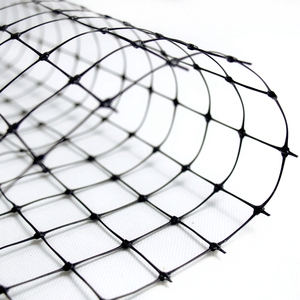
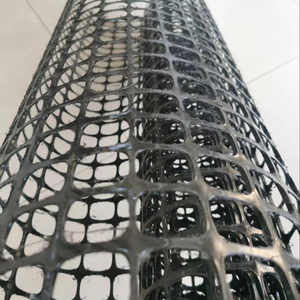
The Seattle metropolitan area—anchored by world-class clinical institutions such as UW Medicine, Swedish Health Services, Virginia Mason Franciscan Health, and Kaiser Permanente Northwest—represents one of the most innovative and quality-rigorous surgical markets in North America. As regional healthcare networks continuously optimize their supply chains to balance clinical performance with total cost of care, sourcing medical devices from premier China manufacturing centers has evolved from simple cost-mitigation into a strategic advantage. China's top absorbable mesh factories now offer unparalleled precision polymer synthesis, advanced cleanroom automated weaving, and rigorous compliance infrastructure capable of meeting FDA 510(k) and ISO 13485 guidelines.
Core Procurement Insight for Pacific Northwest Buyers: Modern surgical mesh procurement in Seattle demands absolute supply chain transparency, validated material bio-compatibility, predictable in-vivo absorption kinetics, and zero-compromise burst pressure specs. Chinese direct-to-hospital exporters are bridging the gap between high OEM cost structures and frontline surgical affordability.
Absorbable meshes rely on synthetic bio-polymers engineered to deliver structural reinforcement during the critical initial phases of tissue healing, followed by gradual, non-inflammatory hydrolytic degradation. Leading Chinese manufacturing partners specialize in three primary polymer profiles:
| Polymer Type | 50% Tensile Support Window | Complete Mass Resorption | Primary Clinical Application in Seattle Health Systems |
|---|---|---|---|
| PGA (Polyglycolic Acid) | 14 - 20 Days | 60 - 90 Days | Subcuticular reinforcement, traumatic liver/spleen packing, short-term fascia support |
| PGLA 910 | 21 - 28 Days | 56 - 70 Days | General hernia repair, pelvic floor temporary scaffolding, pediatric soft tissue approximation |
| PDS / PDO | 35 - 42 Days | 180 - 210 Days | Complex ventral/incisional hernia repair, high-tension orthopedic tendon augmentation |
| PP/PGA Composite | Permanent Core / 21 Day Resorbable Shield | Partially Resorbable | Laparoscopic intraperitoneal hernia repair (TAPP/TEP) with anti-adhesion barrier protection |
To qualify for entry into Pacific Northwest healthcare purchasing groups (GPOs) and Integrated Delivery Networks (IDNs), Chinese absorbable mesh exporters enforce stringent quality control protocols throughout the production lifecycle:
The Puget Sound surgical environment demands specialized equipment adaptations driven by local clinical preferences, surgery center growth, and cost-efficiency mandates.
With outpatient surgery expanding rapidly across Bellevue, Tacoma, and Northgate ASCs, clinical directors are migrating toward high-value direct factory mesh alternatives that slash procedure supply costs by 35–50% without sacrificing tissue compliance or patient safety margins.
Surgeons at leading Seattle trauma centers require ultra-pliable, memory-set absorbable mesh configurations capable of rolling smoothly through 5mm and 8mm laparoscopic trocars during robotic-assisted inguinal and ventral hernia repairs.
Pacific Northwest health systems prioritize suppliers committed to eco-friendly production, recyclable primary foil pouch systems, reduced packaging volume, and ethical labor standards, where over 70% of manufacturing personnel are professionally empowered women.
Streamlined maritime and air freight corridors connect East Asian manufacturing hubs directly to the Northwest Seaport Alliance (Seattle-Tacoma), enabling reliable 14-to-21 day transit times and robust local buffer stock maintenance.
Combining world-class bio-materials R&D with cost-efficient, high-volume production lines calibrated for international medical device brands and private-label buyers.
In-house resin synthesis, filament extrusion, precision warp knitting, ultrasonic trimming, and automated foil sealing ensure 100% control over quality.
Complete branding support—including custom grid layouts, pore configurations, multi-language retail boxes, and sterile pack customization for US distributors.
Comprehensive technical documentation packages (510(k) ready, ISO 13485 certified, CE/EU MDR compliant) to fast-track regional clearance and hospital credentialing.
Over 5,000 active medical device SKUs with cleanroom capacity to produce hundreds of thousands of sterile units per month under guaranteed contract timelines.
Yes. Top Chinese export manufacturers operate under strict FDA Establishment Registrations and maintain active 510(k) clearances for Class II absorbable surgical meshes, ensuring full regulatory compliance for distribution in Washington State and across the US.
Our bio-absorbable PGA and PGLA meshes match or exceed brand-name specifications in tensile strength, tissue drag reduction, pore size uniformity, and hydrolytic absorption timelines. All products undergo 1.1× USP pull-strength testing to ensure identical clinical handling characteristics.
Air-freight shipments directly to Seattle-Tacoma International Airport (SEA) typically arrive within 5–7 business days. Ocean freight container shipments to the Port of Seattle take approximately 14–20 days, backed by local inventory options for contract buyers.
Absolutely. We offer comprehensive OEM/ODM services, including custom laser-cut shapes (e.g., preshaped groin plugs, keyhole meshes), custom pore sizes (20–100 microns), specific weight configurations (GSM), and private-label packaging artwork.
All finished absorbable meshes are terminally sterilized using validated Ethylene Oxide (EO) cycles, achieving a guaranteed 10-6 Sterility Assurance Level (SAL) per ISO 11135 standards. Batch-specific Certificates of Sterility are provided with every delivery.
Our facility operates under a certified ISO 13485 Quality Management System. Raw polymer batches undergo nuclear magnetic resonance (NMR) spectroscopy and viscosity testing, while automated visual sensors inspect mesh geometry during knitting to guarantee zero defects.
Connect directly with our biomedical engineering and export team. Get custom OEM specifications, free evaluation samples for Seattle surgical centers, and competitive tiered pricing.