Explore our premium medical-grade skin staplers, surgical meshes, and specialized industrial containment solutions designed to exceed global pharmacopoeial standards for the West African healthcare supply chain.
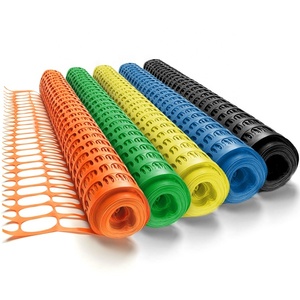
Heavy-duty extruded polyethylene safety netting providing high tensile containment for hospital construction zones, perimeter isolation, and healthcare facility expansions across Nigeria.
Send an Inquiry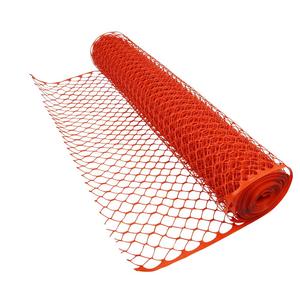
Flexible, UV-stabilized high-density polymer warning barrier mesh designed for fast deployment in emergency medical camps and clinical zone demarcation in tropical West Africa.
Send an Inquiry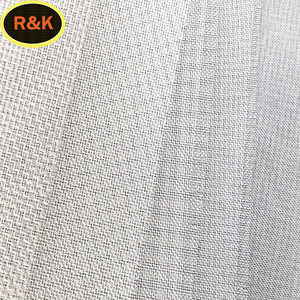
Precision-woven 20 to 100 micron synthetic mesh engineered for pharmaceutical fluid purification, hospital water filtration, and sterile processing laboratory applications.
Send an Inquiry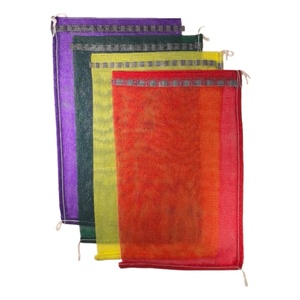
Breathable, high-burst strength monofilament packaging mesh designed for pharmaceutical raw material transport and agricultural logistics throughout West African trade routes.
Send an Inquiry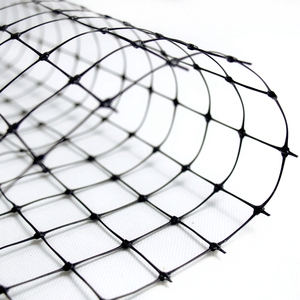
High-tensile biaxially oriented polypropylene netting featuring superior structural integrity under heat and humidity, ideal for perimeter protection and heavy containment.
Send an Inquiry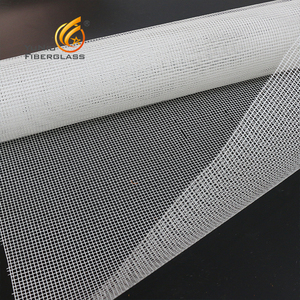
Flame-retardant alkali-resistant woven fiberglass mesh providing thermal stability and structural reinforcement for critical medical infrastructure and laboratory cleanroom walls.
Send an Inquiry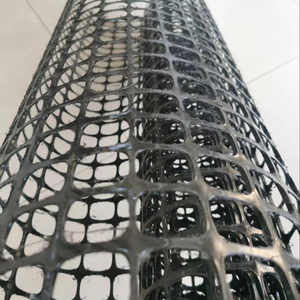
UV-inhibited high-density polymer structural grid designed for sub-base stabilization in healthcare infrastructure building and remote medical facility access projects.
Send an Inquiry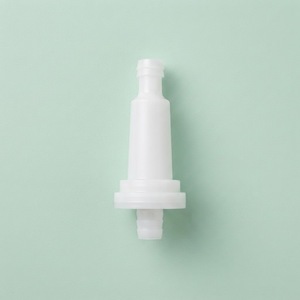
Custom-molded polyamide 6 filter screen components engineered for surgical suction equipment, liquid filtration systems, and medical-grade fluid processing apparatus.
Send an InquiryNigeria’s healthcare architecture is undergoing a rapid systemic transformation. Driven by federal health infrastructure upgrades under the National Health Insurance Authority (NHIA) framework and expanding investments in major urban centers such as Lagos, Abuja, Port Harcourt, and Kano, surgical teams are increasingly prioritizing efficiency, wound tension consistency, and reduced anesthesia duration. Within general surgery, obstetrics (Cesarean delivery skin closure), orthopedic trauma, and emergency laparotomy, traditional manual skin closure with sutures is rapidly giving way to sterile, single-use mechanical skin clips and surgical staplers.
However, West Africa’s tropical maritime and equatorial climates present distinct challenges for surgical device procurement officers. High relative humidity and temperature fluctuations necessitate medical devices that feature absolute sterile barrier integrity, non-corrosive metallurgic composition (specifically implant-grade 316L stainless steel), and predictable spring-back elasticity. Procurement of uncertified or lower-grade wound closure devices poses severe clinical hazards, including staple jamming, incomplete cross-clamping tissue approximation, and premature pull-out under post-operative edema.
To ensure optimal healing without keloid formation—a documented anatomical risk factor in African skin phenotypes—surgical skin staplers must deliver precise rectangular staple formation. High-precision factories utilize medical-grade 316L stainless steel wire engineered to precise tensile yields:
How CE certified skin clips and surgical closure technologies address specific clinical demands across Nigeria’s diverse healthcare sectors.
In high-volume maternity hospitals across Lagos and Ibadan, skin staples provide rapid, uniform alignment of Pfannenstiel incisions during emergency and elective C-sections. This minimizes skin closure time to under 90 seconds, freeing surgical personnel to focus on neonate care and hemostasis control.
Trauma centers operating along major arterial corridors (e.g., Lagos-Ibadan, Abuja-Lokoja) face heavy emergency loads from road traffic accidents. Pre-sterilized disposable skin clips allow surgical teams to rapidly secure lengthy limb and trunk lacerations under emergency debridement protocols.
In remote healthcare initiatives across Northern and Eastern Nigeria, access to continuous autoclave sterilization and specialized electrical equipment may be constrained. Single-use EO-sterilized skin clip units deliver immediate operational readiness with zero re-sterilization dependency.
Comparative technical benchmark for clinical procurement decision-makers evaluating surgical stapler options for hospital supply contracts.
| Parameter / Specification | Standard Skin Stapler (Regular) | Wide Skin Stapler (Wide) | Absorbable Mesh Fastener / Tacker |
|---|---|---|---|
| Wire Material Grade | Medical 316L Stainless Steel | Medical 316L Stainless Steel | Poly(lactic-co-glycolic acid) PLGA |
| Staple Crown Width (Pre-Form) | 12.0 mm ± 0.3 mm | 14.0 mm ± 0.3 mm | N/A (Spiral Pin / Screw Tip) |
| Closed Staple Dimensions | 4.8 mm × 3.4 mm | 6.5 mm × 4.5 mm | 4.1 mm diameter head |
| Wire Diameter / Gauge | 0.55 mm (High Tensile) | 0.60 mm (Heavy Duty Hold) | Resorbable Polymer Profile |
| Tensile Pull-Out Safety | >1.1× USP Requirement | >1.15× USP Requirement | Mechanical Lock Hold >8N |
| Primary Clinical Use in Nigeria | General surgery, pediatric skin, neck/head | Abdominal closure, C-section, orthopedics | Laparoscopic hernia mesh fixation |
| Sterilization Validation | 100% Ethylene Oxide (EO) batch release | 100% Ethylene Oxide (EO) batch release | Gamma Irradiation / EO Validated |
Procuring surgical consumables in Nigeria requires navigating a dynamic regulatory and economic environment. Medical device importers and distributors face key industry trends that dictate successful supply chain integration:
The National Agency for Food and Drug Administration and Control (NAFDAC) has intensified enforcement regarding imported Class II and Class III medical devices. Suppliers must provide complete Technical Files, Free Sale Certificates (FSC), ISO 13485 Quality Management Certificates, and valid CE Certificates under European Union Medical Device Regulation (EU MDR 2017/745). Factory-direct support with pre-compiled regulatory dossiers drastically reduces registration lead times at NAFDAC’s Lagos headquarters.
Maritime transport to Lagos (Apapa or Tin Can Island ports) exposes cargo to elevated heat and relative humidity exceeding 85%. Standard paper packaging runs the risk of moisture ingress, causing package softening and seal breakdown. Premium OEM suppliers employ medical-grade Tyvek® sealed within heavy-gauge aluminum foil outer pouches. This multi-layered barrier guarantees a 5-year sterile shelf life, even when stored in non-air-conditioned central medical stores across regional health boards.
With foreign exchange dynamics driving healthcare cost sensitivity in Nigeria, hospital administrators are evaluating the overall cost-efficiency of surgical procedures. While the upfront cost of a disposable skin stapler exceeds that of a single suture strand, the reduction in operating room time (saving up to 20 minutes per major case) yields substantial savings in surgical team overhead, anesthesia usage, and bed-turnover times. Furthermore, precise staple placement minimizes wound dehiscence and surgical site infection rates, protecting facilities against costly secondary hospitalizations.
Built upon decades of cleanroom manufacturing excellence and operating as a world-class surgical device exporter, our production facilities integrate rigorous testing protocols to empower healthcare providers throughout Africa.
Direct technical and logistical answers addressing skin clip procurement, shipping, and quality assurance for the Nigerian market.
Expand your hospital supply catalog with CE certified, NAFDAC-dossier-ready surgical skin staplers, medical meshes, and specialized surgical consumables. Contact our international sales team for factory-direct FOB/CIF pricing, sample kits, and OEM distribution terms.
Send an Inquiry