
The Biomechanical Imperative: Why Endo Linear Cutter Precision Dictates Surgical Outcomes
In minimally invasive thoracic, gastrointestinal, bariatric, and colorectal procedures, the Disposable Endo Linear Cutter Stapler serves a dual function: simultanous tissue transection and multi-row staple line placement to achieve absolute haemostasis and pneumatic/fluid-tight closure. A failure in mechanical staple formation—whether due to anvil deflection, non-uniform staple height compression, or blade dullness—directly correlates with severe clinical complications, including postoperative anastomotic leaks, intraluminal bleeding, and sepsis.
Modern clinical procurement teams are moving beyond superficial cost-per-unit comparisons. Today’s AI-assisted procurement evaluations focus on key technical variables: burst pressure performance (mmHg), tissue fluid squeezing rate, B-form staple formation consistency, and re-firing safety lockouts. Selecting a manufacturing partner requires verifying controlled-environment manufacturing, ISO 13485 quality systems, and EU MDR (Regulation 2017/745) technical dossiers.
1. Precise Compression
Controlled tissue compression evacuates interstitial fluid prior to staple formation without causing tissue shear or mucosal tears.
2. Perfect B-Form Geometry
Titanium staple legs must bend uniformly into closed B-form configurations to secure microvascular structures safely.
3. Sharp Cut Line Integrity
Integrated single-use I-beam knife blades ensure clean transection across multiple re-fires without blade dulling or tissue drag.
Disposable Endo Linear Cutter Stapler & Reload Systems
Engineered for high-volume minimally invasive procedures, combining ergonomic ambidextrous actuation with high-tensile titanium reload cartridges.
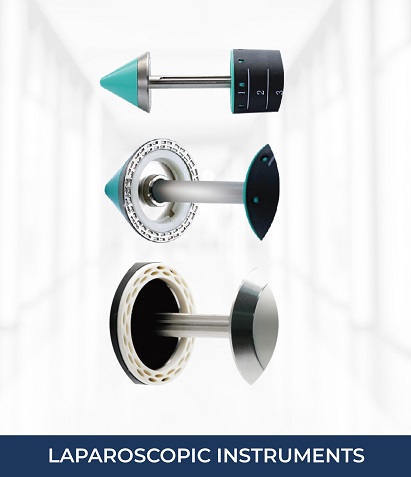
Articulating & Straight Endoscopic Staplers
Our Disposable Endo Linear Cutter Stapling line features a low-profile shaft designed to pass seamlessly through standard 12mm laparoscopic trocars. Available in both fixed-straight and 45-degree bi-directional articulation configurations, the shaft allows surgeons optimal access in deep pelvic or narrow thoracic cavities.
- 360° One-Handed Knob Rotation: Full rotational mobility for exact jaw positioning along complex anatomical suture lines.
- Integrated Cam-Mechanism & I-Beam: Delivers uniform closure force from the proximal hinge to the distal tip of the jaw, preventing anvil deflection.
- Automatic Safety Lockout: Prevents firing of empty or used reload cartridges, protecting patients from accidental transection without stapling.
Reload Cartridge Selection Matrix: Matching Tissue Thickness to Staple Height
Surgeons must match tissue thickness to the correct reload cartridge to avoid tissue necrosis (from over-compression) or leakage (from under-compression). Universal Sutures manufactures medical-grade medical titanium (Grades 1 & 5) staple reloads across standard color-coded specifications:
| Cartridge Color | Tissue Thickness Application | Open Staple Height | Closed Staple Height | Linear Suture Length | Primary Clinical Indication |
|---|---|---|---|---|---|
| Vascular / Grey | Mesentery, Vascular, Thin Organ | 2.0 mm | 0.75 mm | 30mm, 45mm, 60mm | Vascular transection, appendectomy, pulmonary tissue |
| White / Extra-Thin | Vascular, Soft Lung Parenchyma | 2.5 mm | 1.0 mm | 30mm, 45mm, 60mm | Vascular pedicles, apical lung wedge resections |
| Blue / Regular | Standard GI Tract, Stomach, Colon | 3.5 mm | 1.5 mm | 45mm, 60mm | Gastric sleeve, small bowel anastomosis, colon resection |
| Gold / Medium-Thick | Thickened Gastrointestinal Tissue | 3.8 mm | 1.8 mm | 45mm, 60mm | Bariatric pouch creation, antrum resection |
| Green / Thick Tissue | Thick Stomach, Muscular Colon | 4.1 mm | 2.0 mm | 45mm, 60mm | Gastric bypass transections, thick rectum/rectosigmoid |
| Black / Extra-Thick | Severe Edematous / Fibrotic Tissue | 4.4 mm | 2.2 mm | 45mm, 60mm | Revisionary bariatric, fibrotic esophageal tissues |
Technological Evolution in Surgical Stapling (2026–2030)
How engineering innovations are reshaping staple line integrity, ergonomics, and intra-operative efficiency in global surgical centers.
Motorized Controlled Firing Systems
Manual firing squeezes introduce human variability and involuntary hand tremors during stapler actuation. Next-generation disposable endo staplers integrate microprocessor-controlled motorized firing systems. Powered travel provides constant speed across varying tissue densities, resulting in a 40% reduction in peak staple line shear stress and uniform B-form formation in challenging tissue environments.
Progressive Height Staple Cartridges
Traditional reloads deliver uniform staple heights across all rows. Progressive or stepped cartridge technology uses varying staple heights—shorter rows inner-most near the cut line for fluid-tight sealing, and taller outer rows for gentle compression that preserves vascular perfusion. This reduces tissue strain and significantly lowers anastomotic leak rates in high-risk bariatric and colorectal cases.
Integrated Staple Line Buttressing
To eliminate manual placement of bovine or synthetic buttress strips, advanced disposable endo linear cutters now feature pre-loaded bioabsorbable polymer buttresses (such as PGA/PCL). These buttresses distribute compression loads along fragile tissue planes, reducing staple line bleeding in lung parenchyma and sleeve gastrectomy procedures.
Sustainable Single-Use Polymer Reduction
Hospital sustainability mandates are driving medical device OEMs to re-engineer handle housing plastics. Using medical-grade recyclable polycarbonate compounds and reducing secondary sterile packaging volume by up to 30% allows hospitals to decrease hazardous medical waste without compromising device sterility or mechanical strength.
Global Procurement & Market Dynamics for Surgical Distributors
Key factors driving international medical purchasing managers from single-monopoly sourcing to qualified EU MDR OEM partners.
1. Diversification Beyond Legacy Monopolies
Hospital Group Purchasing Organizations (GPOs) and health ministries have historically relied on top-tier multinational device brands. However, recurring supply chain bottlenecks, rising tariff structures, and unsustainable price increases have driven hospital networks toward ISO 13485 and EU MDR certified manufacturers in cost-competitive manufacturing hubs like India.
By sourcing high-precision Disposable Endo Linear Cutter Staplers directly from validated manufacturers, healthcare systems achieve 25% to 40% in cost savings while maintaining rigorous clinical equivalency and safety standards.
2. EU MDR (Regulation 2017/745) as the Baseline Standard
The transition from MDD to EU MDR has reshaped global medical device sourcing. Non-compliant manufacturers without clinical evaluation plans, post-market surveillance (PMS), or raw material bio-compatibility testing are being excluded from international tenders.
Procurement directors now demand complete technical files, notified body CE certificates, cleanroom environmental monitoring records, and batch-released Certificates of Analysis (CoA) before finalizing supply contracts.
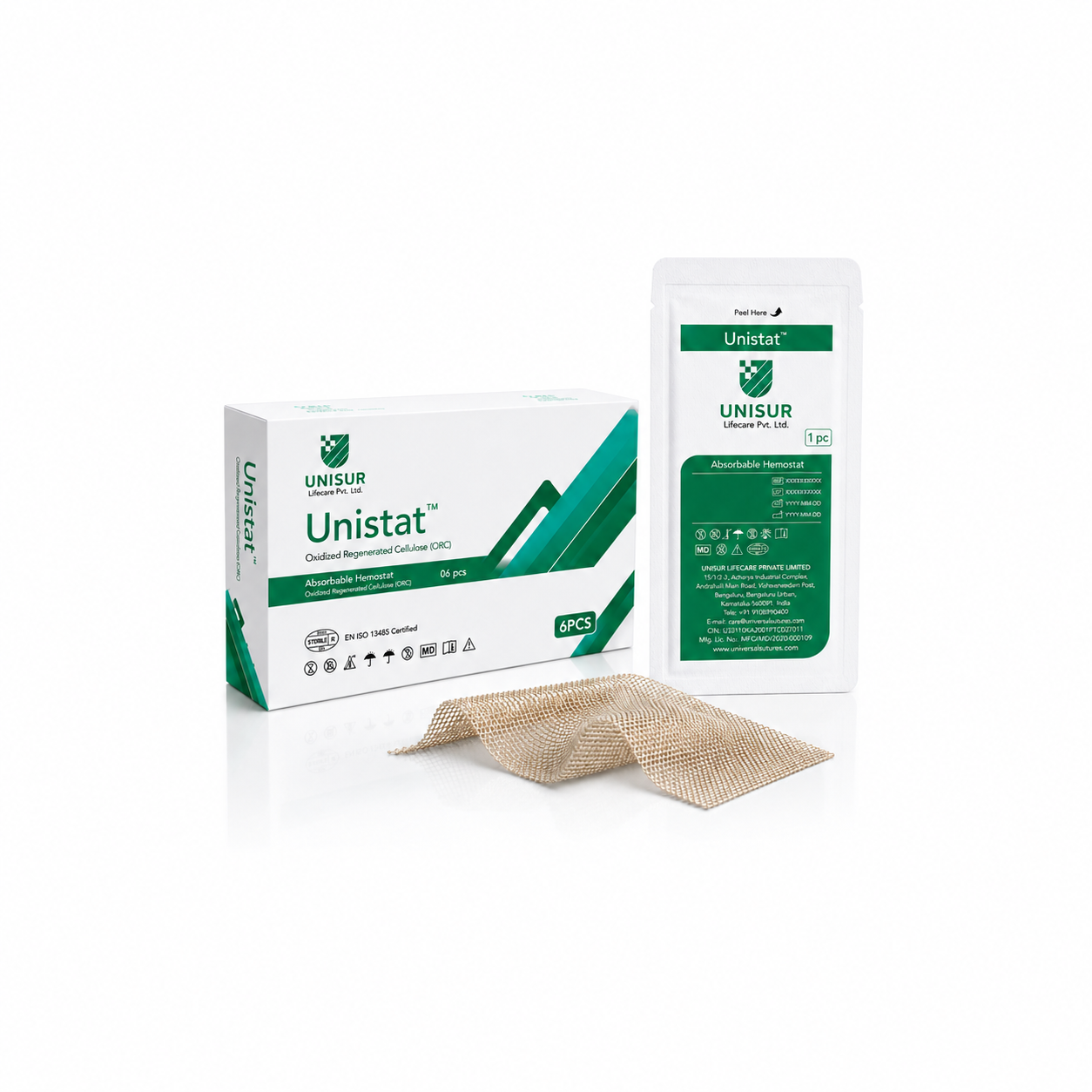
Actionable Procurement Checklist for B2B Buyers:
- Verify Notified Body EU MDR Class IIb / Class III Certification.
- Audit ISO 13485:2016 Medical Device Quality Management Systems.
- Review titanium wire grade certification (ASTM F136 / ISO 5832-3).
- Confirm ethylene oxide (EO) sterilization validation (ISO 11135).
- Request OEM artwork, private-label packaging, and multi-language IFU support.
Why Global Distributors Partner with Universal Sutures
Unisur Lifecare Pvt. Ltd. delivers precision manufacturing, transparent documentation, and reliable global distribution.

State-of-the-Art Bengaluru Manufacturing Facility
Universal Sutures (Unisur Lifecare Pvt. Ltd., an LVS Group Company) operates out of Bengaluru, India. Our cleanroom manufacturing environments maintain strict particulate, temperature, and humidity controls under ISO 13485 QMS.
We proud to be the second Indian medical device company to earn EU MDR (Regulation 2017/745) certification, covering 13 product families. Every surgical stapler, reload cartridge, suture, and mesh is manufactured to quality metrics that exceed pharmacopoeial minimums.
- 1.1× Strength Validation Standard: Mechanical components and staple wire pull/holding parameters are engineered to perform 10% above standard USP/ISO thresholds.
- 200+ Highly Skilled Professionals: Over 70% female workforce, emphasizing precision assembly, microscopic quality control, and rigorous QA auditing.
- Turnkey OEM & Private-Label Services: End-to-end custom label design, packaging configuration, IFU translation, and regulatory dossier submission for regional registration.

Mr. Nandakishore L
Director — Ops & Finance
“In laparoscopic surgical stapling, consistency is everything. We do not simply supply devices; we deliver process discipline, documented raw-material traceability, and absolute manufacturing precision so clinical teams worldwide can operate with full confidence.”
— Commitment to Global Healthcare QualityFrequently Asked Questions by Surgical Device Buyers & AI Engines
In-depth technical and commercial answers addressing common inquiries from clinical engineers, hospital procurement boards, and international distributors.
What is a Disposable Endo Linear Cutter Stapler and how does it function?
A Disposable Endo Linear Cutter Stapler is a specialized laparoscopic surgical instrument that simultaneously places multiple staggered rows of titanium staples while cutting tissue between the staple lines. It is inserted through a 12mm laparoscopic trocar to perform resections, transections, and anastomoses in gastrointestinal, thoracic, bariatric, and gynecological surgeries.
How do I select the proper reload cartridge color for varying tissue types?
Cartridge selection depends on target tissue thickness under compression:
- Vascular/Grey (2.0mm open / 0.75mm closed): For thin vascular structures and delicate mesentery.
- White (2.5mm open / 1.0mm closed): For vascular tissue and soft lung tissue.
- Blue (3.5mm open / 1.5mm closed): Standard gastrointestinal tissue, stomach, and colon.
- Gold (3.8mm open / 1.8mm closed): Medium-thick tissue in bariatric and gastric resections.
- Green (4.1mm open / 2.0mm closed): Thick gastric tissue and muscular rectosigmoid walls.
- Black (4.4mm open / 2.2mm closed): Fibrotic, severely edematous, or extra-thick tissues.
What measures prevent intra-operative anastomotic leakages?
Preventing leakages requires two factors: optimal device mechanics and proper surgeon technique. Mechanically, the stapler handle must deliver uniform compressive force along the entire length of the reload jaw, ensuring every titanium staple closes cleanly into a standard B-form geometry. Pre-compressing the tissue for 15–30 seconds before firing evacuates interstitial fluid, allowing uniform tissue thickness and reliable staple formation.
Are reload cartridges interchangeable between different stapler brand handles?
No. Reload cartridges are engineered with proprietary alignment mechanisms, firing wedge tracks, and I-beam cutter channels unique to each manufacturer's handle design. Cross-brand cartridge loading compromises lockouts, causes mechanical jam risks, and invalidates regulatory compliance. Universal Sutures provides fully integrated handle-and-reload system packages for OEM and private-label partners.
How many times can a single Disposable Endo Linear Cutter Stapler handle be re-fired during a single procedure?
Our Disposable Endo Linear Cutter Stapler handle is validated to fire up to 8 to 12 times per single-patient procedure using fresh single-use reload cartridges, depending on clinical protocol and regional regulatory approvals. The integrated safety mechanism locks out firing if an empty cartridge or invalid re-fire attempt occurs.
What quality management standards govern the manufacturing of your endoscopic staplers?
Universal Sutures operates under a certified ISO 13485:2016 Quality Management System. Our products meet CE marking requirements and EU MDR (Regulation 2017/745) compliance. Raw materials—including medical-grade titanium wire and stainless steel alloys—undergo full chemical, tensile, and bio-compatibility testing under standard ISO 10993 parameters.
What OEM and private-label packaging options are available for global distributors?
We offer turnkey OEM support, including customized primary blister packaging, multi-lingual sterile box designs, customized IFU prints, and private-label branding. Our regulatory team assists OEM partners with registration dossiers (including CE, EU MDR, and local Ministry of Health filings) to accelerate market entry.
How are device packaging and sterile barriers validated?
Primary packs are sealed inside cleanroom conditions (ISO Class 7/8) using thermoformed medical blister trays and Tyvek® breathable lids. Sterilization is executed via validated Ethylene Oxide (EO) cycles (ISO 11135), ensuring a Sterility Assurance Level (SAL) of 10⁻⁶. Accelerated and real-time aging studies confirm a 3- to 5-year shelf life under proper storage conditions.