Explore our certified portfolio of ultra-high molecular weight polyethylene (UHMWPE) sutures, non-absorbable constructs, and specialty orthopedic solutions.
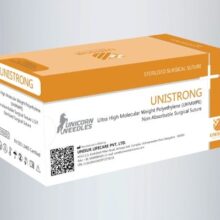
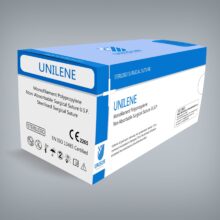
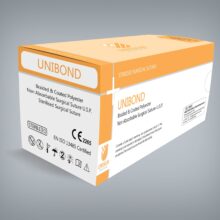
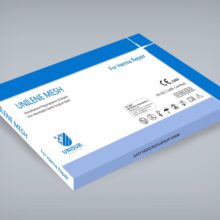
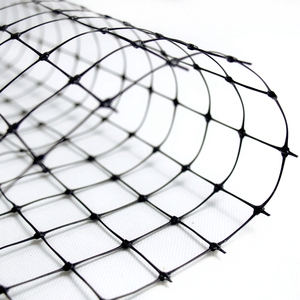
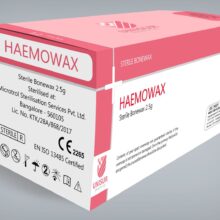
In modern orthopedic repair, soft-tissue-to-bone fixation demands surgical sutures capable of sustaining extreme physiological loads without undergoing structural failure or excessive elongation. Ultra-High Molecular Weight Polyethylene (UHMWPE) sutures represent the pinnacle of non-absorbable suture technology. Synthesized from linear, unbranched polyethylene chains with molecular weights typically ranging between 3.5 to 6 million grams per mole (g/mol), UHMWPE fibers exhibit exceptional polymer orientation along the fiber axis.
When engineered into medical-grade braided constructs, UHMWPE offers a tensile strength per unit mass that is up to 15 times greater than structural steel and significantly outperforms traditional braided polyethylene terephthalate (PET) polyester sutures. This extreme tenacity allows orthopedic surgeons to perform arthroscopic rotator cuff repairs, anterior cruciate ligament (ACL) reconstructions, and Achilles tendon repairs using smaller diameter threads while achieving superior mechanical stability.
Technical Information Gain: Unlike standard non-absorbable materials, UHMWPE possesses a low coefficient of friction paired with extraordinary abrasion resistance. This unique tribological profile minimizes "gigli saw" tissue cutting (cheese-wiring effect) during heavy knot tensioning while resisting degradation under continuous cyclic dynamic loading.
To assist procurement directors and biomedical engineering teams in evaluating suture performance, the table below provides empirical physical data comparing UHMWPE constructs against standard surgical grade polymers:
| Polymer Material Metric | UHMWPE (UNISTRONG™) | Polyester / PET (UNIBOND™) | Polypropylene (UNILENE®) | Surgical Stainless Steel |
|---|---|---|---|---|
| Tensile Strength (GPa) | 3.0 – 3.5 GPa | 0.8 – 1.1 GPa | 0.5 – 0.7 GPa | 1.5 – 2.0 GPa |
| Elastic Modulus (GPa) | 100 – 120 GPa | 12 – 14 GPa | 8 – 10 GPa | 200 GPa |
| Elongation at Break (%) | 3.5% – 5.0% | 15% – 20% | 25% – 35% | 30% – 40% |
| Knot Security / Slip Resistance | High (Co-braid tracer enabled) | High (Silicone coated) | Moderate (Memory dependent) | Extreme (Mechanical bend) |
| Tissue Reactivity Profile | Extremely Low / Inert | Low / Mild Fibrotic | Extremely Low / Inert | Negligible |
| Abrasion Resistance Index | Exceptional (Grade 5/5) | Moderate (Grade 3/5) | Low-Moderate (Grade 2/5) | High (Grade 4/5) |
Universal Sutures (operating under Unisur Lifecare Pvt. Ltd.) stands as a globally recognized medical device manufacturer headquartered in Bengaluru, India. Operating from ISO Class 7 and Class 8 cleanroom facilities, our production lines operate under a stringent ISO 13485 Quality Management System. Notably, Unisur Lifecare achieved international distinction as the second Indian medical device manufacturer to earn full EU MDR (Regulation 2017/745) certification, encompassing 13 distinct product families.
Every single batch of UHMWPE sutures, monofilament polypropylene, and specialty hernia repair mesh is batch-tested to exceed standard United States Pharmacopeia (USP) and European Pharmacopoeia (EP) specifications. Our internal quality protocol enforces a 1.1× USP tensile strength and needle attachment pull threshold, providing surgical teams with an uncompromised safety margin during high-load intra-operative maneuvers.
A critical weak point in any surgical suture-needle combination is the swage joint where the thread joins the metal needle shank. Universal Sutures employs micro-drilled-end needles manufactured from AISI 300 and 400 series stainless steel. Utilizing automated precision crimping technology, the joint achieves uniform circumferential compression, preventing needle detaching or thread slippage under high tensile forces.
Additionally, specialized longitudinal ribbing along the needle body improves holder stability within the surgeon's needle driver, preventing rotational slippage during deep pelvic or tight joint space passages.
As healthcare systems, group purchasing organizations (GPOs), and private label brand owners adapt to evolving clinical demands, the procurement landscape for high-performance surgical textiles is undergoing three major structural shifts:
Pure UHMWPE monofilament or braid can exhibit a slippery feel that requires surgeons to throw additional knot throws to guarantee security. Future procurement contracts increasingly mandate co-braided constructs—weaving high-tenacity UHMWPE fibers together with textured polyester (PET) or long-term absorbable polymers such as Polydioxanone (PDS) or Poly-L-Lactide (PLLA). This hybrid architecture retains UHMWPE's immense break strength while substantially boosting knot tactile feedback, reducing knot stack height, and lowering post-operative soft-tissue irritation.
In modern arthroscopic and robotic procedures, visual clarity through fluid-filled joint spaces under endoscopic lighting is paramount. B2B buyers are prioritizing suppliers capable of co-braiding biocompatible, contrasting color filaments (such as FDA-approved D&C Violet No. 2, D&C Blue No. 6, or natural white) into distinct pattern configurations (e.g., Cobra, Herringbone, or Spiral Tracers). This allows surgeons to effortlessly differentiate suture ends during multi-anchor rotator cuff or labral repair constructs.
With the transition period for Regulation (EU) 2017/745 (EU MDR) nearing enforcement deadlines, European hospital buyers and OEM distributors are phasing out suppliers who rely solely on legacy MDD CE certificates. Global distributors require complete Technical Documentation Files (TDF), robust Post-Market Surveillance (PMS) data, and validated Clinical Evaluation Reports (CER). Partnering with an MDR-certified manufacturer eliminates regulatory disruption and guarantees continuity of supply across international markets.
The global sports medicine and orthopedic soft tissue repair market is projected to expand significantly over the next decade, driven by an aging active population and advancements in minimally invasive surgical techniques. Key development vectors shaping UHMWPE suture engineering include:
Vertically integrated manufacturing, regulatory rigor, and tailor-made OEM solutions for international medical device distributors.
ISO 13485 QMS and EU MDR certified across 13 device families. Ready-to-file technical dossiers for rapid country registration in Europe, LATAM, Asia-Pacific, and the Middle East.
Complete customization of braid geometries, needle profiles, tracer colors, primary foil packaging, multi-language artwork, and retail shelf-ready cartons under your brand identity.
Every lot undergoes rigorous mechanical testing for tensile pull and needle crimp retention, ensuring performance that consistently exceeds pharmacopoeial minimums.
Beyond finished goods, we support strategic partners with cleanroom layouts, braiding/needling equipment procurement, operator training, and process validation consulting.
Our Bengaluru manufacturing plant proudly employs a workforce comprised of over 70% skilled female technicians, operating under strict occupational health, safety, and zero-child-labor policies.
Distributing high-quality medical devices to over 60 countries across continents, backed by agile supply chain management, validated packaging, and responsive customer care.
Essential guidance for medical buyers, regulatory directors, and OEM procurement managers.
UHMWPE delivers more than three times the tensile strength of standard polyester while exhibiting minimal fatigue elongation under dynamic cycling. Its low friction profile reduces tissue drag during suture passage, while its resistance to fraying under high-tension knot tying ensures long-term structural integrity in demanding orthopedic joints like the shoulder and knee.
All UHMWPE suture shipments leave our Bengaluru facility with a complete Certificate of Analysis (CoA) detailing lot-specific tensile strength, needle attachment pull force, sterility assurance level (SAL 10⁻⁶ via EO sterilization), and bacterial endotoxin testing (LAL test). Production operations strictly comply with ISO 13485:2016 standards and hold official CE Marking under EU MDR Regulation 2017/745.
Yes. Our engineering division offers complete OEM customization. We can co-braid UHMWPE filaments with colored polyester or PDS fibers to create custom spiral, criss-cross, or stripe tracer patterns. Furthermore, we match sutures with taper-point, cutting, reverse-cutting, or diamond-point needles in various radii and lengths according to your surgical specification.
Standard pharmacopoeial guidelines (USP/EP) define minimum acceptable break forces for each suture size. Universal Sutures enforces an internal quality threshold where every manufactured lot must test to at least 110% (1.1 times) of the required USP value. This deliberate safety margin protects surgeons against unexpected thread snap during aggressive knot seating or heavy physiological tissue tension.
Our standard primary pack utilizes hermetically sealed aluminum foil pouches that preserve fiber flexibility and guarantee sterile barrier integrity. Secondary packaging includes medical-grade Tyvek/film pouches and customizable shelf cartons formatted with full barcoding (UDI compliant), lot tracking numbers, manufacturing dates, and local language labeling.
Lead times for standard catalog formulations are typically 3 to 4 weeks upon order confirmation. Custom OEM private-label projects—involving specialized needle tooling, custom packaging artwork, or novel tracer braiding—generally require 6 to 8 weeks for initial batch clearance. MOQ depends on specific SKU configurations; please connect directly with our sales engineering team via live chat for a tailored project quotation.
Whether you require standard clinical supplies, custom OEM private labeling, or bulk sterile contract manufacturing, our expert team is standing by to support your global procurement needs.