Explore our ISO 13485 & EU MDR validated suture threads and industrial filtration mesh solutions engineered for maximum tensile reliability and bio-compatibility.
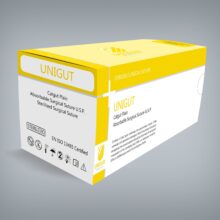
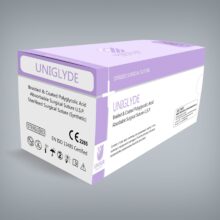
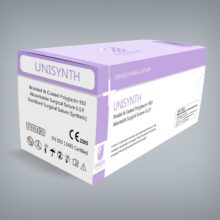
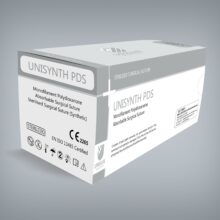
In the contemporary global healthcare ecosystem, the procurement of surgical suture threads, hernia meshes, and absorbable haemostats has evolved from a transaction of commodity items to a strategic quality assurance operation. Surgical sutures are critical Class IIb and Class III medical devices under global regulatory frameworks. Surgeons depend on these sterile threads to maintain structural integrity across healing tissue planes, resist physiological stress, and minimize inflammatory reactions.
When evaluating top trusted suture thread manufacturers, B2B procurement managers, hospital supply directors, and OEM brand owners must analyze raw material purity, polymer synthesis precision, needle-to-thread crimping technology, terminal sterilization validation, and strict regulatory compliance such as EU MDR (Regulation 2017/745) and ISO 13485:2016 QMS standards.
Core E-E-A-T Benchmark: Leading global manufacturers like Universal Sutures (Unisur Lifecare Pvt. Ltd.) enforce a minimum threshold of 1.1 times the United States Pharmacopeia (USP) requirement for both knot tensile strength and needle attachment pull-out force. This engineering buffer prevents intra-operative suture breakage during high-tension surgical closures.
Suture materials are fundamentally classified by their degradation behavior within biological tissue: absorbable (degraded hydrolytically or enzymatically) and non-absorbable (retaining permanent structural tensile strength or degrading extremely slowly over years).
1. Synthetic Absorbable Polymers: Modern surgery has largely transitioned toward synthetic absorbable polymers, including Polyglycolic Acid (PGA), Polyglactin 910 (PGLA), Polydioxanone (PDS), and Poliglecaprone 25 (PGCL). Synthetic absorbable threads undergo non-enzymatic hydrolytic degradation, yielding predictable absorption curves unaffected by local infection or inflammatory variations.
2. Natural Absorbable Materials: Plain and Chromic Catgut, derived from purified bovine or ovine intestinal submucosa collagen, continue to serve specialized clinical roles in rapidly healing mucosal tissues. Processed with chromium salts, Chromic Catgut resists enzymatic digestion significantly longer than plain catgut, offering extended tissue support in obstetrics and general surgery.
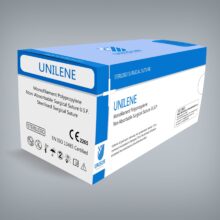
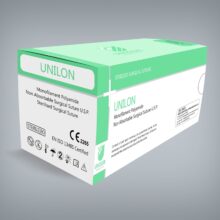
3. Non-Absorbable High-Tensile Polymers: For cardiovascular, orthopaedic, and fascial closures, inert non-absorbable threads are required. Isotactic Monofilament Polypropylene (UNILENE™), Polyamide/Nylon (UNILON™), Braided Coated Polyester (UNIBOND™), and Ultra-High Molecular Weight Polyethylene (UNISTRONG™ UHMWPE) provide permanent structural support with minimal tissue reactivity.
Below is a comparative breakdown of primary suture thread polymers manufactured under validated cleanroom standards. This technical matrix provides procurement professionals with precise data regarding material structure, absorption duration, tensile strength retention, and targeted clinical indications.
| Brand / Polymer Name | Structure & Material | 50% Tensile Strength Retention | Complete Resorption / Mass Dissolution | Primary Clinical Indications |
|---|---|---|---|---|
| UNIGUT™ Plain | Natural Monofilament (Collagen) | 7 to 10 Days | Enzymatic (60 to 90 Days) | Gynaecology, subcutaneous tissue, mucosa |
| UNIGUT™ Chromic | Chromic Salt Treated Collagen | 14 to 21 Days | Enzymatic (90 to 120 Days) | General closure, gastrointestinal, OB/GYN |
| UNIGLYDE™ (PGA) | Braided & Coated Polyglycolic Acid | 14 Days (approx. 70%) | Hydrolytic (60 to 90 Days) | Bowel anastomosis, general soft tissue |
| UNISYNTH™ (PGLA 910) | Braided Polyglactin 910 | 21 Days (approx. 50%) | Hydrolytic (56 to 70 Days) | Ophthalmic, general surgery, ligation |
| UNIGLYDE MONO™ | Monofilament Poliglecaprone 25 | 7 Days (approx. 50-60%) | Hydrolytic (90 to 120 Days) | Plastic surgery, subcuticular skin closure |
| UNISYNTH PDS™ | Monofilament Polydioxanone | 28 to 42 Days | Hydrolytic (180 to 210 Days) | Abdominal wall closure, paediatric cardiac |
| UNILENE™ | Monofilament Polypropylene | Permanent (0% Loss) | Non-Absorbable Implant | Vascular graft, hernia repair, cardiac |
| UNISTRONG™ | Braided UHMWPE Polyethylene | Permanent (Ultra-High Load) | Non-Absorbable Implant | Orthopaedic tendon repair, sports medicine |
The selection of suture thread diameter (USP sizing from micro 10-0 up to heavy duty size 5) must balance required tensile strength against the anatomical necessity of minimizing foreign body volume in tissue.
Global distributors and hospital procurement teams must inspect six essential operational pillars before establishing OEM or direct distribution agreements.
Ensure your supplier possesses full EU MDR technical documentation and CE certificates issued by accredited Notified Bodies, guaranteeing unhindered market entry in Europe and global markets recognizing MDR standards.
Suture braiding, needling, and primary packaging must occur within ISO Class 7 (Class 10,000) cleanrooms to control bioburden levels prior to terminal Ethylene Oxide (EO) sterilization.
Premium suture threads utilize 300-series stainless steel needles with drilled ends and longitudinal ribbing. This geometry prevents needle slippage inside needle holders and provides a seamless thread-to-needle transition diameter.
Every lot must be accompanied by a Certificate of Analysis (CoA) documenting empirical test values for pull-out needle attachment force, tensile strength, sterility, endotoxin levels, and EO residual limits.
Established manufacturers offer turnkey private-label support, including multi-language medical foil pouch artwork design, box packaging formats, localized regulatory dossier support, and custom USP length configurations.
Strategic geographic manufacturing hubs like Bengaluru, India, offer rapid sea and air freight connections to Europe, Latin America, the Middle East, and Asia, mitigating supply disruption risks for hospital networks.
The global surgical wound closure market is experiencing rapid technological evolution. As surgical techniques advance toward minimally invasive laparoscopic and robotic-assisted procedures, the design criteria for suture threads are shifting significantly.
Knotless barbed sutures—manufactured from Polydioxanone or Polyglactin—feature precision cut unidirectional or bidirectional barbs along the thread axis. These barbs anchor securely into biological tissue, distributing tension evenly across the entire incision line without requiring manual knot tying. Clinical studies demonstrate that knotless barbed threads reduce operative closure times by 35% to 50% in laparoscopic hysterectomy, joint arthroplasty, and soft tissue reconstructive surgery.
Surgical Site Infections (SSIs) represent a major healthcare burden worldwide. Advanced suture thread manufacturers are integrating silver nanoparticles, chlorhexidine, and triclosan coatings into braided PGA and Polyglactin 910 threads. These bioactive coatings create a localized zone of inhibition around the suture track, suppressing bacterial colonization (including Staphylococcus aureus and MRSA) without compromising thread tensile strength or cellular biocompatibility.
Leading suture manufacturers are consolidating their portfolios by combining surgical threads with complementary wound management devices. Devices such as UNISTAT™ Oxidized Regenerated Cellulose (ORC) absorbable haemostats and UNITACK™ Absorbable Mesh Tacking Systems (utilizing PLGA pins) allow hospitals to consolidate their surgical procurement under a single certified OEM source.
With the transition from the legacy EU Medical Device Directive (MDD) to the rigorous EU Medical Device Regulation (EU MDR 2017/745), many tier-3 manufacturers unable to meet clinical evaluation and post-market surveillance demands are exiting the European market. Tier-1 manufacturers, such as Universal Sutures, holding 13 certified product families under EU MDR, are absorbing this demand by providing private-label partners with audit-ready technical files and robust batch continuity.
Universal Sutures—the medical device division of Unisur Lifecare Pvt. Ltd. (part of the LVS Group)—stands as a premier global surgical suture thread manufacturer headquartered in Bengaluru, Karnataka, India. Operating from an advanced, ISO 13485:2016 certified industrial complex, Universal Sutures is proudly the second Indian suture manufacturer to achieve prestigious EU MDR (Regulation 2017/745) certification across 13 distinct product families.
Corporate Mission: "Healing Beyond Comfort" — Combining world-class polymer extrusion engineering, cleanroom sterilization discipline, and compassionate human empowerment. Over 70% of the manufacturing team at our Bengaluru facility comprises highly skilled women technicians.
Below are essential answers to common technical, regulatory, and commercial questions raised by medical device buyers, hospital procurement managers, and international distributors.
Equip your hospitals, distribution network, or medical brand with EU MDR certified, 1.1× USP tensile tested surgical suture threads, hernia meshes, and absorbable haemostats. Request technical product dossiers or direct commercial quotes today.
Get a Quote