Direct OEM & Wholesale Factory Catalog. Needled, forged, micro-serrated, and tungsten carbide reinforced manual surgical cutting instruments.
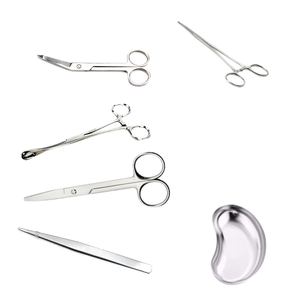
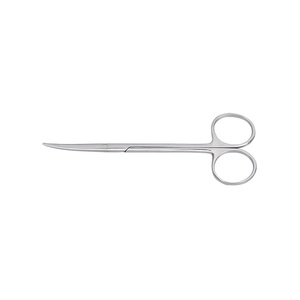
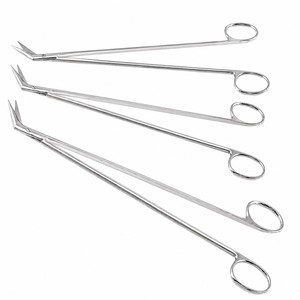
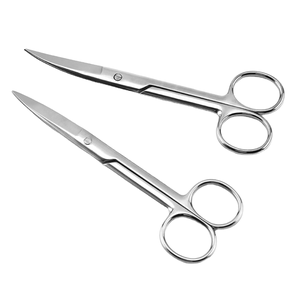
In modern operative environments, surgical scissors are classified as high-precision cutting instruments required to perform flawless tissue dissection, suture cutting, or dressing resection without mechanical drag, structural deformation, or tissue micro-trauma. Top trusted surgical scissors manufacturers operate under stringent quality management frameworks such as ISO 13485:2016 and EU MDR (Regulation 2017/745) to guarantee structural integrity, autoclave endurance, and edge sharpness longevity.
Selection of chemical compositions in surgical stainless steel directly governs corrosion resistance, tensile strength, and edge retention. Premium surgical scissors factories leverage high-grade martensitic stainless steels (such as AISI 410, AISI 420J2, and AISI 440C) alongside vacuum heat-treatment processes to achieve exact Rockwell hardness tolerances (HRC 50–58 for standard surgical blades, and up to HRC 68–72 for Tungsten Carbide reinforced inserts).
| Steel Grade / Material | Hardness Rating (HRC) | Corrosion Resistance | Primary Clinical Application | Sterilization Tolerance |
|---|---|---|---|---|
| AISI 420J2 Martensitic Steel | HRC 50 – 54 | High (Passivated ASTM F1089) | General Operating Scissors, Mayo, Metzenbaum | Autoclave > 1,000 Cycles |
| AISI 440C High-Carbon Steel | HRC 56 – 58 | Superior Edge Retention | SuperCut Precision Micro-Scissors, Iris, Tenotomy | Autoclave > 1,500 Cycles |
| Tungsten Carbide (TC) Inserts | HRC 68 – 72 | Maximum Durability | Cardiovascular, Orthopedic & High-Frequency Suturing | Autoclave > 3,000 Cycles |
| Titanium Nitride / Rainbow PVD | Surface Coating | Ultra-High Scratch & Bio-Fluid Barrier | Specialty Cosmetic, Trauma Shears & First Aid Kits | Autoclave > 800 Cycles |
Evaluating surgical instrument manufacturers requires verifying regulatory cleanroom standards, batch-to-batch consistency metrics, and validated quality control testing.
Operates under validated Medical Device QMS protocols. Comprehensive technical files, CE declaration of conformity, Class I manual instrument approvals, and Class II EU MDR certification coverage.
Incorporating 15° razor-edge bevels matched with precision micro-serrations on opposing blades to prevent soft tissue slipping and deliver effortless tactile feedback for surgeons.
Every lot undergoes chemical acid passivation according to ASTM F1089 standards and rigorous 30-minute boil tests to confirm zero iron contamination, pitting, or surface oxidation.
Turnkey custom brand manufacturing including laser-etched UDI codes, custom shank logos, multi-language retail blister cards, surgical kit assembly, and sterile packaging options.
Exceeding standard ISO/DIN tensile and shear strength minimums by at least 10% (1.1× benchmark), ensuring structural reliability during high-stress surgical maneuvers.
Supplying hospital networks, government tenders, and surgical distributors across 50+ countries with complete technical files, Certificate of Analysis (CoA), and export documentation.
Surgical scissors are engineered in specific tip profiles, curvature angles, and blade configurations to fulfill distinct clinical objectives. Top factories maintain strict tooling specs for each major design line:
Metzenbaum Scissors: Characterized by long shanks and relatively short, delicate blades. Designed for fine tissue dissection and blunt cut-and-spread techniques in deep surgical cavities.
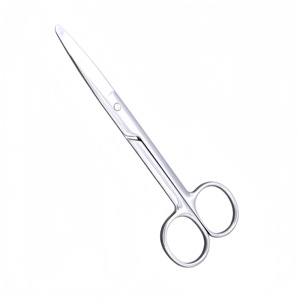
Mayo Scissors: Built with heavy, thick shanks and sturdy blades (straight or curved). Used for cutting tough fascia, tendons, heavy connective tissue, or operative drapes.
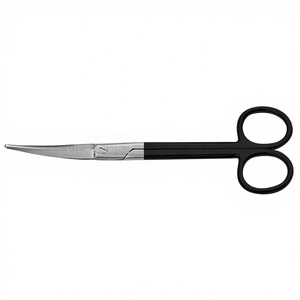
SuperCut Technology: Features a upper razor-sharp edge that cuts cleanly through delicate skin flaps, paired with a lower micro-serrated blade that prevents soft-tissue slippage.
Aston Facelift Scissors: Ergonomically curved with rounded blunt tips to facilitate rhytidectomy (facelift) undermining without tearing tissue or puncturing vascular beds.
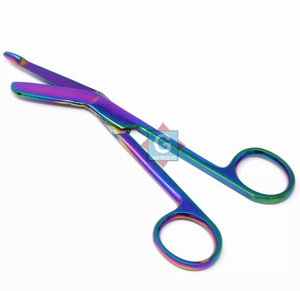
Lister Bandage Scissors: Feature an angled blade with a rounded safety knob on the lower tip. The guard glides beneath tight cast materials, bandages, or clothing without puncturing patient skin.
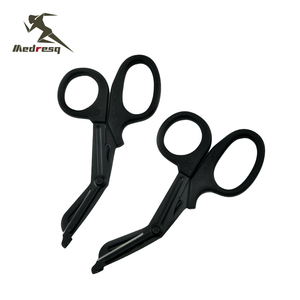
Trauma Shears: High-leverage handles paired with hardened stainless steel blades capable of cutting seatbelts, thick leather, or heavy clothing in emergency first-aid situations.
Kelly Curved Scissors: Precision 6" to 7" scissors with sharp/sharp or sharp/blunt tips used in dental surgery, oral soft tissue trimming, and fine suture excision.
Micro-Surgical (Castroviejo): Spring-loaded handles engineered for microscopic delicate incisions under high magnification (cardiovascular, ophthalmic, and neurosurgery).
Global hospital networks, procurement consortiums, and medical device brand owners are shifting their supply chain requirements. Sourcing directors are prioritizing manufacturers equipped with sustainable production methods, smart asset tracking, and advanced surface science.
Traditional mirror-polished stainless steel is increasingly being upgraded to physical vapor deposition (PVD) coatings, such as Diamond-Like Carbon (DLC), Titanium Nitride (TiN), and matte black anti-reflective coatings. These non-glare coatings reduce eye fatigue under high-intensity operating room LED lamps while increasing surface hardness up to 2,500 HV (Vickers hardness), significantly extending sharpness lifetime.
Under US FDA 21 CFR 830 and EU MDR Annex VI regulations, direct instrument marking with GS1 DataMatrix UDI symbols is now mandatory. Leading factories integrate high-speed fiber laser marking directly into production lines, enabling hospital RFID/barcode scanning for real-time tray tracking, sterilization cycle logging, and automated reprocessing records.
Medical device procurement is heavily prioritizing Environmental, Social, and Governance (ESG) criteria. Top surgical instrument factories are adopting closed-loop stainless steel recycling, eco-friendly citric acid passivation (replacing legacy nitric acid baths), and zero-waste wastewater filtration systems, giving hospital buyers verified carbon-neutral sourcing pathways.
Transitioning from manual hand-grinding to 5-axis robotic CNC grinding stations guarantees micrometer-level blade alignment and consistent cutting tension across multi-thousand unit batches. Optical 3D vision inspection systems automatically reject any blade exhibiting tip deviation greater than 0.005mm.
From custom forging die creation to regulatory dossier preparation, OEM partnerships follow a validated six-stage production lifecycle:
Custom engineering based on technical drawings, surgeon sample replication, or customized blade geometry requirements.
Precision hot drop forging of martensitic stainless steel blanks followed by CNC machining of shank and finger rings.
Computer-controlled vacuum furnace hardening and tempering to achieve exact HRC hardness without surface decarbonization.
SuperCut bevel grinding, micro-serration cutting, manual screw setting, and alignment testing by master instrument smiths.
Ultrasonic cleaning followed by ASTM F1089 citric acid passivation to form a corrosion-resistant chromium oxide layer.
Fiber laser UDI barcoding, custom brand branding, cleanroom pouch sealing, or retail box assembly with complete CoA release.
Expert guidance on regulatory compliance, quality control standards, and factory contract manufacturing.
Top surgical scissors manufacturers must maintain an ISO 13485:2016 certified Quality Management System specifically scoped for medical device design and production. For export to Europe, compliance with EU MDR (Regulation 2017/745) for Class I re-usable surgical instruments or Class II sterilizer accessories is required, alongside CE mark registration. For the United States, factory registration with the FDA and 510(k) status (where applicable) is essential, including direct laser UDI compliance under 21 CFR 830.
Standard surgical scissors are made from hardened martensitic stainless steel (HRC 50–56), providing excellent sharpness and corrosion resistance suitable for general surgery. Tungsten Carbide (TC) scissors feature high-density tungsten inserts gold-soldered onto the cutting edges. TC inserts offer a Rockwell hardness of HRC 68–72, allowing the blade edge to stay sharp up to 5 to 6 times longer under heavy surgical use. TC instruments are visually identified by gold-plated finger rings.
Corrosion resistance is achieved through chemical acid passivation compliant with ASTM F1089 standards. After machining and polishing, instruments are immersed in controlled citric acid or nitric acid solutions. This chemical bath removes free iron molecules from the stainless steel surface, creating a continuous chromium oxide (Cr2O3) passive barrier. Every batch should undergo 30-minute boiling water tests and copper sulfate testing to verify zero rust potential prior to final release.
SuperCut scissors are engineered with a specific dual-blade configuration: one blade is ground to a razor-sharp 15-degree edge for effortless slicing action, while the opposing blade features microscopic serrations (micro-serrations). These micro-grooves hold soft tissues in place, preventing slipping during delicate dissection. SuperCut instruments are usually designated by black-coated handles or black finger rings.
Yes. OEM-capable factories provide complete white-label service packages, including custom fiber laser logo etching, customized tip curvatures, customized finger ring colors (such as titanium rainbow, matte black, or gold plating), custom packaging (sterilization pouches, retail blister packs, or surgical kit boxes), and complete technical file documentation to assist distributors with regional health authority registrations.
Standard wholesale MOQs for catalog surgical scissors typically range from 50 to 100 units per item code. Custom OEM private-label production runs generally require 300 to 500 units per SKU depending on custom tooling requirements. Production lead times average 3 to 5 weeks for standard stainless steel instruments and 4 to 6 weeks for specialized PVD-coated or custom-engraved orders.
Connect with our technical engineering team for bulk surgical instrument catalogs, ISO/EU MDR compliance certificates, and custom private-label manufacturing quotes.