Explore top-grade medical skin glues, topical tissue adhesives, veterinary fast-bond agents, and surgical drapes hot-melt PSAs engineered under strict ISO 13485 cleanroom protocols.
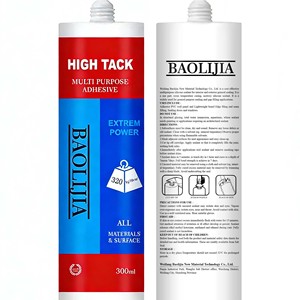
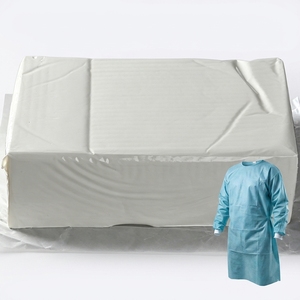
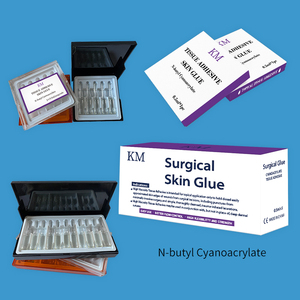
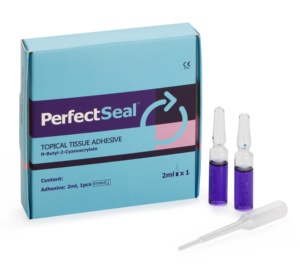
Our manufacturing facility in Bengaluru operates under stringent quality control standards, ensuring world-class mechanical strength, sterile packaging, and global regulatory readiness.
Medical-grade topical tissue adhesives utilize synthetic monomeric cyanoacrylate esters—specifically N-Butyl-2-Cyanoacrylate (NBCA) and 2-Octyl Cyanoacrylate. Upon contact with moisture on skin or tissue surfaces, an exothermic anionic polymerization reaction is rapidly initiated. This converts liquid monomers into a flexible, resilient polymer film that physically bridges incision margins, providing immediate closure strength and acting as an impenetrable antimicrobial barrier against common surgical site pathogens like Staphylococcus aureus and Escherichia coli.
As an established leader certified under ISO 13485, CE Marking, and EU MDR (Regulation 2017/745), our manufacturing protocols demand that every production lot of wound closure devices and adhesive systems undergo stringent analytical verification. Tensile strength and needle-attachment pull testing are validated to exceed 1.1 times USP minimum pharmacopoeial requirements. Batch release requires complete Certificates of Analysis (CoA) confirming endotoxin limits, bioburden control, and ethylene oxide (EtO) residual compliance.
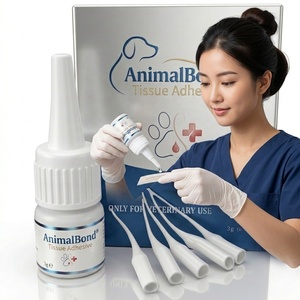
Liquid tissue adhesives provide significant clinical benefits in emergency care, plastic surgery, pediatric laceration management, and minimally invasive laparoscopic procedures. By eliminating needle-stick injury risks and reducing operating room closure times, cyanoacrylates offer superior cosmetic results with minimal scar tissue formation. Furthermore, specialized veterinary formulations allow rapid hemostasis and wound closure in animal care environments without requiring complex post-operative suture removal.
Strategic Enterprise Footprint: Unisur Lifecare Pvt. Ltd. (Universal Sutures) stands as the second medical device manufacturer in India to secure prestigious EU MDR certification across 13 complex product families. Operating out of Bengaluru with a workforce comprising over 70% skilled women professionals, the organization combines social empowerment with uncompromising quality management for global healthcare markets.
| Performance Parameter | N-Butyl Cyanoacrylate (NBCA) | 2-Octyl Cyanoacrylate | Pressure Sensitive Hot Melt (PSA) | Traditional Absorbable Sutures |
|---|---|---|---|---|
| Primary Indication | Low-tension topical closure, lacerations | Longer incisions, high-flexure areas | Disposable surgical gowns & drapes bonding | Deep tissue layers, high-tension closure |
| Setting Time / Polymerization | 5 to 15 seconds (Rapid) | 30 to 60 seconds (Flexible) | Tackified setting upon cooling | Manual knotting required |
| Tensile Strength Profile | High initial burst strength | High flexibility and lateral load resistance | High initial peel & lap-shear strength | Extended mechanical hold (7–90 days) |
| Microbial Barrier Capability | 99.9% physical bacterial exclusion | 99.9% physical bacterial exclusion | Moisture-proof fluid barrier | Potential wick effect depending on braid |
| Removal Requirement | Sloughs off naturally (7–10 days) | Sloughs off naturally (7–14 days) | Single-use disposable bond | Resorbs hydrolytically or requires removal |
| Regulatory Standards | ISO 13485 / CE / EU MDR | ISO 13485 / CE / EU MDR | ISO 10993 Biocompatible | 1.1× USP Strength Validation |
Understanding the strategic shifts in global medical procurement, regulatory tightenings, and polymer material innovations.
With the transition from the legacy Medical Device Directive (MDD) to the rigorous European Union Medical Device Regulation (EU MDR 2017/745), healthcare procurement teams are facing supply chain vulnerabilities due to delayed vendor recertifications. Manufacturers capable of delivering complete technical dossiers, clinical evaluation reports (CER), and proven 13485 QMS compliance are capturing dominant market share. Indian manufacturing hubs, backed by extensive R&D facilities and cost-efficient cleanrooms, are becoming the preferred contract manufacturing and OEM source for international distributors seeking regulatory certainty.
The future of surgical glue lies in hybrid formulations that integrate antimicrobial agents, growth factors, and anti-inflammatory compounds directly into the monomeric matrix. Advanced research focuses on dual-action tissue glues that not only seal incisions within seconds but also release controlled ionic silver or chlorhexidine to eliminate surgical site infections (SSIs). Concurrently, bio-inspired polydioxanone and polyurethane hydrogels are being engineered to facilitate internal hemostasis without causing tissue thermal necrosis during polymerization.
As global surgical protocols shift toward outpatient and ambulatory surgical centers (ASCs), minimizing patient recovery times has become a paramount financial metric. Liquid skin glues eliminate the need for post-operative suture removal visits, lower infection risk, and significantly reduce post-procedural pain. Sourcing directors are increasingly reallocating purchasing budgets from traditional non-absorbable sutures toward high-performance cyanoacrylate skin adhesives and combination wound dressing systems.
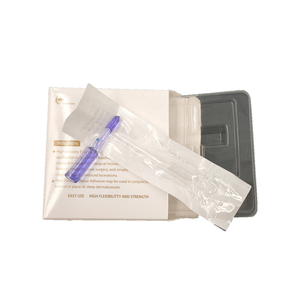
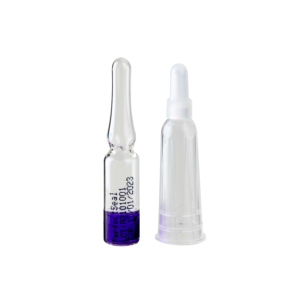
Hospital networks and regional distributors are expanding their proprietary brands to secure higher margins. Leading manufacturers now offer comprehensive OEM solutions—supplying pre-filled sterile ampoules, specialized applicator tips, multi-language artwork, and country-specific regulatory dossier support. Accessing turnkey production capacity with low minimum order quantities (MOQs) allows global brands to rapidly respond to local clinical demands.
N-Butyl Cyanoacrylate (NBCA) features a shorter carbon monomer chain length, resulting in a very fast polymerization reaction time (typically 5 to 15 seconds) and high tensile strength upon setting. It is ideally suited for fast wound closure in low-tension areas and emergency trauma settings. In contrast, 2-Octyl Cyanoacrylate possesses a longer octyl chain, providing greater film flexibility, higher resistance to flexural stress, and a slightly longer setting time (30 to 60 seconds). Octyl formulations are often preferred for longer surgical incisions or skin folds subject to movement.
Our state-of-the-art facility in Bengaluru, India, operates under a strictly audited ISO 13485 quality management system. Universal Sutures is proudly the second Indian medical device manufacturer to earn official EU MDR (Regulation 2017/745) certification across 13 comprehensive product families. We provide our global B2B partners with complete technical dossiers, Certificates of Analysis (CoA) for each batch, bioburden reports, validated Ethylene Oxide (EtO) sterilization certificates, and full support for country-specific health authority registrations.
Standard topical cyanoacrylates (NBCA and Octyl formulations) are intended exclusively for topical skin application and external wound closure. They must not be applied inside closed body cavities, internal organs, or vascular anastomoses due to potential tissue toxicity and exothermic reactions during internal cure. For internal bleeding control, specialized absorbable hemostats—such as Oxidized Regenerated Cellulose (ORC) or surgical bone wax (HAEMOWAX)—must be used as per clinical guidelines.
Every single suture-needle combination and medical adhesive line manufactured at our facility is designed and validated to exceed pharmacopoeial standards by at least 1.1 times the USP requirement for tensile strength and needle-attachment pull-off force. This intentional engineering margin guarantees reliable performance, prevents premature tissue dehiscence, and provides surgeons with uncompromised handling confidence in critical procedures.
We provide complete turnkey OEM and private-label programs for medical device brand owners. Our capabilities include custom monomer viscosity formulation, primary aluminum foil packaging, blister packing, dual-chamber micro-applicator pens, custom dye additions (such as D&C Violet No. 2 for high visibility), multilingual box printing, and regulatory technical file creation tailored to your regional market requirements.
To prevent premature monomer polymerization, medical cyanoacrylates should be stored in controlled environments, ideally between 2°C and 8°C (refrigerated) or as specified on the product technical data sheet. When maintained under validated controlled storage conditions, high-purity medical skin glues exhibit a shelf life ranging from 24 to 36 months, supported by real-time and accelerated stability testing data.
Whether you require medical skin glue, tissue adhesives, absorbable sutures, polypropylene hernia mesh, or complete OEM private-label contract manufacturing, our team in Bengaluru delivers uncompromised quality, verified batch security, and regulatory excellence.