Engineered for minimal insertion force, zero-leak abdominal sealing, and maximum optical clarity during minimally invasive procedures.
Operating from our state-of-the-art cleanroom facility in Bengaluru, India, Unisur Lifecare Pvt. Ltd. (Universal Sutures) stands as an authority in wound closure and laparoscopic device manufacturing.
Universal Sutures is proudly the second Indian surgical device manufacturer to secure EU MDR certification across 13 comprehensive product families. Our Bengaluru facility adheres to stringent Class 100,000 cleanroom requirements, ensuring audit-ready technical files and complete regulatory compliance for global buyers.
Quality reliability is non-negotiable in surgical access and wound closure. Every laparoscopic instrument, trocar assembly, and suture batch undergoes rigorous mechanical pull-testing, validating a minimum safety threshold of 1.1 times the USP tensile strength requirements.
With over 200 dedicated professionals, our production lines are powered by a workforce where over 70% of colleagues are women. This commitment to gender equity, continuous skill development, and ethical labor standards drives precision quality in assembly, needling, and cleanroom foil sealing.
We provide global distributors with complete turnkey manufacturing solutions—including custom sleeve artwork, multi-lingual sterile barrier labeling, custom needle geometry selection, and comprehensive technical dossier assistance for swift local registration.
Each batch undergoes validated EO terminal sterilization cycles. Products are released with batch-specific Certificates of Analysis (CoA) detailing bio-burden compliance, endotoxin limits, sterility assurance levels (SAL 10⁻⁶), and structural integrity verification.
From Asia-Pacific to Europe, Latin America, and Africa, Universal Sutures delivers medical devices to over 60 countries, adhering to strict cold-chain and moisture-proof packaging specs for international transit.
An authoritative technical breakdown for hospital procurement officers, biomedical engineers, and surgical device brand managers.
Laparoscopic trocars serve as the primary conduit between the external surgical environment and the patient’s peritoneal cavity. Creating and maintaining a stable pneumoperitoneum requires access instruments that achieve a delicate balance: minimal peak insertion force to prevent visceral trauma, combined with zero-tolerance seal integrity under dynamic instrument movement.
Modern trocar engineering centers around three structural components:
Choosing the correct trocar system impacts intra-operative safety, closure time, and post-operative incisional hernia rates. The table below outlines key engineering metrics across primary laparoscopic access configurations:
| Trocar Variant | Tip Mechanism | Peak Insertion Force (N) | Fascial Trauma Level | Primary Surgical Indication |
|---|---|---|---|---|
| Optical Direct-Vision Trocar | Transparent Hollow Conical Tip | 18.5 N ± 2.1 | Low (Muscle Splitting) | Initial Umbilical Entry, Bariatrics |
| Bladeless Dilating Trocar | Non-Cutting Separation Fins | 22.1 N ± 1.8 | Minimal (Fibre Preserving) | Gynecological & General Laparoscopy |
| Auto-Shielded Bladed Trocar | Retractable Spring-Loaded Blade | 14.2 N ± 1.5 | Moderate (Incisional) | Dense Scar Tissue / Re-Operations |
| Hasson Open Trocar | Blunt Rounded Obturator & Cone | N/A (Cut-Down Access) | Zero Sharp Trauma | Pediatric & High-Risk Abdominal Wall |
Medical trocars are subject to strict biological evaluation under ISO 10993 standards. Materials must exhibit complete chemical inertness when exposed to carbon dioxide (CO₂) gas, irrigation fluids, and electrocautery smoke. At Universal Sutures, all plastic components—including polycarbonate housings and nitrile/silicone seals—are molded from 100% virgin USP Class VI resin.
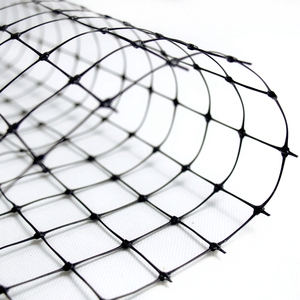
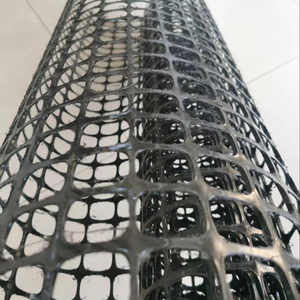
This avoids micro-fissures, chemical leaching, or valve degradation during extended surgical procedures exceeding 4 hours. Furthermore, our surgical filtration meshes (such as PA6 and high-density polypropylene) undergo rigorous extractable testing to guarantee zero particle shedding inside the surgical field.
How evolving robotic surgical platforms, sustainability mandates, and regulatory shifts are reshaping global medical device supply chains.
As robotic surgical systems become standard in tertiary hospitals, trocar manufacturers are redesigning access ports to withstand the increased lateral torque exerted by robotic arms. Next-generation trocars feature reinforced wall thickness and low-friction internal coatings to prevent mechanical binding during rapid robotic wrist articulation.
Hospital purchasing committees are under pressure to balance infection control with medical waste reduction. The market is accelerating toward hybrid trocar platforms: a durable, autoclavable stainless steel cannula paired with a single-use sterile valve housing module. This hybrid model cuts medical waste per procedure by up to 60% without compromising sterility.
The transition from the legacy Medical Device Directive (MDD) to the stringent EU MDR (Regulation 2017/745) has forced non-compliant factories out of the European market. B2B buyers are consolidating orders with verified OEM manufacturers like Universal Sutures that maintain active, certified technical dossiers, guaranteed batch traceability, and unannounced audit compliance.
Direct technical and commercial answers for hospital tender managers, OEM brand owners, and medical device importers.
Universal Sutures (Unisur Lifecare Pvt. Ltd.) operates under an ISO 13485 certified quality management system with full CE marking and EU MDR (Regulation 2017/745) compliance. Our manufacturing facility in Bengaluru incorporates Class 100,000 cleanrooms and controlled environmental conditions for all device assembly, packaging, and testing operations.
Our trocars incorporate a dual-seal dynamic system: a multi-tier flexible silicone gasket that maintains airtight sealing around instruments ranging from 5mm to 12mm in diameter, paired with an internal auto-closing duckbill valve that prevents gas escape during tool changes. Every production batch is 100% pressure-tested at 15–20 mmHg CO₂ elevated levels.
Yes. Our OEM division provides complete end-to-end brand customized solutions. This includes custom handle colors, branded outer blister packaging, multi-lingual sterile barrier labels, custom kit configurations (trocar + veress needle + specimen bag), and full regulatory STED dossier support for local health authority filings.
Every product line—ranging from surgical sutures and polypropylene hernia meshes to laparoscopic access trocars—is manufactured to meet or exceed international pharmacopoeial standards. Specifically, our suture-needle combinations and device tensile strengths are validated to at least 1.1 times the USP safety requirement, providing an extra margin of clinical security.
All disposable trocars and access accessories are terminally sterilized using validated Ethylene Oxide (EO) gas cycles in accordance with ISO 11135 standards. Each shipment is dispatched with a lot-specific Certificate of Analysis (CoA) confirming sterility testing, endotoxin limits (under 20 EU/device), residual EO levels, and physical seal strength.
For standard Universal Sutures branded sterile goods, minimum order quantities start at 500 units per specification. For full OEM private-label production, MOQs generally start at 2,000 units depending on custom packaging specifications. Standard export lead times range from 3 to 5 weeks from order confirmation.
Expand your hospital supply catalog or launch your custom OEM laparoscopic trocar line with an EU MDR & ISO 13485 certified manufacturing leader. Request sample packs, factory audits, or instant price quotes today.