Engineered for extreme shear resistance, broad temperature stability, and low VOC compliance across global OEM manufacturing electronics, automotive trim, and appliance assembly lines.
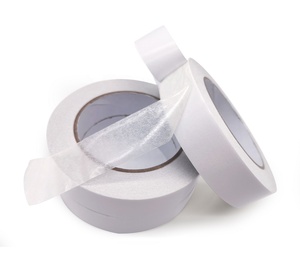
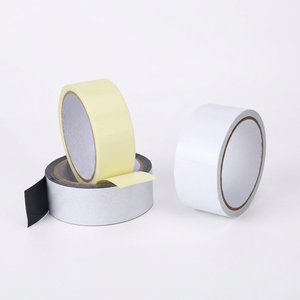
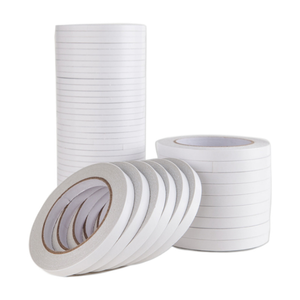
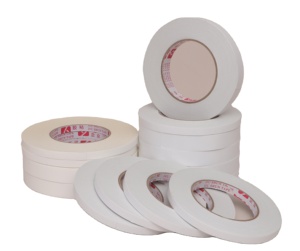
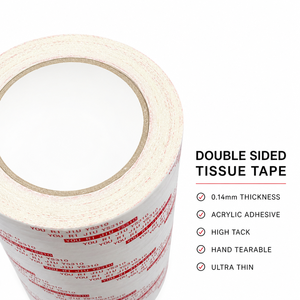
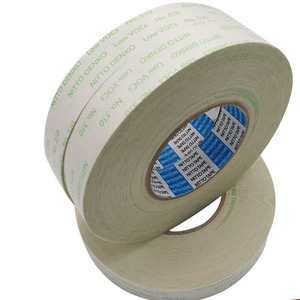
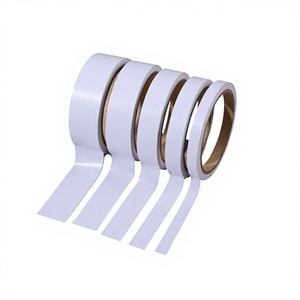
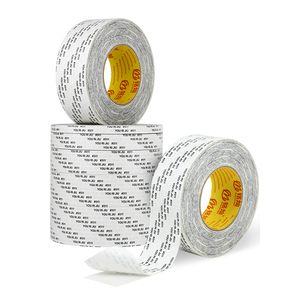
In global industrial assembly, automotive engineering, consumer electronics, and surgical-grade cleanroom applications, double-sided tissue adhesive tapes serve as the invisible backbone of structural bonding, thermal management, and noise damping. China has transitioned from a high-volume commodity tape producer into an advanced polymer engineering powerhouse. Today, top Chinese tissue adhesive manufacturers leverage high-precision reverse-roll coating, solvent-free UV curing, and ultra-clean dry room conversion processes to supply Fortune 500 OEMs with high-shear, low-VOC pressure-sensitive adhesive (PSA) solutions.
Modern industrial procurement directors and supply chain executives face strict compliance frameworks, including EU REACH, RoHS, TSCA, and stringent indoor air quality standards (such as VDA 278 for VOC and FOG emissions in automotive interiors). Partnering with certified Chinese tissue tape suppliers provides significant economic leverage while maintaining 100% batch-to-batch consistency and technical traceability.
Combining state-of-the-art polymer chemistry, automated cleanroom slitting, and rigorous pharmacopoeial/industrial quality control protocols.
Our chemical R&D team synthesizes custom solvent acrylic, water-based acrylic, and high-tack rubber formulations in-house, enabling precise tuning of tack, peel adhesion (15 N/25mm to >25 N/25mm), and static shear holding power.
Operating enclosed Class 10,000 (ISO 7) cleanrooms for coating and converting, ensuring zero particle contamination on adhesive faces—a vital prerequisite for medical devices, touch panel laminations, and optical displays.
Equipped with high-speed rotary die-cutting lines, automated log slitters, and laser cutting units capable of producing custom shapes, pull tabs, kiss-cut sheets, and extended liner options with tolerance down to ±0.1mm.
Our solvent-based acrylic tissue tapes retain over 92% of initial adhesion strength after 1,000 hours of continuous thermal exposure at 120°C, preventing lifting, bubbling, or edge curling in high-stress environments.
Every batch undergoes strict quality audits matching high pharmacopoeial and industrial standards. Tensile strength and liner-release force are tested at 1.1 times standard industry thresholds to ensure zero processing downtime.
From private label branded packaging, barcode integration, and multi-lingual documentation to full compliance customs clearing support in North America, Europe, and Southeast Asia.
Choosing the correct tissue tape matrix requires a thorough understanding of substrate surface energy (HSE vs. LSE plastics), operating temperature envelopes, and environmental degradation factors. Below is a comparative technical analysis compiled by our senior adhesive application engineers:
| Adhesive Chemistry | Initial Tack (PSTC-6) | High-Shear Resistance | Temp Range (°C) | Plasticizer Resistance | Primary Industrial Applications |
|---|---|---|---|---|---|
| Solvent Acrylic | Moderate to High | Exceptional (>168 hrs) | -40°C to +150°C | Outstanding | Automotive exterior trim, appliance panels, LED backlight units, electronic shields. |
| Water-Based Acrylic | Moderate | Good (>48 hrs) | -20°C to +100°C | Moderate | Paper converting, general box sealing, office supplies, light graphic mounting. |
| Synthetic Hot Melt Rubber | Ultra-High (Immediate) | Fair (>12 hrs) | -10°C to +70°C | Poor | Scrapbooking, carpet fixing, temporary positioning, leather craft assembly. |
| Low-VOC Solventless Acrylic | High | Very High (>120 hrs) | -30°C to +130°C | Excellent | Automotive cabin insulation, HVAC acoustic foams, medical equipment housing. |
As sustainability mandates and micro-assembly precision reshape industrial manufacturing, procurement departments must adapt to emerging trends in pressure-sensitive adhesive technology. Leading Chinese manufacturers are investing heavily in next-generation research to address three main industry shifts:
Traditional solvent-based coating relies on thermal ovens to evaporate organic solvents like toluene or ethyl acetate, generating volatile organic compound (VOC) emissions that require expensive thermal oxidizers. Future procurement contracts increasingly mandate 100% solid UV-curable acrylic tissue tapes. UV-cured adhesives yield zero solvent emissions while delivering cross-linked polymer networks capable of handling extreme heat (+180°C peak) and harsh chemical exposure.
With global sustainability initiatives gaining momentum, manufacturers are replacing synthetic polyester/nylon tissue carriers with FSC-certified wood pulp, bamboo fibers, and PLA (polylactic acid) non-woven matrices. Combined with bio-derived acrylic polymers, these eco-friendly double-sided tissue tapes enable 100% recyclable paperboard packaging and biodegradable consumer electronics packaging.
As smartphones, wearable medical monitors, and IoT devices become thinner, the demand for sub-70-micron double-sided tissue tapes has surged. Chinese coating lines are adopting real-time laser thickness profiling systems capable of maintaining coating weight uniformity within ±0.5 g/m², preventing adhesive squeeze-out during high-pressure thermal lamination.
When qualifying China-based tissue tape suppliers, evaluating unit price alone often leads to hidden costs caused by tape delamination, liner tearing, or adhesive transfer during automated machine application. Procurement teams should implement a multi-stage vendor assessment checklist:
Ensure the supplier provides certified lab test reports detailing 180° peel strength on stainless steel, glass, ABS, and polyolefin plastics (PE/PP). Low surface energy (LSE) materials require specialized modified acrylic tackifiers.
For high-speed automated die-cutting, the differential release force between the tight side and easy side of the release paper must be tightly controlled (e.g., 5g vs. 25g/25mm) to prevent premature premature delamination or liner locking.
Verify that samples undergo accelerated environmental chamber testing combining high heat (85°C) and high humidity (85% RH) for at least 500 hours without adhesive yellowing or cohesive failure.
Tissue tape utilizes a lightweight non-woven paper/cellulose carrier impregnated with adhesive on both sides. This carrier allows easy hand tearability, high conformability on irregular or curved surfaces, and excellent adhesive penetration. PET or PVC film-backed tapes offer higher tensile strength and puncture resistance but cannot be hand-torn and are less conformable around tight radii.
Solvent acrylic tissue tapes deliver superior long-term durability, temperature resistance (-40°C to +150°C), UV resistance, and plasticizer resistance, making them ideal for industrial, automotive, and appliance applications. Hot melt tissue tapes offer much higher immediate initial tack and cost benefits, making them popular for temporary bonding, paper craft, light packaging, and leather goods where extreme heat resistance is not required.
Yes. Premium Chinese manufacturers offer direct technical equivalents to benchmark industry tapes such as Nitto 500, Nitto 512, 3M 9448A, 3M 9080, and Tesa 4959. These cross-reference products undergo rigorous comparative laboratory testing to ensure equivalent peel strength, static shear holding power, and caliper thickness at significantly reduced supply chain costs.
OEM services include custom roll width slitting (from 3mm up to 1260mm log rolls), custom length rewinding (5m to 1000m spool rolls), die-cut gaskets, kiss-cut stamped pads on sheets, extended tab release liners, custom core printing, shrink wrapping, and private label branded retail box packaging.
For electronic assembly, require ISO 9001 quality management, RoHS 3.0, REACH SVHC compliance, and halogen-free test reports. For automotive interior applications, request VDA 278 low VOC/fogging test reports. For medical-grade tissue tapes (skin contact or surgical dressings), verify ISO 13485 certification, ISO 10993 cytotoxicity, skin irritation, and sensitization compliance.
Under recommended storage conditions of 20°C to 25°C (68°F to 77°F) and 50% relative humidity, away from direct sunlight, solvent acrylic tissue tapes maintain optimal performance for 12 to 24 months from the date of manufacture. Hot melt tissue tapes typically carry a 12-month shelf life limit.
Standard master log roll samples or die-cut prototype sheets can be dispatched within 48 to 72 hours for client lab testing. Custom slitting MOQs typically range from 500 to 2,000 square meters depending on the specialty adhesive formulation and release liner complexity.