Direct supply from audited cleanroom facilities — validated to exceed USP minimum tensile strength standards by 1.1×
In modern clinical practice and specialized industrial applications, monofilament sutures represent the pinnacle of structural integrity, biocompatibility, and drag-free performance. Unlike braided or twisted multifilament structures, a monofilament consists of a single solid strand of extruded synthetic polymer or natural material. This smooth, non-porous physical architecture completely eliminates capillary action, thereby preventing the migration of pathogens along the suture line and dramatically lowering infection risks in contaminated tissue beds.
As global medical device procurement transitions toward stringent regulatory frameworks—most notably the European Union’s Medical Device Regulation (EU MDR 2017/745) and stringent US FDA 510(k) clearances—healthcare systems and OEM brand managers require suppliers who go beyond baseline compliance. Leading Chinese and global monofilament suture suppliers have transformed manufacturing methodologies, integrating cleanroom Class 8 extrusion lines, precision micro-swaging machinery, and automated Ethylene Oxide (EO) terminal sterilization cycles to guarantee audit-ready supply chains.
Understanding user intent and surgeon preference requires an objective evaluation of structural properties. Monofilament sutures are specifically selected when tissue reaction must be minimized and smooth knot passage is paramount.
| Material Type | Absorption Profile | Tensile Strength Retention | Tissue Reactivity | Primary Clinical Indications |
|---|---|---|---|---|
| Polypropylene (PP / Unilene) | Non-Absorbable (Permanent) | Indefinite retention (0% loss) | Extremely Low (Inert) | Cardiovascular, Hernia Repair, Plastic Surgery |
| Polyamide (Nylon / Unilon) | Non-Absorbable (Gradual hydrolytic decay ~15%/yr) | 80% at 1 year | Low to Moderate | Cuticular Closure, Ophthalmic, Microsurgery |
| Polydioxanone (PDS / Unisynth) | Absorbable (Hydrosis, 180–210 days) | 75% at 2 weeks, 50% at 4 weeks | Minimal | Fascial Closure, Orthopedics, Pediatric Cardio |
| Poliglecaprone-25 (PGCL) | Absorbable (Rapid hydrosis, 90–120 days) | 60% at 1 week, 30% at 2 weeks | Extremely Low | Subcuticular Cosmesis, Urology, Gastrointestinal |
| UHMWPE (Unistrong) | Non-Absorbable (Ultra-High Load) | Permanent (Exceeds steel ratio) | Negligible | Orthopedic Tendon & Ligament Repair |
Integrating world-class engineering, documented batch traceability, and private-label OEM capabilities.
Utilizing 100% virgin ultra-pure homopolymers (Polypropylene, Polyamide-6/66, and Polydioxanone resins). Sourced from audited global chemical leaders to eliminate endotoxins and volatile plasticizers.
Every batch of needled monofilament sutures undergoes automated pull-testing and linear strength evaluation. We consistently exceed pharmacopoeial minimum tensile requirements by at least 10% for superior safety margins.
Complete technical documentation including ISO 13485 QMS certification, CE markings, EU MDR registration files, and ISO 10993 biocompatibility testing suites ready for local ministry health approvals.
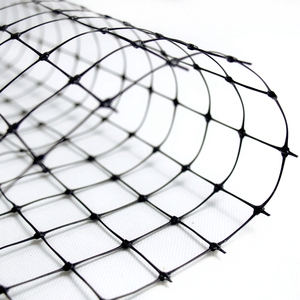
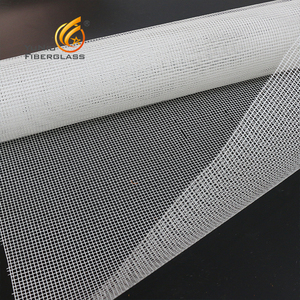
From 10-0 micro-nylon sutures for ophthalmic surgery to heavy-gauge polypropylene monofilaments and hernia meshes, our portfolio consolidates complete surgical wound-closure sourcing under a single supplier contract.
Comprehensive brand customization including double-aluminum foil vacuum barrier packaging, multi-language artwork translation, custom needle geometry swaging (ribbed, drilled-end stainless steel 300/400 series), and kit packaging.

“In the medical device industry, monofilament manufacturing is an art of absolute consistency. We don't merely produce threads; we deliver validated, traceable surgical confidence that surgeons rely on during life-critical operations.”— Leadership Statement, Director of Quality & Global Operations
As healthcare systems face inflationary pressures alongside demands for improved clinical outcomes, procurement leaders must anticipate technological shifts in suture manufacturing. Below are the key structural trends shaping the next decade of monofilament suture sourcing:
Historically, deep fascial closures relied on braided absorbable sutures (such as Polyglycolic Acid) due to high initial strength. However, braided strands carry higher tissue drag and micro-interstices that harbor bacteria. The market is shifting rapidly toward long-term absorbable monofilaments like Polydioxanone (PDS) and short-term options like Poliglecaprone-25. Suture suppliers are advancing extrusion control to tailor absorption rates exactly to specific tissue healing curves.
Surgical Site Infections (SSIs) cost global healthcare systems billions annually. The market is witnessing exponential demand for monofilaments coated with anti-bacterial agents, such as Triclosan or chlorhexidine complexes. Leading China manufacturers are embedding bio-compatible antimicrobial coatings directly onto monofilament surfaces without compromising knot security or increasing drag coefficient.
A monofilament suture is only as reliable as its needle attachment point. Advanced suppliers are abandoning traditional channel needles in favor of laser-drilled end needles featuring longitudinal micro-grooves (ribbed needles). This design provides a 360-degree mechanical lock with the monofilament strand, reducing needle pull-off failures during strenuous tissue suturing.
Under tighter global environmental oversight, healthcare regulators are reducing acceptable limits for residual Ethylene Oxide (EO) and Ethylene Chlorohydrin (ECH) on sterile devices. Top suppliers employ extended aeration cycles in temperature-controlled chambers, ensuring EO residuals fall well below ISO 11135 thresholds (less than 1 ppm) before batch release.
Detailed technical answers for hospital purchasing departments, medical device importers, and OEM brand owners.
Polypropylene is completely non-absorbable, biologically inert, and maintains tensile strength indefinitely in vivo, making it the gold standard for vascular anastomoses and hernia mesh repair. Polyamide (Nylon) provides exceptional elasticity and smooth passage, making it ideal for skin closure; however, Nylon undergoes slow hydrolytic degradation, losing approximately 15-20% of tensile strength per year.
Qualified manufacturers utilize precision German and Japanese CNC needle-drilling and swaging machines. Every batch undergoes 100% optical inspection and statistical pull-testing compliant with USP/EP standards, ensuring the swage junction exceeds minimum pull-out forces by at least 1.1 times.
OEM projects are executed under an ISO 13485 accredited Quality Management System. The supplier provides a complete technical dossier, proof of cleanroom environment (ISO Class 8 minimum), raw material certificates of analysis (CoA), validated EO sterilization records, and shelf-life accelerated aging data (typically 5 years).
Monofilament memory refers to the strand's tendency to retain its coiled shape from packaging, which can make handling difficult for surgeons. Premium suppliers use specialized heat-setting annealment processes during post-extrusion drawing and roll the suture in wide-radii aluminum foil packs to minimize memory while preserving knot pliability.
Yes, suppliers offer bulk non-sterile monofilament spools, medical-grade extruded monofilament yarns for hernia mesh weaving, and un-needled cut lengths packaged under controlled environments for localized medical assembly.
Standard SKUs typically carry low MOQs (e.g., 50–100 boxes), while custom OEM private label artwork orders generally require 500 to 1,000 boxes per code. Manufacturing and EO sterilization lead times range between 3 to 5 weeks depending on regulatory registration requirements.
Request comprehensive product catalogs, sample technical files, or private-label quotations today. Our technical sales team responds within 24 business hours.