Direct Cleanroom Supply & Certified OEM Solutions Exceeding USP & EP Quality Metrics
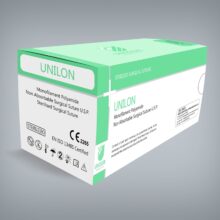

Surgical sutures manufactured from Polyamide (commonly designated as Nylon) represent one of the foundational non-absorbable wound closure modalities in modern surgery. Valued globally for high tensile strength, smooth knot run-down, minimal tissue reaction, and elastic recoil, nylon sutures are heavily specified in skin closure, plastic surgery, ophthalmic procedures, microsurgery, and cardiovascular repairs.
Procurement directors and hospital purchasing authorities face an increasingly complex regulatory landscape. The transition from the European Medical Devices Directive (MDD 93/42/EEC) to the stringent European Medical Devices Regulation (EU MDR 2017/745), combined with heightened US FDA 510(k) audit scrutiny, has reshaped the global supplier qualification matrix. Selecting a supplier requires evaluating not merely price-per-dozen, but cleanroom automation, raw-material polymer purity, needle-attachment security, and full technical dossier support.
To assist procurement managers, biomedical engineers, and global distributors in evaluating manufacturing partners, the following comparative framework details the structural and regulatory tiers governing current industry suppliers:
| Supplier Category & Tier | Primary Manufacturing Hubs | Key Compliance Standards | Needle Attachment Integrity | OEM Private Label Flex |
|---|---|---|---|---|
| Tier 1 Legacy Conglomerates (Ethicon, B.Braun, Medtronic) | USA, EU, Mexico | FDA 510(k), EU MDR, ISO 13485 | Exceeds USP Standards (Laser Drilled) | Very Low / High MOQ Constraints |
| Tier 2 Certified Specialized OEMs (Universal Sutures / Unisur Lifecare) | Bengaluru, India | EU MDR (2017/745), CE Mark, ISO 13485 | Validated 1.1× USP Strength Requirement | High Flexibility / Custom Dossier Support |
| Regional Commercial Assemblers | Turkey, Brazil, China | ISO 13485, Local Ministry Approvals | Meets Basic USP Minimums | Moderate Flex / Variable Technical Support |
| Uncertified Industrial Convertors | Various Asian Hubs | Basic ISO 9001 (Non-Medical) | Inconsistent Pull-Out Retention | High Risk / Non-Audit Ready |
The clinical performance of a non-absorbable nylon suture relies on the molecular structure of the synthetic polyamide chain. Medical suture manufacturers utilize two primary variants of polyamide: Polyamide 6 (Polycaprolactam) and Polyamide 6,6 (Polyhexamethylene adipamide).
Synthesized via ring-opening polymerization of caprolactam, Polyamide 6 exhibits superior softness and pliability. This reduced flexural modulus makes Nylon 6 monofilaments less prone to wire-like memory, improving knot tie-down ergonomics for delicate cuticular and intradermal closures. It demonstrates exceptional surface smoothness, minimizing tissue drag during passage.
Formed by reacting hexamethylenediamine with adipic acid, Polyamide 6,6 presents a higher crystalline density and elevated melting temperature (~265°C vs ~220°C for Nylon 6). This delivers higher initial tensile modulus and resistance to linear creep. It is preferred in ultra-fine microsurgical diameters (9-0, 10-0, 11-0) where linear strength per square millimeter is critical.
Although classified pharmacopeially as a non-absorbable suture material, polyamide contains amide linkages that undergo slow, gradual hydrolytic degradation in vivo at a rate of approximately 15% to 20% tensile loss per year. Over a multi-year period, the suture is encapsulated by fibrous connective tissue without initiating chronic cellular inflammation.
Quality-focused factories implement specialized thermal annealing processes post-extrusion. Annealing relaxes internal orientation stresses, locking in thread diameter uniformities while eliminating microscopic voids that could harbor bacteria or compromise knot security.
As demonstrated by leading manufacturers such as Universal Sutures (Unisur Lifecare Pvt. Ltd.), medical device manufacturing requires an uncompromising commitment to cleanroom standards and quality management systems. Operating out of Bengaluru, India, Universal Sutures represents the modern standard of specialized surgical manufacturing, becoming the second Indian suture manufacturer to achieve prestigious EU MDR (Regulation 2017/745) certification covering 13 distinct product families.
While standard pharmacopoeias establish baseline tensile parameters, top-tier factories engineer every suture and needle-attachment swage to exceed USP and EP tensile pull limits by at least 10%, providing a decisive safety margin in demanding surgical closures.
Nylon threads are attached to premium 300-series corrosion-resistant stainless steel needles. Longitudinal ribs along the needle body prevent slipping inside the needle-holder jaw, ensuring spatial control during tissue passage.
From custom primary foil packaging designs to localized multi-language artwork and technical registration dossiers, advanced factories provide complete turnkey OEM support, enabling brand owners to enter global markets seamlessly.
As clinical surgical demands evolve toward minimally invasive procedures and microsurgical refinement, the manufacturing landscape for nylon sutures and technical polymer meshes is undergoing key structural shifts:
Hospital-acquired surgical site infections (SSIs) represent a significant burden on global health systems. Advanced R&D teams are developing non-absorbable nylon monofilaments impregnated or coated with chlorhexidine or silver nanoparticles. This provides sustained zone-of-inhibition protection without altering the mechanical knot security or breaking strength of the thread.
Bidirectional barbed nylon sutures are gaining rapid adoption in subcuticular cosmetic closures and orthopaedic joint capsule approximations. Helical barbs cut directly into the monofilament body distribute tension evenly along the tissue margin, eliminating the need for knot tying, reducing intra-operative closure time by up to 35%, and eliminating knot-induced tissue reaction.
Visibility in blood-filled operative fields is critical. Leading factories are upgrading to micro-encapsulated Logwood Extract (black) and Copper Phthalocyanine (blue) dyes that deliver deep color contrast under high-intensity OR LED lamps while maintaining bio-inertness under ISO 10993 biocompatibility testing.
To achieve zero-defect quality levels across millions of units, progressive factories are implementing inline automated vision inspection system (AVIS). High-speed optics measure suture diameter consistency down to sub-micron tolerances and inspect needle swage integrity prior to primary foil packaging.
Answers to common regulatory, quality, and technical questions evaluated by hospital tender boards and device distributors.
A globally compliant suture manufacturer must hold an ISO 13485:2016 certified Quality Management System. For European Union distribution, compliance with EU MDR (Regulation 2017/745) is mandatory. Suppliers serving the Americas require US FDA 510(k) clearance. Full technical documentation, including ISO 10993 biocompatibility test reports, EO sterilization validation (ISO 11135), and 5-year real-time shelf-life stability studies, must be available for audit.
Monofilament nylon features a completely smooth surface, yielding virtually zero tissue drag and eliminating the "sawing" effect associated with braided materials like silk. Unlike braided silk—which exhibits capillary action that can harbor bacteria—nylon monofilament is non-capillary and highly infection-resistant. While silk offers zero memory, modern annealed nylon monofilaments provide pliable handling while retaining permanent tensile stability in vivo.
Needle-attachment pull-off limits are strictly governed by United States Pharmacopeia (USP) and European Pharmacopoeia (EP) specifications based on suture gauge size. For example, a USP 2-0 suture requires a minimum single-pull limit of 1.10 kgf. Premium suppliers like Universal Sutures design swaging machinery to achieve a minimum 1.1× safety factor above USP minimums, ensuring needles do not detach during tough tissue passes.
Yes. Experienced OEM factories offer comprehensive private-label customization, including needle alloy selection (AISI 302, 304, or 420 series), needle point geometry (cutting, reverse cutting, taper point, tapercut, micro-spatula), thread length (from 10 cm micro-lengths to 150 cm loops), primary aluminium foil pouch barrier printing, and retail carton branding.
Sterile surgical sutures are sealed in hermetically sealed primary aluminium foil pouches that protect the polymer from moisture ingress and UV degradation. These primary packs are enclosed within secondary Tyvek or medical-grade paper peel pouches. The entire barrier system undergoes 100% Ethylene Oxide (EO) sterilization validated under ISO 11135, maintaining sterility for 5 years when stored under recommended ambient conditions.
Streamline your wound closure procurement with over 5,000 active SKUs, validated 1.1× USP strength safety limits, and complete regulatory technical file support for global hospital supply.