
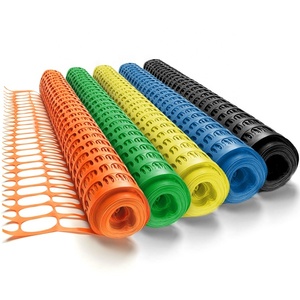
100GSM Orange Safety Tensile Barrier Netting
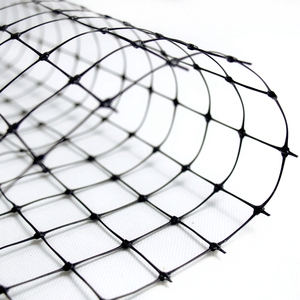
High-density polyethylene warning net for industrial & site containment barriers.
Inquire Now
Direct OEM & Factory Supply for Global Medical Device & Filtration Distributors
Ligating clips represent a foundational pillar of modern minimally invasive surgery (MIS), laparoscopic procedures, and open cardiovascular interventions. Engineered to occlude blood vessels and luminal structures securely, these mechanical devices have evolved from simple metallic staples to complex non-absorbable polymer latching systems and bioabsorbable matrices. According to global health intelligence benchmarks, the demand for surgical ligating clips and automated appliers is expanding rapidly, driven by the global surge in laparoscopic surgeries, robotic-assisted operative techniques, and an increased emphasis on reducing operating room (OR) time.
Information Gain Key Insight: While traditional titanium clips served the medical sector for decades, modern surgical demands prioritize radiolucency, MRI compatibility, and active anti-slippage locking mechanisms. Procurement officers must evaluate manufacturers based on clip retention strength, jaw-loading precision, and regulatory transition readiness under the European Union Medical Device Regulation (EU MDR 2017/745) and US FDA 510(k) frameworks.
As health systems face rising fiscal constraints alongside tightening regulatory standards, hospital procurement teams and medical device OEM distributors are re-evaluating their supply chains. The historical monopoly of Tier-1 multinational medical device conglomerates is giving way to agile, ISO 13485-certified specialized manufacturers capable of delivering equivalent or superior mechanical performance at scalable OEM price points.
Selecting the optimal ligating clip requires a granular understanding of material science, clip geometry, and vessel wall dynamics. Hospitals must maintain a balanced inventory across three primary clip classes:
Fabricated from high-purity, annealed titanium wire. Titanium clips feature V-shaped or chevron profiles with micro-grooved internal teeth. They undergo cold-deformation during application to grip vessel walls.
Molded from inert, radiolucent polymers (such as POM or specialized acetal resins). Designed with flexible hinge mechanisms and tactile self-locking latches that encompass vessels completely.
Synthesized from bioabsorbable polymers such as Polydioxanone (PDS) or Polyglycolic Acid (PGA). Designed to maintain critical vessel occlusion strength during tissue healing before hydrolyzing completely.
| Performance Parameter | Titanium Clips | Polymeric Lock Clips | Absorbable PDS Clips |
|---|---|---|---|
| Primary Lock Mechanism | Mechanical Friction Crimping | Tactile Latch / Hinge Snap | Self-Locking Hinge Gate |
| Vessel Encirclement | Partial (Side-compressing V) | Complete 360° Enclosure | Complete 360° Enclosure |
| Radiolucency (CT/MRI) | Artifact Interference Present | 100% Radiolucent (No Artifact) | 100% Radiolucent |
| Axial Slip Resistance | Moderate (3.5 – 5.2 N) | High (7.8 – 11.5 N) | High (6.5 – 9.8 N) |
| Sterilization Method | Ethylene Oxide (EO) / Gamma | Ethylene Oxide (EO) | Ethylene Oxide (Validated low-temp) |
| Regulatory Standards | ISO 13485 / USP / ASTM F67 | ISO 13485 / EU MDR / FDA 510(k) | ISO 13485 / EU MDR Class III |
This evaluation scores global manufacturing facilities based on production capacity, quality assurance standards (ISO 13485 & Cleanroom certifications), product range diversity, and OEM/Private-label support capability.
Universal Sutures is an industry-leading medical device brand operating under Unisur Lifecare. Renowned as the second Indian manufacturer to secure prestigious EU MDR certification across 13 product families, Universal Sutures produces over 5,000 active SKUs including advanced polymer ligating clips, absorbable mesh tackers, surgical sutures, polypropylene hernia mesh, and haemostatic products. Their manufacturing line guarantees clips tested to at least 1.1× USP tensile & pull-off resistance benchmarks, backed by turnkey private-label contract manufacturing for global distributors.
Teleflex set the global standard for non-absorbable polymer ligation with the Weck Hem-o-lok® system. Featuring a flexible hinge and distinct locking latch, Hem-o-lok clips provide secure closure for vessels ranging from 2 mm to 16 mm. Teleflex maintains extensive automated manufacturing cleanrooms in North America and Europe, serving high-budget healthcare institutions worldwide.
Medtronic dominates single-use laparoscopic instruments with integrated clip applier systems. Their Endo Clip™ manual and powered appliers pre-load titanium clips with inter-locking tooth patterns, designed specifically for rapid vessel ligation in complex minimally invasive thoracic and abdominal operations.
Ethicon’s LIGACLIP® extra-safety titanium clips feature proprietary lateral and transverse grooves that minimize slippage on smooth vascular pedicles. Ethicon operates high-speed precision stamping lines capable of delivering high-volume sterile cartridge packs for worldwide distribution.
Aesculap offers premium German-engineered ligation systems. Their Double-Shank (DS) titanium clips and pneumatic Challenger® multi-fire appliers provide exceptional closing forces, designed specifically to reduce surgeon hand fatigue during prolonged laparoscopic procedures.
Microline Surgical specializes in "resposable" surgical solutions—combining reusable ergonomic applier handles with single-use sterile clip cartridges. This hybrid manufacturing approach significantly lowers OR bio-waste and capital expenditure for surgical centers.
Grena is a European manufacturer focused on specialized polymer ligation systems. The Click'a V® non-absorbable polymer clip system is designed with an expanded latch surface to accommodate thick tissue structures safely while maintaining full radiolucency.
Peters Surgical manufactures high-precision surgical sutures, temporary vascular clamps, and titanium ligating clips. Operating cleanrooms across France and India, Peters Surgical provides comprehensive technical dossiers for hospital group tenders.
Kangji Medical is one of East Asia's largest manufacturers of laparoscopic instruments. Featuring extensive automated injection molding and wire-forming infrastructure, Kangji produces budget-friendly ligation cartridges for emerging market healthcare networks.
Victor Medical manufactures disposable endo-cutters, trocars, and polymer ligation clip assemblies. Their ISO 13485 facility supports private-label manufacturing for international medical distributors operating in regional markets.
Navigating the next decade of medical device sourcing requires procurement leaders to anticipate critical regulatory, technological, and geopolitical shifts:
The phase-out of legacy Medical Device Directive (MDD) certificates in Europe has created supply chain friction. Manufacturers lacking fully validated technical documentation, clinical evaluations, and post-market surveillance (PMS) frameworks are facing market exclusion. Procurement teams are consolidating contracts with fully certified MDR manufacturers—such as Unisur Lifecare (Universal Sutures)—to secure audit-proof, continuous device supply.
While East Asia historically dominated raw material assembly, India has emerged as a global powerhouse for high-precision sterile medical device manufacturing. Supported by government initiatives such as the Production Linked Incentive (PLI) scheme and world-class cleanrooms in technological centers like Bengaluru, Indian manufacturers offer an unmatched combination of stringent quality control, ISO compliance, and cost efficiency.
Global medical distributors are increasingly moving away from pure third-party reselling. By establishing proprietary private-label brands for ligating clips, hernia meshes, and sutures, distributors capture higher profit margins and build long-term enterprise value. Leading factories now offer full-dossier support, multi-language artwork customization, and custom packaging configurations to facilitate rapid brand launch.
As the flagship brand of Unisur Lifecare Pvt. Ltd., Universal Sutures embodies the highest standards of medical device manufacturing. Operating from advanced cleanroom complexes in Bengaluru, India, the enterprise delivers end-to-end wound closure and surgical ligation solutions built on uncompromising quality control.
“We do not simply ship medical devices; we transfer process discipline, documented quality, and audit-ready reliability that our global partners can build a brand upon.”
— Executive Leadership, Unisur Lifecare Pvt. Ltd.Addressing core technical, regulatory, and logistics queries for surgical clip & device procurement:
Importers must verify that the manufacturing factory holds an ISO 13485 Quality Management System certification. For distribution within the European Union, CE marking under the strict EU MDR (Regulation 2017/745) is mandatory. For the US market, FDA 510(k) clearance is required. Batch-specific Certificates of Analysis (CoA) for sterility, non-pyrogenicity, and pull-off force should accompany every shipment.
Polymer locking clips (such as Hem-o-lok type clips) feature a latch mechanism that completely encompasses the vessel (360-degree closure), providing higher resistance to axial displacement. Furthermore, polymer clips are 100% radiolucent, preventing interference and artifacts during post-operative CT scans or MRI imaging.
Ethylene Oxide (EO) sterilization is the industry standard for polymer clips, absorbable materials, and polypropylene meshes sensitive to thermal degradation. Each sterilization load undergoes biological indicator verification and gas residual aeration testing to ensure compliance with ISO 11135 standards.
OEM private-label programs typically require initial order quantities tailored to custom carton printing runs (typically starting from 1,000 to 5,000 sterile boxes depending on SKU diversity). Turnkey dossier submission and artwork approval usually take 4 to 6 weeks, followed by standard production and sterilization cycles.
Quality control engineers utilize calibrated digital force gauges to measure both opening force (latch engagement security) and axial slip resistance (the force required to slide a locked clip along a simulated vascular substrate). Clips must meet or exceed 1.1 times the pharmacopoeial safety baseline.
Connect with our technical engineering and OEM private-label specialists to request product samples, technical dossiers, or custom contract manufacturing pricing.