Explore our top-tier selection of medical-grade synthetic meshes, agricultural barriers, and precision industrial filter screens built to rigorous international standards.
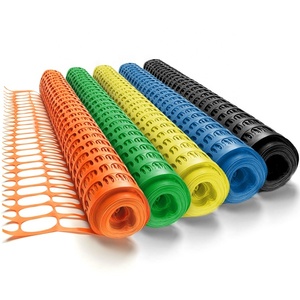
High-tensile warning mesh engineered for construction barrier security and site protection.
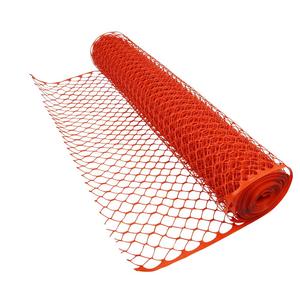
Flexible high-density polyethylene security mesh designed for portable perimeter fencing.
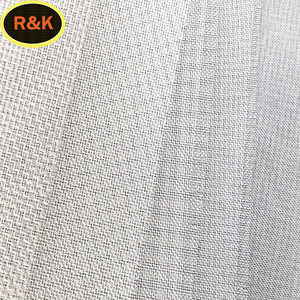
Precision calibrated micron filtration mesh compliant with FDA food-grade and medical standards.
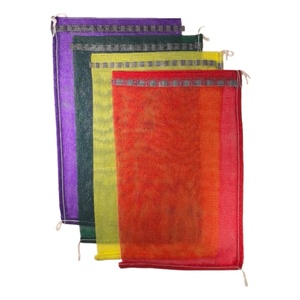
Heavy-duty ventilated 25kg agricultural packing mesh bag tailored for crop transportation.
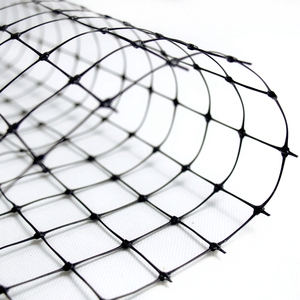
Biaxially oriented polypropylene barrier netting with superior UV degradation resistance.
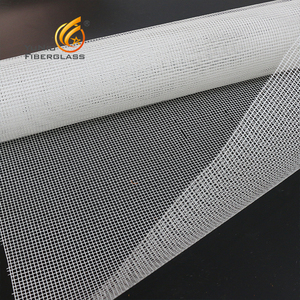
Flame-retardant structural reinforcement fiberglass grid for thermal and mechanical stability.
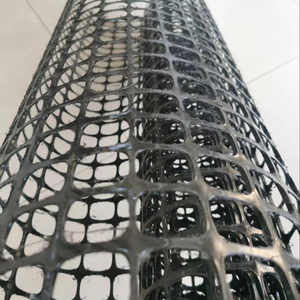
Anti-UV virgin polypropylene biaxial structure engineered for high-load soil stabilization and farming.
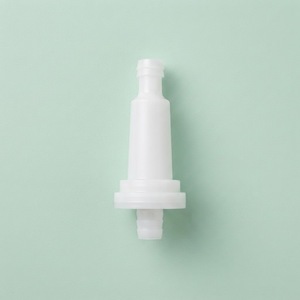
Precision engineered polyamide 6 micro-porous filter screen for medical and industrial fluid filtration.
In modern surgical practice, wound closure technology has experienced a paradigm shift from traditional smooth monofilaments and braided multifilaments to advanced knotless barbed suture systems. Traditional wound closure relies heavily on surgical knots to anchor the suture line and maintain tissue approximation. However, surgical knots represent the weakest point of any suture construct—reducing tensile strength by up to 50%, acting as potential loci for surgical site infections (SSI), and adding significant intraoperative time, particularly in laparoscopic and minimally invasive procedures.
Barbed sutures address these limitations through engineered micro-barbs cut into the monofilament core at precise angles. These tiny, directional barbs penetrate deep into the surrounding tissue, gripping it uniformly along the entire length of the strand. This mechanical distribution converts localized point-tension (inherent in interrupted or knotted continuous sutures) into a continuous, balanced tension profile across the entire wound bed.
Eliminating surgical knot tying reduces tissue approximation time significantly in open and laparoscopic surgeries.
Prevents tissue ischemia and necrosis by distributing mechanical forces uniformly along the entire suture line.
Removes knot slippage risks, unravelling, and suture granuloma formation caused by bulky surgical knots.
Optimized for robotic-assisted surgery (e.g., da Vinci) where manual knot tying inside tight cavities is challenging.
Uni-directional Barbed Sutures: Feature barbs cut in a single direction with a fixed welded loop at the distal end. The needle passes through the loop to initiate anchoring without tying a knot.
Bi-directional Barbed Sutures: Possess barbs oriented in opposing directions from a central unbarbed transition zone. Double-armed with needles at both ends, allowing two surgeons to close a incision simultaneously from the center outward.
An authoritative evaluation of the industry's leading OEM, private-label, and hospital-direct barbed suture manufacturers based on regulatory compliance, material engineering, and global export capabilities.
Comparative evaluation of key surgical polymers utilized in barbed suture manufacturing, detailing degradation profiles, tissue support duration, and target surgical indications.
| Polymer Material | Structure Type | Tensile Strength Retention | Complete Absorption | Primary Clinical Application | USP Size Range |
|---|---|---|---|---|---|
| Polydioxanone (PDO / PDS) | Monofilament Barbed | 50% at 4 Weeks / 25% at 6 Weeks | 180 – 220 Days | Abdominal wall fascia, orthopedics, bariatric surgery | USP 2 to 4-0 |
| Poliglecaprone-25 (PGCL) | Monofilament Barbed | 50% at 7 Days / 0% at 21 Days | 90 – 120 Days | Subcuticular skin closure, cosmetic plastic surgery | USP 1 to 5-0 |
| Polyglycolic Acid (PGA) | Coated Monofilament Barbed | 50% at 14 Days / 20% at 21 Days | 60 – 90 Days | Gastrointestinal anastomosis, gynecology, soft tissue | USP 2 to 3-0 |
| Polypropylene (PP) | Non-Absorbable Monofilament | Permanent (0% Loss over time) | Non-Absorbable | Hernia mesh fixation, tendon repair, cardiovascular | USP 1 to 6-0 |
| UHMWPE Polyethylene | Non-Absorbable High Load | Permanent Ultra-High Tensile | Non-Absorbable | Arthroscopy, high-stress orthopedic ligament reconstruction | USP 5 to 2-0 |
As healthcare systems globally transition toward value-based procurement and reduced operating room times, demand for barbed wound closure devices is projected to grow at a CAGR of 8.4% through 2030. Sourcing executives and hospital supply-chain leaders must align their purchasing strategies with key technological shift shaping the industry:
Future barbed sutures are incorporating chlorhexidine and silver-nanoparticle coatings to prevent Surgical Site Infections (SSIs) while maintaining barb mechanical grip integrity inside wet tissue environments.
Transitioning from mechanical blade cutting to ultra-fast femtosecond laser barbing enables consistent barb geometry, elimination of structural micro-cracks, and exact tensile strength margins meeting 1.1× USP standards.
With stringent European Medical Device Regulation (EU MDR 2017/745) requirements, global buyers are consolidating vendors—favoring certified manufacturers like Universal Sutures that maintain fully audited technical documentation.
As India's second medical device manufacturer to earn prestigious EU MDR certification, Universal Sutures delivers uncompromised quality, regulatory certainty, and full turn-key OEM solutions.
Full regulatory compliance across 13 product families, audited technical dossiers, and global CE approval for frictionless market entry.
Every lot of absorbable and non-absorbable suture is validated to 110% of USP minimum tensile strength and needle attachment limits.
Extensive selection of suture materials, needle profiles, absorbable mesh sheets, and bone wax configurations under one roof.
Over 70% female representation in our cleanroom workforce, operating with strict anti-child-labor policies and continuous skill training.
Get instant clarity on technical specifications, regulatory filings, OEM private labeling, and bulk supply options.
Looking for a reliable supply of barbed sutures, polypropylene hernia mesh, bone wax, or OEM private-label wound closure products? Contact our regulatory and sales engineering team today.
Inquire Now