Explore our export-grade medical-grade synthetic meshes, surgical closure components, and specialized industrial barrier netting manufactured under certified quality control systems.
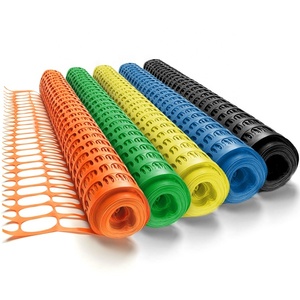
High-tensile barrier netting designed for heavy-duty structural perimeter warning, construction safety, and temporary enclosure applications.
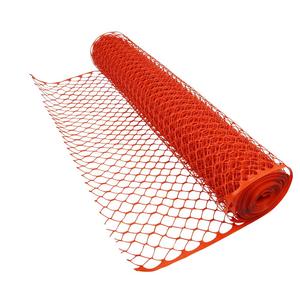
Flexible UV-stabilized polymer security mesh engineered for rapid deployment, high tear-resistance, and multi-site reusability.
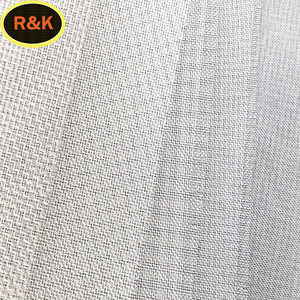
Precision-woven monofilament filtration mesh featuring uniform aperture size for liquid separation, bioprocess, and industrial fluid control.
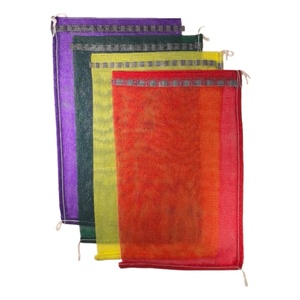
100% virgin PP breathable mesh sacks with reinforced drawstrings, optimized for bulk agricultural export and high-burst load endurance.
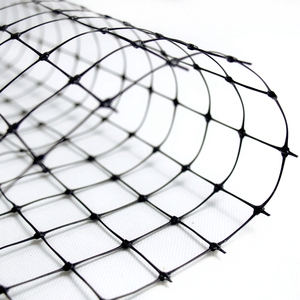
Biaxially oriented polypropylene barrier netting offering ultra-lightweight structural strength, weather resistance, and biological exclusion.
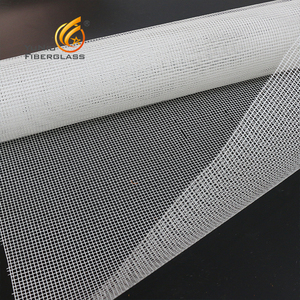
Alkali-resistant woven fiberglass mesh designed for thermal insulation, composite reinforcement, and fire-retardant industrial barriers.
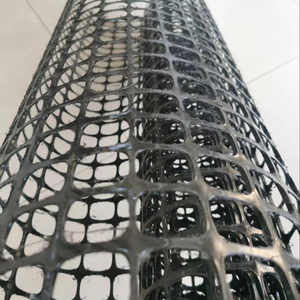
Rigid extruded polymer grid engineered for soil stabilization, agricultural containment, and high-tensile environmental fencing.

Precision-molded Polyamide 6 micro-filtration screen designed for industrial water purification, automotive fluid control, and medical housings.
A comprehensive examination of stainless steel alloys, tip geometry mechanics, silicone surface lubricity, and attachment swaging tension required for high-tier medical device manufacturing.
The performance of surgical suture needles in demanding operative conditions (such as calcified vascular tissue or dense sternal bone) relies fundamentally on the alloy composition. OEM manufacturing requires a rigorous selection between 300-series (austenitic) and 400-series (martensitic) stainless steels.
300-Series Alloy Wire (e.g., AISI 302, 304, 316L): Preferred for its exceptional ductility and high tensile strength. Through specialized cold-working processes, 300-series wire achieves extreme bend resistance without catastrophic brittle fracture. This yields a needle that yields under excessive force rather than snapping inside operative tissue, maximizing surgical safety.
400-Series Alloy Wire (e.g., AISI 420, 455): Heat-treated martensitic alloys provide supreme initial hardness and point sharpness. While highly rigid, 400-series needles exhibit lower ultimate ductility compared to cold-drawn 300-series alloys, making them ideal for precise micro-surgical points where shaft deflection must be minimized.
Modern surgical standards require an uninterrupted, smooth transition from the needle body to the suture thread (atraumatic needle assembly). OEM factories utilize two primary end-joining architectures:
Precision Drilled-End Needles: A micro-laser or mechanical drill creates an axial hole down the center of the needle shank. The suture thread is inserted and swaged 360 degrees around the perimeter. This provides a uniform outer diameter, reducing tissue drag force by up to 35% during tissue passage compared to traditional channel needles.
Channel Swaged Needles: A longitudinal channel is pressed into the needle tail to clamp the suture material. While cost-effective for high-volume basic surgical lines, channel needles exhibit a larger cross-sectional footprint at the transition zone, generating higher penetration resistance.
Comprehensive selection matrix for B2B procurement managers, regulatory dossier compilers, and OEM private label distributors.
| Needle Type | Cross-Section Geometry | Penetration Profile | Primary Clinical Indications | Key OEM Specification |
|---|---|---|---|---|
| Taper Point | Round shank, smooth gradual taper point | Pushes tissue fibers aside without cutting | Gastrointestinal, vascular, subcutaneous, fascia | Micro-siliconized 300-series wire; ultra-low tissue drag |
| Cutting Edge (Reverse) | Triangular with cutting edge on outer convex curvature | High resistance to tissue tear-out; cuts through tough tissue | Skin closure, plastic surgery, ophthalmic, tendon repair | Hand-honed triangular apex; 3-stage grinding process |
| Tapercut (Taper Point Cutting) | Round body with short triangular cutting tip | Initial penetration through tough tissue, followed by smooth dilation | Calcified vascular walls, dense fascia, orthopedic repair | Balanced rigidity; low hole-size ratio to thread diameter |
| Spatulated Micro-Point | Flat top and bottom surfaces with lateral cutting edges | Splits corneal or scleral tissue layers horizontally without deep penetration | Ophthalmic anterior segment, micro-vascular anastomosis | Laser-drilled end down to 10-0 suture diameter alignment |
| Blunt Taper Point | Round body with rounded, non-cutting tip | Prevents accidental needle-stick injuries; pushes delicate parenchymal tissue | Liver, kidney parenchymal tissue closure, high-risk virus procedures | Specialized blunting geometry; high ductility wire alloy |
Strategic shifting in regulatory demands, manufacturing automation, and supply chain risk mitigation for global healthcare distributors.
The regulatory landscape has permanently altered with the sunsetting of the European Medical Device Directive (MDD 93/42/EEC) in favor of the stringent EU Medical Device Regulation (EU MDR 2017/745). Global healthcare buyers can no longer rely on basic self-declarations.
Procurement teams are aggressively shifting orders toward verified OEM partners who possess fully audited Technical Documentation Files (TDF), robust Clinical Evaluation Reports (CER), and rigorous Post-Market Surveillance (PMS) frameworks across all surgical suture families.
Manual needle swaging introduces batch-to-batch variability in needle-holding security and penetration forces. Strategic B2B procurement trends lean heavily toward factories utilizing fully automated high-speed needle curving, micro-drilling, and robotic swaging machinery.
Furthermore, advanced curling and silicone coating technology ensures that multi-pass penetration force remains linear, preventing needle dulling during continuous running sutures in long surgical cases.
Over-reliance on single-region manufacturing hubs has created severe vulnerability in global medical device supply chains. International healthcare systems are adopting a "China+1" or multi-hub sourcing model, driving significant OEM contract growth to certified manufacturing facilities in India.
Facilities based in tech-centric hubs like Bengaluru offer mature metallurgical engineering ecosystems, ISO 13485 accredited cleanrooms, competitive labor economics, and direct export routes to over 80 countries worldwide.
A flagship medical device manufacturer in Bengaluru, India — delivering world-class wound closure technology, private label programs, and institutional supply chain reliability.
Universal Sutures operates under a certified ISO 13485 Quality Management System and stands proudly as the second Indian suture manufacturer to secure full EU MDR (Regulation 2017/745) certification. Our manufacturing plant spans thousands of square feet of ISO Class 7 & Class 8 controlled cleanroom environments.
We provide full-service turn-key contract manufacturing for global medical device brands, hospital chains, and regional distributors seeking customized wound closure product portfolios.
From micro-surgery needles to high-strength polypropylene meshes and oxidized regenerated cellulose absorbable hemostats.
Full spectrum of synthetic and natural absorbable polymers including UNIGLYDE (PGA), UNISYNTH (Polyglactin 910), UNISYNTH PDS (Polydioxanone), UNIGLYDE MONO (Poliglecaprone 25), and UNIGUT (Plain & Chromic Catgut).
Strength Retention: 14 days up to 60 days depending on polymer structure.
High-tensile permanent wound closure materials including UNILENE (Monofilament Polypropylene), UNILON (Monofilament Nylon/Polyamide), UNIBOND (Braided Coated Polyester), UNISTRONG (UHMWPE Polyethylene), and Surgical Stainless Steel Wire.
Indication: Cardiovascular, orthopedic, hernia mesh fixation, and skin closure.
Medical-grade polypropylene hernia repair meshes in sterile sheets/rolls, UNISTAT™ Oxidized Regenerated Cellulose (ORC absorbable hemostat), HAEMOWAX surgical bone wax, and LAPAROSCOPIC mesh tacker devices.
Biocompatibility: ISO 10993 compliant with low inflammatory response profiles.
Expert answers addressing technical specifications, regulatory dossier submissions, quality assurances, and factory ordering procedures.
All suture needle combinations engineered at our facilities meet or exceed United States Pharmacopeia (USP) and European Pharmacopoeia (EP) specifications. Crucially, our internal testing protocol mandates a minimum 1.1× safety factor above USP minimums for both tensile knot strength and needle-attachment pull-off strength.
We utilize premium AISI 300-series (such as 302/304/316) cold-worked stainless steel wire for maximum ductility and bend resistance, alongside AISI 400-series martensitic alloys for specialty micro-cutting applications. 300-series wire is widely preferred for global tenders because it bends under extreme torque rather than snapping unexpectedly in tissue.
Yes. Our OEM division handles end-to-end contract manufacturing. We design customized primary foil packs, outer shelf cartons, insert sheets, and localized language labels. Furthermore, our regulatory affairs team provides complete Technical Documentation Files (TDF) to assist distributors with regional health authority registrations.
Needle sharpness is measured using automated multi-pass penetration testing equipment that records the force (in grams/Newtons) required to penetrate a standardized polyurethane substrate over successive passes. Micro-siliconization treatments are applied to maintain a flat penetration force curve, preventing needle dulling during lengthy surgical closures.
Every commercial batch is terminally sterilized using validated Ethylene Oxide (EO) gas cycles compliant with ISO 11135 standards. Shipments are accompanied by a comprehensive Certificate of Analysis (CoA) detailing EO residual limits (ISO 10993-7), sterility assurance level (SAL 10⁻⁶), endotoxin test results (LAL test), and physical mechanical pull values.
Standard OEM lead times range from 4 to 6 weeks depending on custom needle tooling, foil packaging artwork approvals, and batch size. MOQs vary by product code and needle wire geometry, but we maintain flexible batch sizing options to support market entry testing for authorized distributors.
Consult with our OEM technical sales team today to request product samples, review technical documentation files, or request detailed FOB/CIF pricing for your distribution network.