Industry White Paper
Polypropylene Mesh Technology: Material Science, Manufacturing Engineering, & Global Procurement Sourcing Guide
Polypropylene (PP) mesh represents one of the most versatile synthetic polymer structures in modern bio-engineering, geotextile structural reinforcement, precision filtration, and agricultural logistics. Defined by its high strength-to-weight ratio, chemical inertness, biological compatibility, and resistance to environmental stress cracking, polypropylene mesh has established itself as an indispensable material across international industrial supply chains.
This comprehensive technical white paper evaluates the molecular architecture of polypropylene mesh, analyzes advances in warp-knitting and extrusion technology, examines key global market procurement trends from 2025 to 2030, and establishes a definitive quality assurance framework for international procurement directors and OEM brand managers.
Key Takeaway for B2B Procurement Teams: Sourcing high-performance polypropylene mesh requires evaluating polymer crystallinity, monofilament diameter consistency, pore size stability, thermal set memory, and strict adherence to international regulatory standards such as ISO 13485, EU MDR (2017/745), US FDA 21 CFR 177.1520, and REACH protocols.
1. Polymer Architecture & Microstructural Engineering of Polypropylene Mesh
At the molecular level, industrial and medical-grade polypropylene mesh is produced primarily from isotactic polypropylene (iPP). The linear arrangement of methyl groups (-CH3) along the polymer backbone creates a highly crystalline structure (typically 50% to 70% crystallinity) that imparts unique physical properties:
- Density & Weight Efficiency: Polypropylene features one of the lowest specific gravities among commercial synthetic polymers (approximately 0.90 to 0.91 g/cm³), allowing it to float in water while providing exceptional structural tensile resilience.
- Hydrophobicity & Chemical Resistance: With negligible moisture absorption (<0.01% after 24-hour immersion), PP mesh resists aqueous solutions, inorganic acids, alkalis, and organic solvents. This prevents hydrolytic degradation, mold formation, and bacterial proliferation.
- Thermal Behavior & Heat Setting: Featuring a melting point range of 160°C to 165°C, polypropylene monofilaments undergo thermal stabilization (annealing) post-weaving or post-knitting. This heat-setting step locks the pore geometry, prevents fraying upon cutting, and eliminates internal mechanical strain.
The transition from raw polyolefin resin to finished mesh involves specialized extrusion techniques. Virgin polypropylene pellets are melted and extruded through precision spinnerets to create high-tenacity monofilament threads or flat ribbons. During the drawing process, the polymer chains are uniaxially or biaxially oriented, increasing molecular alignment and yielding tensile strengths up to 7.0–8.5 g/denier in high-spec surgical monofilaments and industrial geogrids.
| Property Parameter |
Surgical Mesh Grade |
Geotextile / Geogrid Grade |
Filtration Micron Mesh Grade |
Safety & Agriculture Netting |
| Base Polymer |
100% Virgin Medical iPP |
High-Density PP / BOP PP |
Precision Food Grade PP / PA6 |
Virgin PP + UV Masterbatch |
| Monofilament Diameter |
0.08 mm – 0.20 mm |
0.30 mm – 0.80 mm |
0.03 mm – 0.15 mm |
0.15 mm – 0.35 mm |
| Burst Strength (MOP) |
> 1000 kPa (Ball Burst) |
> 35 kN/m Tensile Yield |
Delta-P Rated (0.5 – 5.0 bar) |
Tensile Yield > 100 GSM |
| Porosity Range |
Macroporous (1.5 – 4.0 mm) |
Grid Aperture (20 – 50 mm) |
Micron Aperture (20 – 100 µm) |
Knitted Mesh (5 – 25 mm) |
| Sterilization/Compliance |
EO Sterilizable / EU MDR |
ISO 10319 Tensile Standard |
FDA 21 CFR 177.1520 / NSF |
Anti-UV 300 KLY Rating |
2. Key Manufacturing Paradigms: Warp-Knitting vs. Extrusion vs. Biaxial Stretching
Understanding the distinction between manufacturing methodologies is essential for selecting the appropriate mesh structure for your specific operational application:
A. Raschel Warp-Knitting (Medical & Soft Security Mesh)
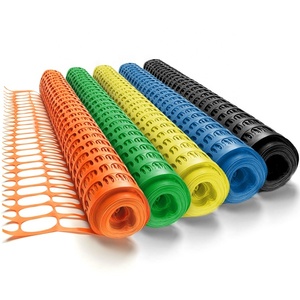
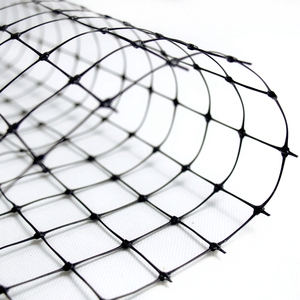
Surgical hernia meshes, high-density portable safety fences, and flexible warning netting are produced primarily via Karl Mayer Raschel warp-knitting machines. Monofilaments are interlooped into a stable interlocking matrix. The key advantage of warp-knitting is its non-raveling construction: if a knitted mesh is cut or punctured in surgery or on a construction site, the surrounding loops maintain structural integrity without unraveling.
B. Biaxially Oriented Polypropylene (BOP) Extrusion (Geogrids & Heavy-Duty Fence)
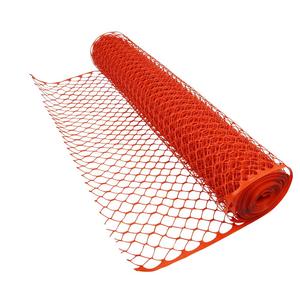
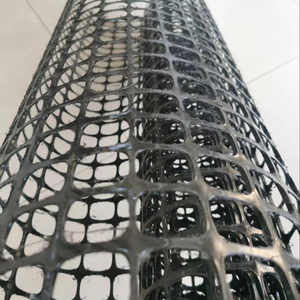
Biaxial polypropylene geogrids and heavy-duty poultry fence netting are manufactured by extruding a continuous sheet of high-density PP, punching a precise grid pattern, and subsequently stretching the material in both longitudinal (machine) and transverse directions at elevated temperatures. This biaxial orientation aligns the polymer molecules along the rib junctions, resulting in exceptionally high tensile modulus and creep resistance under heavy structural load.
C. Precision Monofilament Weaving (Micron Liquid & Air Filtration)
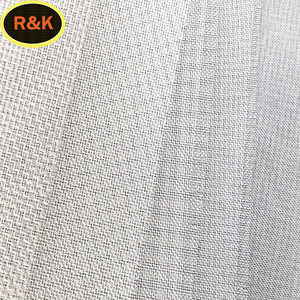
Precision filtration mesh relies on shuttleless weaving looms to achieve accurate micron-rated apertures (ranging from 20 micron to 100 micron). Used widely in industrial water purification, food and beverage processing, and chemical synthesis, these monofilament weaves present smooth pore surfaces that minimize particle trapping within the thread structure, facilitating easy backwashing and clean-in-place (CIP) maintenance.
3. Sourcing & Procurement Trends (2025–2030): Market Drivers & Buyers' Imperatives
The global polypropylene mesh market is undergoing structural shifts driven by evolving regulatory demands, supply chain localization, and material innovation:
- Medical Mesh Regulatory Tightening (EU MDR & FDA Class II/III Requirements): The rollout of the EU MDR (Regulation 2017/745) has raised technical documentation requirements. Overseas healthcare procurement agencies now mandate comprehensive clinical evaluation reports (CER), biocompatibility data (ISO 10993), residue stability analysis, and guaranteed batch-to-batch tensile consistency exceeding 1.1× USP standards. Indian export hubs such as Unisur Lifecare's Bengaluru manufacturing plants lead this compliance transition.
- Demand for Lightweight & Large-Pore Surgical Mesh: In hernia repair and tissue reconstruction, clinical literature strongly favors macroporous, lightweight PP mesh (<45 g/m² with pore sizes >1.5 mm). These structures minimize foreign body reactions, reduce post-operative stiffness, and promote healthy fibroblastic tissue ingrowth compared to traditional heavy, dense meshes.
- Incorporation of Anti-UV & Flame-Retardant Masterbatches: For outdoor construction barriers, agricultural crop netting, and security fences, exposure to ultraviolet radiation causes rapid photo-oxidative degradation of un-stabilized polyolefins. Global buyers now specify Hindered Amine Light Stabilizer (HALS) additives capable of enduring 300 to 500 KLY (Kilo-Langleys) of direct sunlight, alongside halogen-free fire-retardant standard compliance (e.g., UL94 V-0 or DIN 4102 B1).
- Supply Chain Transparency & OEM Private Label Customization: Industrial buyers and distributor networks are consolidating vendors, favoring turn-key OEM partners who offer integrated cleanroom packaging, custom roll widths, sonic slit edges, private label artwork, and fully certified laboratory test certificates (CoA) with every shipment.
Operational Quality Guarantee: At Unisur Lifecare, our full cleanroom infrastructure ensures zero particulate contamination. Every roll of polypropylene mesh, surgical suture thread, and bone wax product is subjected to stringent tensile strength testing, bioburden monitoring, and validated Ethylene Oxide (EO) sterilization cycles.
4. Quality Control Protocol: Testing Standards for Polypropylene Mesh Exports
To ensure zero-defect delivery across international borders, professional OEM exporters utilize a multi-tier quality management system (QMS) governed by ISO 13485 and ISO 9001 guidelines:
- Tensile & Elongation Testing (ASTM D5034 / ISO 13934): Measures peak load failure and percentage elongation under mechanical stress. Medical meshes require balanced elasticity (25%–45% stretch) to match human abdominal wall compliance under intra-abdominal pressure spikes.
- Bursting Strength (ASTM D3786 / ISO 13938 Ball Burst): Evaluates multi-directional fluid or pressure tolerance, confirming that knitted loops will not rupture under explosive pressure loads.
- Differential Scanning Calorimetry (DSC): Assesses polymer purity, thermal history, and oxidation induction time (OIT) to detect recycled resin contamination or degradation.
- Bioburden & Endotoxin Testing (USP <85> / ISO 11737): Validates that medical polypropylene surgical implants maintain endotoxin levels strictly below 20 EU/device prior to terminal EO sterilization.
What quality management certifications govern your polypropylene mesh manufacturing lines?
Our production plants operate strictly under an ISO 13485 certified Quality Management System. Furthermore, Unisur Lifecare Pvt. Ltd. holds official CE marking and full EU MDR (Regulation 2017/745) certification across 13 distinct product families. We are proud to be the second Indian suture and surgical device manufacturer to secure EU MDR compliance, guaranteeing audit-ready technical files for international hospital supply chains.
How does your 1.1× USP tensile strength testing protocol benefit OEM buyers?
Pharmacopoeial standards (such as USP and EP) define minimum acceptable thresholds for tensile strength and needle-pull detachment. Our internal quality standard mandates that every polypropylene mesh and surgical suture batch test at a minimum of 1.1 times (110%) of the USP baseline requirements. This intentional engineering safety margin guarantees structural knot integrity, high ball-burst tolerance, and zero field failures.
Can you customize mesh dimensions, pore sizes, GSM weight, and roll widths for OEM contract manufacturing?
Yes. Our OEM/ODM capabilities encompass custom monofilament extrusion, variable warp-knitting gauge settings, masterbatch color matching (orange warning, black biaxial, purple/white agricultural, blue/transparent surgical), sonic roll slitting (from 5 cm up to 32 cm or 2.5 m width), custom GSM weights (from light 30 GSM up to heavy 145+ GSM), and customized retail carton branding.
What sterilization options are available for medical polypropylene surgical mesh?
We offer terminal Ethylene Oxide (EO) sterilization inside validated cleanroom chamber systems. Primary packaging includes sterile medical-grade peelable pouches (aluminum foil or Tyvek/film combinations) featuring chemical indicator strips, double-sterile barriers, and complete batch traceability labels adhering to UDI (Unique Device Identification) standards.
Are your agricultural and industrial polypropylene nets compliant with UV degradation standards?
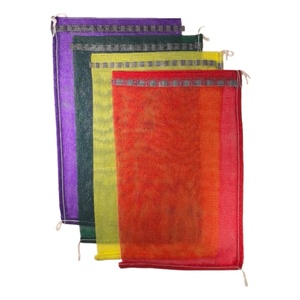
All outdoor safety fences, poultry geogrids, and agricultural packing meshes are compounded with premium UV-stabilizer additives (HALS). We offer custom UV ratings tailored to target export regions—ranging from 120 KLY up to 500 KLY (Kilo-Langleys), ensuring long-term structural integrity without embrittlement or color fading under intense direct solar exposure.
Do your micron filtration meshes comply with food contact regulations?
Our precision micron polypropylene, polyester, and PA6 filter screens are manufactured using 100% virgin food-grade resin that complies fully with US FDA 21 CFR 177.1520 and EU Regulation 10/2011 for direct food and beverage contact applications.
What is your standard production lead time and Minimum Order Quantity (MOQ)?
Standard catalog items ship within 2 to 3 weeks. Custom OEM contract manufacturing runs typically require 4 to 6 weeks for tooling setup, masterbatch validation, pouch artwork approval, and cleanroom production. MOQs depend on product customization levels; contact our export sales desk for tailored quotation structures.
How do you support global distributors with country-specific regulatory registrations?
We provide comprehensive technical dossier packages (including ISO 10993 biocompatibility testing reports, shelf-life stability studies, sterilization validation protocols, Certificate of Analysis (CoA), and CE technical files) to streamline registration with local ministries of health and regulatory bodies worldwide.