Explore our ISO 13485 & CE certified surgical linear cutter staplers designed for thoracic, abdominal, and gynecological surgical procedures.
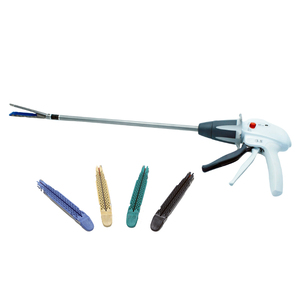
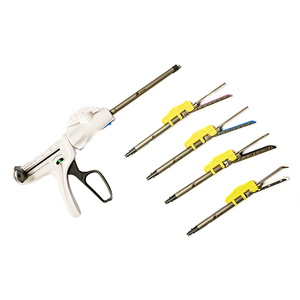
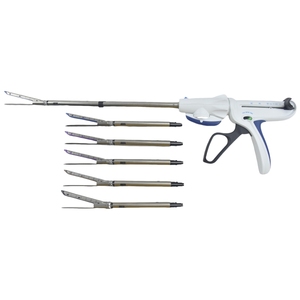
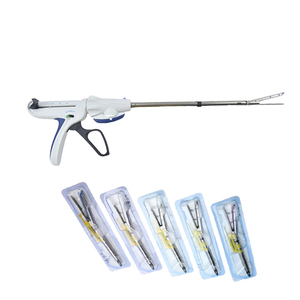
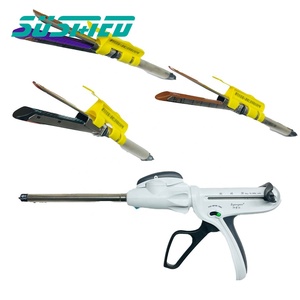
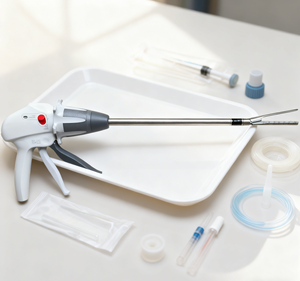
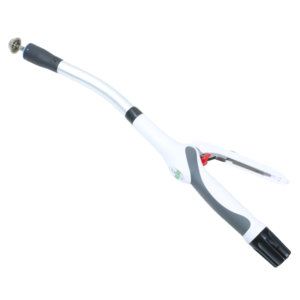
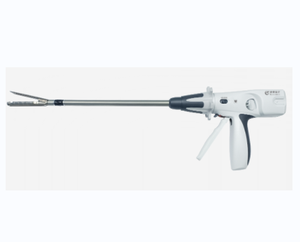
Understanding the engineering principles behind anastomotic integrity, B-form staple formation, and variable height reload configurations in modern minimally invasive surgery (MIS).
In laparoscopic gastric bypass, lobectomy, and colorectal resection, the endoscopic linear cutter stapler serves a dual function: simultaneously transecting tissue and placing parallel staggered rows of titanium staples. The primary determinant of surgical success is preventing anastomotic leaks while avoiding tissue necrosis. Leading Chinese medical device manufacturers utilize precision-machined I-Beams to maintain uniform clamping force across the entire 45mm or 60mm cartridge length, ensuring consistent B-form staple closure regardless of tissue density variations.
Traditional dual-height reload cartridges subject delicate tissue to uniform lateral stress. Advanced Chinese OEM facilities have introduced stepped-height reload technology (Tri-Staple geometry). By placing shorter staples near the cut line for optimal hemostasis and progressively longer staples at the outer edges for microvascular perfusion, tissue stress is reduced by up to 35%. This gradient compression profile significantly lowers postoperative bleeding risks and promotes rapid physiological healing.
Selecting the appropriate reload cartridge based on measured tissue thickness is paramount for preventing tissue shearing or incomplete stapling. The technical specification matrix below outlines standard manufacturing parameters for B2B global buyers:
| Reload Color Code | Tissue Classification | Unclosed Staple Height | Closed Staple Height | Wire Diameter (Ti-6Al-4V) | Primary Clinical Indications |
|---|---|---|---|---|---|
| Gray / Tan | Extra Thin / Vascular | 2.0 mm | 0.75 mm – 1.0 mm | 0.19 mm | Mesentery, vascular structures, delicate lung parenchyma |
| White | Vascular / Thin Tissue | 2.5 mm | 1.0 mm – 1.5 mm | 0.21 mm | Standard lung tissue, vascular bundles, small intestine |
| Blue | Standard / Medium Tissue | 3.5 mm | 1.5 mm – 1.8 mm | 0.23 mm | Gastrointestinal tract, stomach body, colon transection |
| Gold / Yellow | Medium / Thick Tissue | 3.8 mm – 4.0 mm | 1.8 mm – 2.0 mm | 0.25 mm | Thickened stomach tissue, bariatric sleeve gastrectomy |
| Green | Thick Tissue | 4.1 mm – 4.5 mm | 2.0 mm – 2.2 mm | 0.28 mm | Gastric tissue, rectosigmoid junction, muscular tissues |
| Black | Extra Thick Tissue | 4.8 mm – 5.0 mm | 2.3 mm – 2.5 mm | 0.30 mm | Dense hypertrophic tissue, re-do bariatric procedures |
SEO & Clinical Engineering Insight: When sourcing endoscopic linear staplers from China wholesale manufacturers, procurement teams must verify that reload cartridges undergo 100% optical verification for anvil alignment. Discrepancies in anvil pocket alignment exceeding 0.02mm can lead to 'Scissor-Form' staple malformation and catastrophic surgical line failure.
Key technological shifts and strategic sourcing patterns shaping the surgical instrument manufacturing landscape over the next decade.
Manual squeezing handgrips are rapidly giving way to electronically controlled powered endo cutters. Battery-driven motorized stapling delivers consistent firing speed, eliminates manual tremor, and maintains uniform force on the cutting knife. Hospitals across Europe and North America are prioritizing powered platforms, driving OEM factories in China to expand production lines for motorized handles with embedded microprocessor feedback systems.
Next-generation endoscopic staplers integrate micro-sensors within the cartridge jaw that measure tissue compression thickness and fluid displacement prior to firing. If tissue is too dense or under-compressed, the device alerts the surgeon or automatically pauses blade deployment. Global distributors are seeking Chinese contract manufacturing partners capable of integrating sensor-to-board PCB circuitry in Class III surgical devices.
To combat suture-line bleeding and air leaks in thoracic surgery, demand for reload cartridges equipped with pre-attached bioabsorbable polymer buttress membranes (PGA/PCL) has surged. Procurement trends show B2B buyers shifting from standalone buttress material toward integrated factory-installed reinforcements, streamlining intraoperative setup and reducing total procedure costs.
From cost-effective copies to high-precision proprietary medical intellectual property, Chinese surgical instrument factories have modernized their supply chain.
Historical challenges in Chinese surgical instrument manufacturing centered on manual assembly variations and metallurgy inconsistency. Over the past seven years, top-tier manufacturers in Changzhou, Suzhou, and Hangzhou have invested heavily in 5-axis CNC Swiss machining, high-precision Wire EDM (Electrical Discharge Machining), and automated robotic needle-to-thread crimping lines.
Today, titanium wire used in Chinese endo stapler reloads is sourced from medical-grade Titanium Grade 5 (Ti-6Al-4V ELI), matching the tensile strength and biocompatibility parameters required by US FDA 510(k) and European CE MDR regulatory frameworks.
Sourcing wholesale endo staplers directly from Chinese manufacturers provides global distributors with a 40% to 65% cost margin advantage compared to major multinational brands. These savings stem from cluster-based supply chains, where raw materials, injection molding, cleanroom blister packaging, and Ethylene Oxide (EO) sterilization facilities operate within a 50-kilometer radius.
Furthermore, leading suppliers offer turnkey OEM private-label programs, providing customized handle colors, multi-language artwork, regulatory dossier assistance, and complete technical files for country-specific health authority registrations.
Combining world-class quality systems, expert engineering personnel, and rigorous batch traceability for global healthcare partners.
Our manufacturing complex operates under a fully certified ISO 13485 Quality Management System. We are proud to maintain rigorous compliance with EU MDR (Regulation 2017/745), ensuring audit-ready technical documentation, full material certificates of analysis (CoA), and comprehensive bio-burden control for every lot shipped.
Quality assurance goes beyond basic regulatory minimums. Every production batch of surgical endo stapler reloads and suturing materials is tested to exceed United States Pharmacopeia (USP) requirements by at least 10% (1.1× safety margin) for clamping force, blade sharpness, and staple retention integrity.
With over 200 dedicated manufacturing professionals, quality engineers, and regulatory specialists, our production facility emphasizes continuous skill training, safe working environments, and fair labor practices. Over 70% of our assembly line specialists are women, driving meticulous attention to detail in micro-assembly.
Supplying surgical instruments to over 90 countries worldwide, our international trade team provides complete regulatory assistance. From STED (Summary Technical Documentation) dossiers to CE declaration of conformity and multi-lingual artwork design, we simplify local health authority approvals.
Offering a complete single-source procurement catalogue covering manual endoscopic staplers, motorized cutters, curved tip reloads, circular hemorrhoidal staplers, polypropylene hernia mesh, and absorbable surgical sutures for comprehensive wound closure consolidation.
In addition to contract manufacturing under private labels, our engineering management division offers comprehensive technology transfer and facility setup consulting for international distributors seeking to establish local surgical assembly operations.
Addressing essential technical, regulatory, and commercial inquiries for hospital buyers, medical device distributors, and OEM brand owners.
International health authorities require manufacturers to hold an ISO 13485 certified Quality Management System. For distribution in Europe and CE-accepting territories, certification under EU MDR (Regulation 2017/745) for Class IIb / Class III surgical instruments is essential. For the United States, devices must clear FDA 510(k) review. Always request direct verification of CE certificates, test reports, and factory cleanroom audit records before finalizing purchase orders.
Leading Chinese factories integrate a safety lockout mechanism within the reload cartridge. If an empty or previously fired reload is loaded, the firing handle automatically locks to prevent the blade from advancing. Additionally, precision 440C stainless steel I-Beam blades are utilized for crisp, single-pass tissue transection through up to 25 consecutive firings without dulling.
The length refers to the active tissue cutting and stapling line. 45mm staplers are typically favored in narrow anatomical spaces such as pediatric procedures, deep pelvic colorectal surgery, or VATS thoracic operations. 60mm staplers are standard in gastric bypass, sleeve gastrectomy, and abdominal resections where longer transections reduce total firing cycles and procedure time.
Most reputable Chinese manufacturers offer two options: proprietary handle-reload ecosystems, or universal OEM platforms engineered for cross-compatibility with major global brand handles. It is crucial to specify your compatibility requirements during the RFQ phase so proper fitting tolerances and patent compliance can be assured.
Disposable endoscopic linear staplers and reloads are individually packaged in medical-grade Tyvek/PET blister pouches and terminally sterilized using validated Ethylene Oxide (EO) cycles according to ISO 11135 standards. Sterility Assurance Level (SAL) of 10⁻⁶ is standard, backed by residual EO testing certificates for every production batch.
Standard shelf life for EO-sterilized endoscopic staplers is 3 to 5 years from the date of manufacture. Devices should be stored in cool, dry conditions (temperature between 5°C and 35°C, relative humidity below 80%) away from direct sunlight and corrosive chemical vapors.
OEM programs support custom handle color molding, laser marking of brand logos on shaft bodies, custom multi-lingual box packaging, specialized IFU (Instructions for Use) printing, and tailored reload combination kits configured specifically for target surgical specialties.
QC technicians perform 100% tissue-simulating polyurethane foam test firings on every lot. Closed B-form staple dimensions are measured under high-magnification optical comparators to confirm height uniformity, leg overlap, and crimp security before lot release.