Manufactured under Class 100,000 cleanroom environments. Validated to exceed USP and EP pharmacopoeial tensile strength standards by at least 1.1× safety margin.
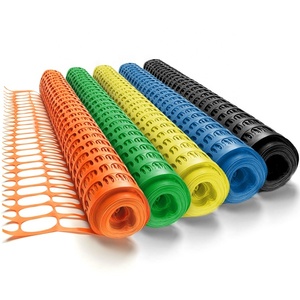
Extruded high-density polypropylene architectural & surgical perimeter barrier. Enhanced UV stabilization and anti-tear structural matrix.
Get Catalog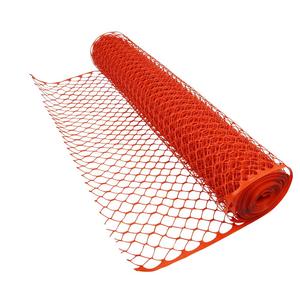
Flexible polymers crafted for industrial containment and protective perimeter isolation. High impact resistance with soft touch finishing.
Get Catalog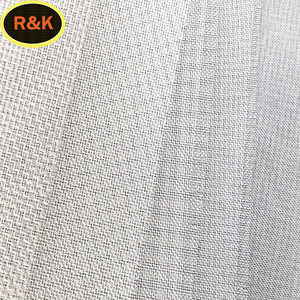
20 to 100 Micron micron-rated monofilament mesh screens. ISO 10993 biocompatible PA/PP material for pharmaceutical and liquid processing.
Get Catalog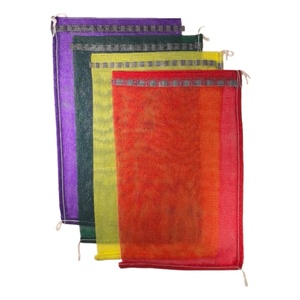
Reinforced 100% virgin PP monofilament woven mesh bags. Engineered for high tensile strain, ventilation, and bulk load containment.
Get Catalog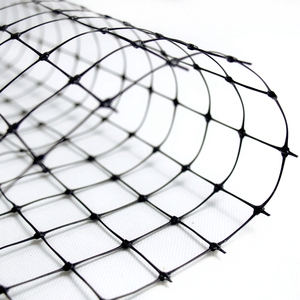
Biaxially oriented polypropylene mesh offering superior biaxial tensile strength, anti-aging coatings, and zero environmental degradation.
Get Catalog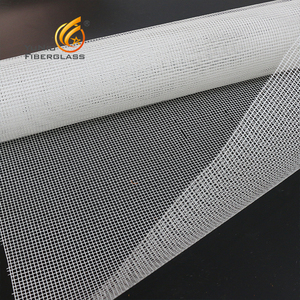
6x6mm weave structural grid mesh coated with alkali-resistant resin. Designed for extreme fire retardancy and tissue/wall structural reinforcement.
Get Catalog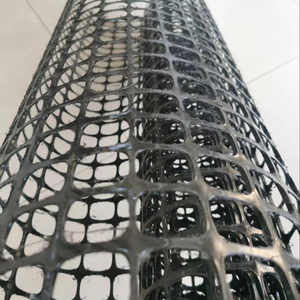
Anti-UV virgin polymer composition delivering dimensional stability, low elongation under load, and high knot security profiles.
Get Catalog
Polyamide 6 precision-molded screen filters. Cleanroom produced, offering exact aperture sizes, chemical inertness, and autoclave compatibility.
Get CatalogIn the highly regulated ecosystem of modern medical devices, selecting a primary surgical suture exporter requires absolute compliance transparency, uncompromising raw material selection, and rigorous cleanroom processing. As a leading China-based surgical sutures factory, our manufacturing infrastructure operates under an audited ISO 13485 Quality Management System, adhering to the stringent regulatory benchmarks set by EU MDR (Regulation 2017/745) and global health authorities.
Our state-of-the-art facility features Class 100,000 (ISO Class 7) controlled cleanrooms dedicated to precise filament extruding, yarn micro-braiding, protective coating, needle crimping, primary pouch sealing, and terminal Ethylene Oxide (EO) sterilization. By maintaining end-to-end oversight over polymer chemistry and metallurgical precision, we ensure every batch delivered to hospital networks, government tenders, and private label distributors delivers flawless intra-operative performance.
Every lot undergoes automated knot-pull and straight-pull tensile testing, maintaining a minimum 10% structural safety margin above international USP/EP pharmacopoeial thresholds.
We provide full technical documentation (STED), bio-compatibility reports (ISO 10993), stability studies, and multi-lingual packaging design for turn-key brand registration.
Complete lot-level traceability from raw polymer resin to final sterile foil pouch. Direct container logistics serving over 100 countries across Europe, Asia, LATAM, and Africa.
Our quality assurance framework implements 100% optical inspection on needle-to-thread swage integrity. By utilizing 300-series and 400-series premium grade stainless steel needles with silicone micro-coating, we guarantee smooth tissue penetration force (<150mN entry force) and zero needle bending or detachment during high-stress fascia closures.
Understanding the degradation kinetics and mechanical behavior of surgical biomaterials is crucial for hospital procurement committees and surgical specialists. Surgical sutures are broadly categorized into Absorbable (synthetic and natural) and Non-Absorbable polymers, each engineered to align with specific physiological wound healing timelines.
| Material Suture Family | Polymer / Filament Type | Tensile Retention Profile | Absorption / Mass Degradation | Ideal Surgical Applications |
|---|---|---|---|---|
| PGA (UNIGLYDE) | Synthetic Braided Polyglycolic Acid | 70% at 14 days, 40% at 21 days | 60 – 90 Days (Hydrolysis) | Subcutaneous closure, Gastrointestinal, Ophthalmic |
| PGLA 910 (UNISYNTH) | Braided Poly(glycolide-co-lactide) 90/10 | 75% at 14 days, 50% at 21 days | 56 – 70 Days (Hydrolysis) | General Soft Tissue Approximation, Gynaecology |
| PDO / PDS (UNISYNTH MONO) | Synthetic Monofilament Polydioxanone | 75% at 14 days, 50% at 42 days | 180 – 210 Days (Hydrolysis) | Abdominal Wall Closure, Orthopedics, Pediatric Cardio |
| PGCL (UNIGLYDE MONO) | Monofilament Poliglecaprone-25 | 60% at 7 days, 30% at 14 days | 90 – 120 Days (Hydrolysis) | Plastic & Reconstructive Surgery, Cuticular Closure |
| Polypropylene (UNILENE) | Non-Absorbable Isotactic Monofilament | Indefinite (0% loss over years) | Permanent Implant | Cardiovascular, Hernia Repair Mesh, Vascular Grafts |
| Nylon / Polyamide (UNILON) | Non-Absorbable Monofilament PA 6/6.6 | 15-20% gradual loss per year | Encapsulated by tissue | Skin Closure, Microsurgery, Ophthalmic Procedures |
| UHMWPE (UNISTRONG) | Ultra-High Molecular Weight Polyethylene | Ultra-High Tensile Load Capacity | Permanent Implant | Orthopedic Tendon Repair, Arthroscopy, Sports Medicine |
The global wound closure market is undergoing a structural paradigm shift driven by minimally invasive surgery (MIS), heightened infection control protocols, and rigorous regulatory harmonization. Healthcare procurement directors and B2B buyers must align their supply chain strategies with four critical industry transformations:
Traditional interrupted or continuous suturing techniques require manual knot tying, which introduces stress concentration points and extends intra-operative duration. Monofilament polydioxanone and PGLA barbed sutures feature precision micro-barbs angled in uni-directional or bi-directional configurations. These barbs anchor securely into tissue without requiring knots, distributing tension uniformly along the wound line and reducing suturing time by up to 35% in laparoscopic and robotic surgeries.
Surgical Site Infections (SSIs) represent a multi-billion-dollar burden on healthcare systems globally. The incorporation of broad-spectrum antibacterial agents—such as Chlorhexidine or Triclosan—onto braided PGA and PGLA 910 sutures creates a zone of inhibition surrounding the wound site. Supply chain managers are increasingly prioritizing factories capable of supplying antimicrobial-coated devices to meet clinical quality benchmarks in hospital networks.
With the sunsetting of the legacy EU MDD directive and full enforcement of the EU MDR (2017/745), smaller manufacturers lacking technical dossier depth are being phased out. Global distributors are consolidating vendor pools, favoring high-capacity factories in China that maintain comprehensive clinical evaluation reports (CER), post-market surveillance (PMS) frameworks, and direct CE marking across all absorbable and non-absorbable product lines.
Environmental, Social, and Governance (ESG) criteria are rapidly becoming decisive factors in public healthcare procurement. Leading factories are adopting closed-loop solvent recovery systems during polymer synthesis, replacing toxic plasticizers with bio-based lubricants, and utilizing recyclable medical-grade packaging materials without compromising sterile barrier integrity.
In-depth responses to critical technical, regulatory, and supply chain queries submitted by hospital purchasing teams, OEM brand owners, and medical device importers.
Our manufacturing complex operates strictly under an ISO 13485 certified Quality Management System. We hold full CE Marking and EU MDR (Regulation 2017/745) technical file approvals covering 13 distinct medical device families—including absorbable polyglycolic acid, PGLA 910, polydioxanone, non-absorbable monofilament polypropylene, polyamide, braided silk, surgical bone wax, and oxidized regenerated cellulose (ORC) haemostats.
We utilize ultra-pure medical grade polymer resins sourced from certified international chemical synthesis leaders. Our hot-drawing extrusion and precision micro-braiding equipment maintain strict orientation control over polymer crystalline structures. Furthermore, our crimping process employs laser-drilled blinded needle ends rather than traditional channel swaging, ensuring uniform stress distribution and preventing needle pull-out under extreme tensile loads.
We offer turnkey OEM manufacturing solutions ranging from custom needle-thread combinations to complete brand artwork development. B2B clients can specify suture USP/EP sizing, thread lengths (15cm to 150cm), needle geometry (taper-cut, reverse cutting, blunt point, spatula needle radius), primary foil pack artwork, multi-lingual outer display cartons, and validated sterile barrier packaging configuration. Full regulatory STED dossiers are provided to assist local market registration.
All surgical sutures and hernia meshes are sealed inside medical-grade aluminum foil primary pouches to form an impermeable vapor and bacterial barrier. Terminally packaged products undergo validated Ethylene Oxide (EO) gas sterilization cycles. Every production lot is quarantined until gas chromatography testing confirms EO residual levels fall well below the strict limits defined by ISO 10993-7 (<4mg/device for limited exposure implants).
Yes. Beyond standard rectangular polypropylene sheets (such as 6cm×11cm, 15cm×15cm, and 30cm×30cm), we manufacture pre-shaped keyhole, plug, and 3D contour meshes for inguinal and ventral hernia repair. We also supply bulk non-sterile monofilament polypropylene mesh rolls (widths up to 32cm, lengths up to 25m) for local conversion and sterile packaging partners.
Our synthetic absorbable sutures (PGA, PGLA 910, PDO, PGCL) maintain a validated 5-year shelf life when stored in their original unopened foil packaging at temperatures below 25°C and relative humidity below 60%. Desiccant elements are incorporated into secondary packaging to safeguard hydrolytic degradation against moisture ingress.
For standard branded catalog items, our minimum order quantity is 10 dozen (120 foil packs) per code. For custom OEM/private-label orders, MOQ typically starts at 500 dozen per specification code to facilitate cleanroom setup and custom packaging printing. Standard production lead time is 25 to 35 business days from artwork sign-off and PO confirmation.