Explore our certified medical-grade surgical needle holders, barrier meshes, and specialized industrial filtration solutions engineered for international hospital networks and OEM brand owners.
In modern surgical discipline, the performance of wound closure depends as much on the quality of the needle holder (needle driver) as it does on the suture thread and needle geometry. As surgical protocols move rapidly toward minimally invasive procedures, micro-vascular reconstruction, and complex tissue approximation, procurement directors and hospital supply chain managers require surgical instruments manufactured under uncompromising quality assurance standards.
This comprehensive industry whitepaper examines the global ecosystem of needle holder manufacturing, evaluating key suppliers, metallurgical standards (such as AISI 410, AISI 420 stainless steel, and Tungsten Carbide TC inserts), ergonomic design evolution, and regulatory compliance under EU MDR (Regulation 2017/745) and ISO 13485:2016.
“Precision tissue synthesis demands zero needle rotational slippage. A superior surgical needle holder must maintain a minimum mechanical grip coefficient capable of exceeding 1.1 times USP pull-out strength standards without damaging the delicate curved needle body or inducing fatigue in the surgeon's hands.”
Chinese surgical manufacturers utilize gold-plated handles to signify vacuum-brazed Tungsten Carbide jaw inserts. Featuring pyramidical micro-serrations (pitch sizes 0.2mm to 0.5mm), TC jaws offer up to 5 times longer service life compared to standard stainless steel.
Every needle holder undergoes rigorous chemical passivation compliant with ASTM A967 standards. High-grade chromium oxide passive films protect instruments against aggressive autoclaving cycles, enzymatic cleaning solutions, and saline exposure.
Leading exporters provide complete private label packaging, custom laser marking (UDI compliance, matrix barcodes, catalog numbering), and technical file dossiers required for registration with global regulatory bodies.
Selecting the appropriate needle driver configuration requires understanding surgical intent, needle wire diameter, and ratchet mechanics. Below is an engineering comparison of core surgical needle holder families available from top export partners.
| Needle Holder Pattern | Primary Surgical Application | Target Suture Size (USP) | Jaw Structure & Pitch | Locking Mechanism |
|---|---|---|---|---|
| Mayo-Hegar | General Surgery, Gynaecology, Deep Fascia Closure | USP 1-0 to 4-0 | Cross-hatched TC / 0.5mm pitch serrations | Multi-stage finger ring ratchet |
| Crile-Wood | Cardiovascular, Plastic Surgery, Delicate Tissue | USP 3-0 to 6-0 | Tapered jaw with fine 0.4mm serrations | Precision box-joint ratchet |
| Castroviejo | Ophthalmic, Microsurgery, Vascular Anastomosis | USP 7-0 to 10-0 | Smooth or ultra-fine 0.2mm diamond dust jaws | Spring-action quick release lock |
| Mathieu | Oral Surgery, Orthodontics, Veterinary Procedure | USP 2-0 to 5-0 | Heavy duty ribbed / cross-hatched jaws | Palm-squeeze quick-release ratchet at handle base |
| Olsen-Hegar | Plastic Surgery, Emergency Wound Repair (Includes Scissors) | USP 2-0 to 5-0 | Dual-function jaw: TC gripper + cutting blades | Standard finger ring ratchet |
Modern Chinese surgical instrument manufacturing has transitioned from labor-intensive manual grinding to 5-axis CNC micro-machining and robotic laser welding. The steel selected for medical needle holders primarily falls under martensitic stainless steel grades (such as German 1.4117 / AISI 420B). These alloys achieve optimal Rockwell Hardness (HRC 48–52) following vacuum heat treatment, ensuring the instrument handles high lateral torque without jaw deflection or shaft twisting.
Furthermore, when combined with vacuum-brazed Tungsten Carbide (WC/Co) inserts, the jaw surfaces resist wear from high-tensile stainless steel needles, preventing needle twisting during tough cartilage or fascial penetration.
Leading exporters provide comprehensive surgical solutions. A needle holder achieves maximum efficiency only when paired with high-performance surgical sutures, hernia meshes, and absorbable haemostatic barriers.
From UNIGUT Plain & Chromic Catgut to synthetic polymers like UNIGLYDE (Polyglycolic Acid PGA), UNISYNTH (Polyglactin 910), and UNISYNTH PDS (Polydioxanone), suppliers offer over 5,000 active needle-suture combinations. Each suture thread is attached to drilled-end ribbed needles, engineered to fit snugly into TC needle holder serrations for zero needle slippage.
Non-absorbable options include UNILENE Monofilament Polypropylene, UNILON Polyamide Nylon, and ultra-high-strength UNISTRONG UHMWPE for orthopedic joint reconstruction.
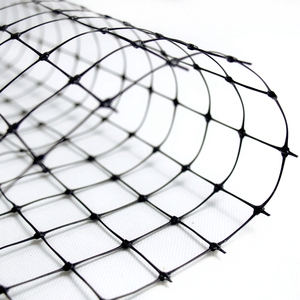
In addition to manual instruments, Chinese and partner factories export medical-grade monofilament knitted polypropylene hernia meshes (ranging from light 28g/m² to heavy 80g/m² density). These meshes exhibit superior burst strength and controlled tissue in-growth.
For immediate surgical bleeding control, advanced absorbable haemostats like UNISTAT™ Oxidized Regenerated Cellulose (ORC) and HAEMOWAX Surgical Bone Wax provide surgeons with complete intra-operative control during thoracic, orthopedic, and general surgical procedures.
The international trade landscape for medical devices is undergoing structural shifts driven by regulatory tightening, technological automation, and supply chain diversification. B2B buyers must adapt to four pivotal macro trends:
The transition from EU MDD to EU MDR (Regulation 2017/745) has eliminated standard self-declarations for many surgical instruments. Tier-1 exporters in China and Asia now maintain comprehensive Clinical Evaluation Reports (CER), Post-Market Surveillance (PMS) protocols, and full batch traceability from ingot melting to Ethylene Oxide (EO) sterilization chamber release.
Extended laparoscopic and micro-vascular surgeries have heightened surgeon hand fatigue awareness. Titanium alloy (Ti-6Al-4V) needle holders—offering a 40% weight reduction compared to stainless steel while retaining extreme torsional strength—are becoming standard in advanced operating rooms.
Distributors no longer source needle holders, sutures, and mesh from fragmented factories. Modern procurement favors consolidated suppliers capable of offering kitted solutions: pre-packaged surgical sets containing custom needle drivers, sterile sutures, and tissue mesh under a single brand identity.
Leading factories utilize automated vision inspection systems to verify ratchet tooth depth, jaw alignment, and micro-serration symmetry before assembly. This reduces human error and guarantees uniform jaw clamping pressure across every manufactured unit.
Why top medical device importers, hospital consortia, and OEM partners select our verified production facilities for global supply continuity.
Our manufacturing and cleanroom packaging lines operate under ISO Class 7 and Class 8 controlled environments, preventing bioburden build-up prior to terminal EO sterilization.
Every needle holder-suture combination is engineered to exceed pharmacopoeial minimum strength limits by at least 10%, giving surgeons an added safety margin during high-tension fascial repairs.
With a workforce comprised of over 70% skilled female technicians in precision assembly and micro-inspection, our facilities embody fair labor, zero child labor, and continuous technical training.
To avoid sub-standard instruments that suffer from premature jaw alignment loss, ratchet slipping, or surface pitting, hospital procurement teams should mandate the following 5-point quality verification during supplier sampling:
Close the needle holder ratchet to the first tooth. Hold the jaw tip up to a bright light source. There should be zero visible light leakage between the gripping surfaces, confirming perfect parallel alignment along the entire jaw face.
Demand a Material Test Certificate (MTC) verifying AISI 420 grade composition and Rockwell Hardness test values (HRC 48-52 for shafts; HRC 60-64 for Tungsten Carbide inserts).
Test the ratchet release pressure. The lock should engage smoothly across 3 to 4 distinct teeth without requiring excessive force, releasing easily with single-finger thumb press pressure.
Subject sample units to a 30-minute boiling water test (ISO 13402 compliant) or 20 consecutive 134°C steam autoclave cycles to verify passivated oxide film integrity.
Insert a standard size 2-0 curved suture needle between the jaws and lock to the second ratchet tooth. Apply manual lateral torque. The needle must not twist or rotate under operational clamping pressure.
Evaluate our EU MDR certified needle holders and suture combinations in your clinical setting.
Send an InquiryEssential technical and commercial answers for international distributors, OEM partners, and medical procurement officers.
Tungsten Carbide (TC) needle holders feature micro-serrated TC inserts vacuum-brazed into the jaw faces. TC is significantly harder than standard stainless steel, offering up to 5 times greater wear resistance and preventing needle slippage or jaw scarring. TC instruments are identified internationally by gold-plated handles.
Imports into the European Union require compliance under EU MDR (Regulation 2017/745) along with ISO 13485:2016 Quality Management System certification. For North America, FDA 510(k) clearance or Device Registration / Listing with Good Manufacturing Practice (GMP) compliance is mandatory.
Matching depends on jaw serration pitch. Use 0.5mm pitch jaws (e.g., Mayo-Hegar) for heavy needles (USP 1-0 to 4-0). Use 0.4mm pitch jaws (e.g., Crile-Wood) for medium/fine needles (USP 3-0 to 6-0). Use 0.2mm fine pitch or smooth diamond-coated jaws (e.g., Castroviejo) for delicate microsurgical needles (USP 7-0 to 10-0).
Yes. OEM programs include custom fiber-laser marking of brand logos, catalog numbers, lot codes, and UDI matrix barcodes directly on the stainless steel shank. Furthermore, customized blister packing, retail boxes, and multi-language instructions for use (IFU) are fully supported.
Reusable instruments are supplied non-sterile or clean-packed, suitable for hospital steam autoclaving at 134°C (273°F). Single-use pre-packaged instrument-suture kits are terminally sterilized using validated Ethylene Oxide (EO) gas cycles backed by sterility test certificates.
Standard catalog models typically carry Minimum Order Quantities (MOQs) starting from 50 to 100 units per pattern. Custom OEM or bespoke ergonomic modifications generally require 30 to 45 business days for precision CNC tooling, heat treatment, passivation, and QA release.
Get access to EU MDR certified surgical needle holders, custom OEM packaging, and direct factory pricing. Connect with our medical engineering team today.