Explore high-performance titanium, polymer (Hemolok style), and vascular bulldog clip appliers engineered for minimally invasive surgery (MIS) and open operative procedures.
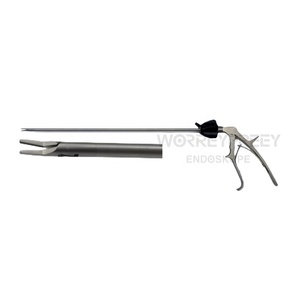
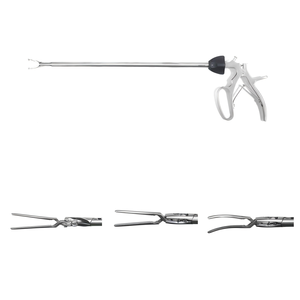
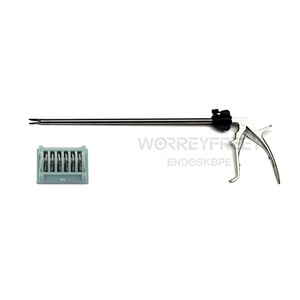
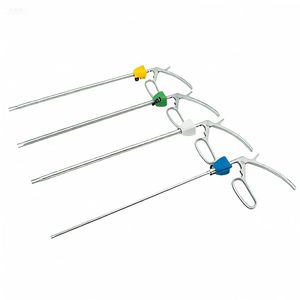
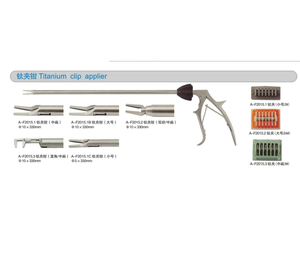
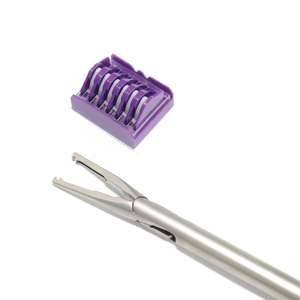
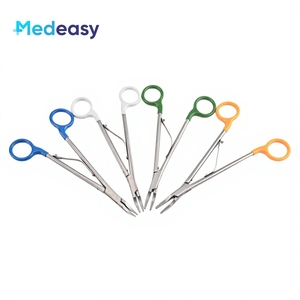
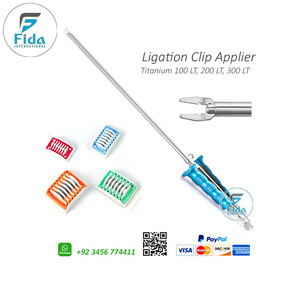
Minimally invasive surgery (MIS) has fundamentally transformed modern operative techniques across laparoscopic, thoracoscopic, and robotic interventions. Central to intraoperative hemostasis and vessel closure is the surgical clip applier—a precision biomechanical instrument designed to occlude blood vessels, cystic ducts, and tissue structures rapidly and reliably. As healthcare systems globally demand higher procedural safety, cost efficiency, and strict adherence to regulatory standards such as EU MDR (Regulation 2017/745) and US FDA 510(k), evaluating procurement sources from China has shifted from simple unit-cost comparison to thorough technical auditing of engineering specs, material bio-compatibility, and manufacturing quality systems.
This technical whitepaper serves as an authoritative procurement guide for medical device distributors, hospital procurement boards, and OEM brand owners seeking to understand the architectural design, metallurgical standards, manufacturing advantages, and procurement trends of surgical clip applicators engineered in China’s leading medical device manufacturing hubs.
Core Procurement Insight: China's top tier surgical instrument manufacturers have integrated 5-axis Swiss-type CNC machining, vacuum heat treatment, and automated laser welding. This enables surgical clip appliers to maintain tight jaw alignment tolerances within ±0.01mm, ensuring zero clip scissoring or slippage during critical vascular ligation.
Surgical clip appliers operate under harsh intraoperative environments and must deliver reproducible tactile response, precise clip closure, and structural resilience against repetitive steam sterilization (134°C autoclave cycles). The engineering architecture of a modern clip applier comprises three primary subsystems: the mechanical actuation handle, the elongated shaft assembly, and the precision tip jaw mechanism.
The performance of reusable endoscopic clip applicators depends heavily on material selection. Premium Chinese manufacturers utilize high-grade surgical stainless steels tailored to specific functional components:
Clip deformation failure (commonly referred to as "scissoring" or cross-over closure) is a primary concern during vessel ligation. Scissoring occurs when the upper and lower jaws deviate laterally, causing the clip legs to overlap rather than meet flush in a parallel plane. Advanced Chinese manufacturing facilities solve this through multi-stage micro-wire EDM (Electrical Discharge Machining) and dual-channel guide grooves within the jaw housing. This guarantees that whether deploying standard titanium ligating clips (LT100, LT200, LT300, LT400 series) or non-absorbable polymer clips (Hemolok compatible), the compressive force is evenly distributed along the entire length of the clip arm.
Micro-machined lateral alignment tracks prevent jaw deflection, ensuring pristine, parallel clip closure on vascular structures.
Ergonomic finger wheel allows smooth one-handed shaft rotation for optimal visual positioning in deep pelvic or thoracic cavities.
Integrated Luer-lock flushing ports facilitate rapid enzymatic bio-burden decontamination prior to autoclave cycles.
To assist clinical procurement directors in selecting the proper instrument platforms for their procedural portfolios, the following comparative evaluation highlights key technical parameters across major clip applicator configurations:
| Applicator Modality | Compatible Clip Material | Cannula Shaft Size | Primary Clinical Application | Sterilization Method | Tactile Occlusion Index |
|---|---|---|---|---|---|
| Titanium LT Series (LT300/400) | Pure Titanium (Grade 1 / Grade 2) | 5.0mm / 10.0mm x 330mm | General Laparoscopy, Cholecystectomy, Appendectomy | Steam Autoclave (134°C) / EO Gas | High (Linear Spring Force) |
| Polymer Hemolok Style | Radiolucent Non-Absorbable Polymer | 5.0mm / 10.0mm x 330mm | Nephrectomy, Major Vessel Ligation, Appendiceal Stump | Autoclave (Reusable) / Gamma (Single) | Very High (Audible Latch Click) |
| Vascular Bulldog Clip Applier | Titanium / Stainless Steel Clamps | 10.0mm Trocar Compatible | Temporary Vascular Occlusion, Partial Nephrectomy | Steam Autoclave (134°C) | Calibrated Spring Force |
| Open Surgery Ligating Applier | Titanium LT100 - LT400 | Direct Handheld (190mm - 280mm) | Open Abdominal, Thoracic & Vascular Procedures | Steam Autoclave (134°C) | Direct Mechanical Contact |
Sourcing medical devices internationally requires rigorous evaluation of a factory's quality management system (QMS), production cleanrooms, and regulatory compliance files. China's top medical manufacturers have built world-class production infrastructure certified under ISO 13485:2016 and aligned with EU MDR 2017/745 specifications.
Final assembly, mechanical calibration, and primary sterile barrier packing occur within validated Class 10,000 (ISO Class 7) cleanrooms. Automated ultrasonic multi-stage cleaning baths remove cutting fluids, metallic micro-particles, and bio-burdens prior to assembly, guaranteeing that instruments leave the factory with endotoxin levels far below international pharmacopeia thresholds (< 2.15 EU/device).
Quality assurance is embedded throughout every manufacturing milestone:
Distributor OEM Advantage: Premium manufacturers offer extensive OEM/ODM private-label capabilities. From custom laser-etched branding and customized shaft lengths (e.g., 220mm for bariatrics or pediatric surgery, 450mm for deep pelvic procedures) to custom color-coded rotation knobs, partner factories supply turn-key medical lines ready for local market registration.
The global market for laparoscopic clip appliers is undergoing rapid technological convergence driven by surgical robotics, single-use ergonomics, and sustainability initiatives. Global buyers and medical procurement officers must align their inventory strategies with several key macro trends:
While titanium ligating clips remain a foundational staple due to their low cost and broad historical adoption, polymer clips (such as Hemolok compatible systems) are expanding market share rapidly. Polymer clips feature a integrated flexible hinge and a positive locking latch that provides surgeons with an audible and tactile "click" confirming total vessel encasement. Furthermore, because polymer clips are radiolucent and non-conductive, they generate zero artifacts under CT scanning or MRI procedures, making them the preferred choice for oncology and complex urological procedures.
With the rapid global deployment of robotic-assisted surgical platforms, conventional rigid 330mm shafts are evolving. Next-generation clip appliers incorporate wrist-articulated tips capable of 60° multi-directional deflection within the operative field. Chinese R&D centers are currently co-developing flexible drive-cable linkages that deliver high tactile feedback through robotic master controllers.
Hospital purchasing committees face dual pressures: reducing healthcare-acquired infection (HAI) risks while meeting strict environmental sustainability goals. The industry is seeing strong demand for "hybrid" clip applier systems—utilizing a durable, autoclavable ergonomic handle combined with a sterile, single-use detachable shaft cartridge. This hybrid model mitigates cross-contamination risks while drastically cutting biomedical waste compared to fully disposable plastic appliers.
The global regulatory environment has tightened considerably. The transition from MDD to EU MDR 2017/745 requires comprehensive clinical evaluation reports (CER), post-market surveillance (PMS) data, and Unique Device Identification (UDI) laser marking down to individual component lots. Leading Chinese factories maintain up-to-date technical documentation files (TDF) and provide global distributors with full audit access to facilitate rapid national healthcare approvals (FDA 510k, CE MDR, NMPA, ANVISA, and SFDA).
Chinese factory appliers are engineered to full international standardized specifications. For titanium clips, appliers accommodate standard LT100 (Small), LT200 (Medium), LT300 (Medium-Large), and LT400 (Large) sizes. For polymer clips, appliers correspond to Medium (M), Medium-Large (ML), Large (L), and Extra-Large (XL) clip dimensions.
Yes. Reusable surgical clip appliers manufactured from premium 316L and martensitic stainless steel are designed to withstand repeated steam autoclave sterilization cycles up to 134°C (273°F) at 2.1 bar pressure for 18–20 minutes, complying with ISO 17665 sterilization guidelines.
Standard unbranded stock orders typically have low MOQs (10 to 20 units). For custom OEM private labelling—including custom laser branding, custom packaging boxes, and specific shaft length modifications—the typical MOQ ranges from 50 to 100 units depending on customization complexity.
Each clip applier jaw is calibrated using mechanical tension gauges during final cleanroom inspection. The jaw spring pressure is dialed to provide sufficient friction to hold the clip securely within the jaw channel during shaft insertion through the laparoscopic trocar, while releasing smoothly once the clip is fully crimped around the target vessel.
Factories supply full regulatory dossier packages including ISO 13485 certificates, CE Declaration of Conformity, ISO 10993 Biocompatibility Test Reports, Steam Sterilization Validation Data, Material Certificates of Analysis (CoA), and UDI-DI mapping files.
Whether you require standard LT-series titanium applicators, polymer Hemolok clip appliers, or custom OEM minimally invasive surgical instruments, our engineering team provides end-to-end manufacturing excellence.
Send an Inquiry