Explore Products View Certificates
0%

China Top Polyglactin 910 Sutures Manufacturer Supplier

Polyglactin 910 Sutures remain widely used for soft-tissue approximation and internal closure. They are synthetic, absorbable, braided, and designed for predictable tensile-strength loss. Their coated surface supports smoother passage through tissue. Their handling also helps surgeons create secure knots in confined operative fields.

Grand View Research estimates that the global surgical sutures market reached approximately USD 4.5 billion in 2023. The same report forecasts continued growth through 2030, driven by rising surgical volumes and advanced wound-care demand. MarketsandMarkets also identifies absorbable sutures as a major product category. However, market estimates differ by research method. Buyers should examine the methodology.

Professor David G. Leaper, a recognized surgical-site-infection researcher, has emphasized, “Surgical site infection remains a serious problem for patients and healthcare systems.” This reminder matters when evaluating Polyglactin 910 Sutures. Material choice cannot replace sterile manufacturing, validated packaging, or disciplined surgical technique.

An experienced China supplier should provide traceable raw materials, controlled braiding, coating consistency, and documented absorption performance. Product evaluation should include USP or EP compliance, tensile strength, needle attachment, knot security, and biocompatibility records. Small details matter. A frayed strand can complicate handling.

Not every supplier offers the same reliability. Some descriptions sound impressive but lack complete testing evidence. Therefore, hospitals and distributors should request certificates, batch records, sterilization validation, and samples before purchasing. A strong Polyglactin 910 Sutures manufacturer combines production capacity with transparent quality control. That standard is practical, not decorative.
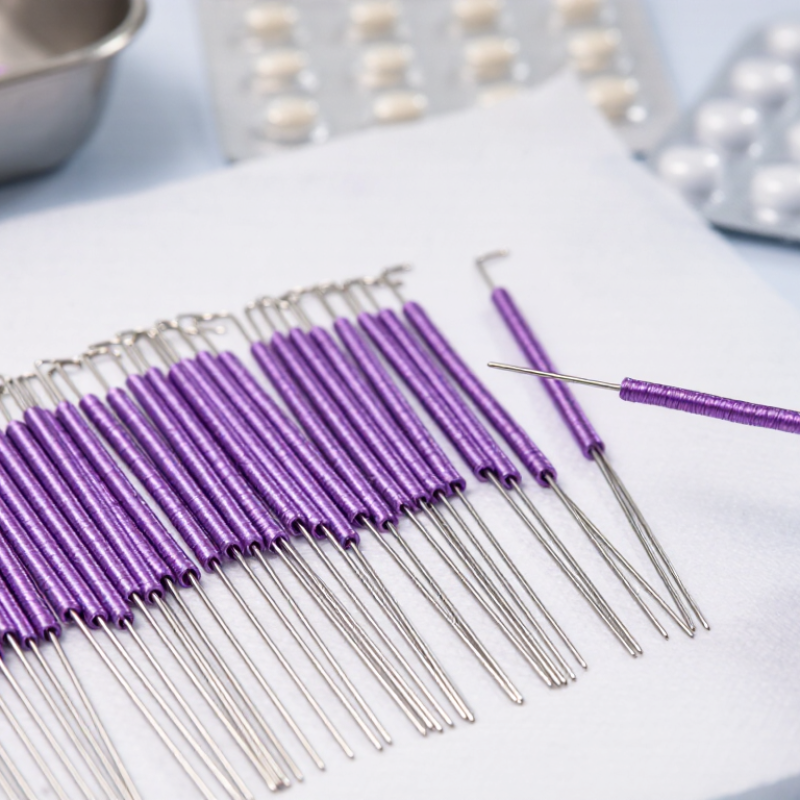
China Top Polyglactin 910 Sutures Manufacturer Supplier

Polyglactin 910 Sutures: Material Composition and Medical Properties

Polyglactin 910 sutures are synthetic, absorbable threads made from a copolymer of glycolide and L-lactide. The commonly used ratio is 90% glycolide and 10% lactide. This structure gives the material useful tensile strength during early wound healing. It also supports predictable breakdown through hydrolysis rather than enzymatic digestion.

The suture is usually braided, which improves flexibility and knot security. A smooth coating can reduce tissue drag during placement. In practice, handling depends on needle design, suture size, moisture, and surgical technique. Small details matter.

Polyglactin 910 gradually loses strength as the body absorbs it. Complete absorption often occurs within several weeks, but exact timing varies by product and tissue conditions. Specifications should be checked against validated technical data.

Its medical properties suit many soft-tissue closures where prolonged permanent support is unnecessary. It is commonly considered for subcutaneous tissue, mucosal repair, and selected skin closures. However, no absorbable suture fits every wound. High-tension areas, infected tissue, poor circulation, and delayed healing may require another material or additional support. This is where simple assumptions can fail. Clinicians should assess tissue strength, expected healing time, and patient factors before selection. Quality verification should include composition, diameter, tensile performance, sterility, packaging integrity, and applicable pharmacopeial requirements.

How Polyglactin 910 Sutures Work During Tissue Healing

China Top Polyglactin 910 Sutures Manufacturer Supplier

Polyglactin 910 sutures support tissue while the wound rebuilds its strength. They are braided, synthetic, absorbable, and designed for controlled handling during closure. After implantation, water gradually breaks the polymer chains through hydrolysis. The material then loses tensile strength and leaves the body through normal biological processes.

Healing is not linear. Regulatory technical dossiers and USP <881>-aligned testing commonly report about 75% strength retention after 14 days, 50% after 21 days, and 25% after 28 days. Complete absorption often occurs within 56 to 70 days, depending on tissue conditions and suture size. These figures are useful, but not absolute. Infection, poor blood supply, diabetes, and excessive tension can change the timeline.

In practice, the surgeon feels the difference at the knot. A smooth pass reduces tissue drag, while balanced braid structure supports secure placement. Polyglactin 910 usually causes a temporary inflammatory response as hydrolysis progresses. Clinical decisions still require wound assessment, not a calendar alone. The Association for the Advancement of Medical Instrumentation emphasizes validated tensile and sterility testing for surgical sutures. Manufacturer quality records should therefore include diameter control, knot-pull strength, sterility assurance, and absorption testing. Small variation matters. Less irritation is not guaranteed.

China Top Polyglactin 910 Sutures Manufacturer Supplier - How Polyglactin 910 Sutures Work During Tissue Healing
Data Dimension Polyglactin 910 Suture Information Relevance to Tissue Healing
Material composition A synthetic copolymer made from glycolide and lactide, commonly referred to as polyglactin 910. The polymer provides temporary mechanical support while the tissue progressively regains its own strength.
Suture classification Absorbable, synthetic, multifilament suture when supplied in a braided construction. It is intended to support approximated tissue without requiring routine removal after healing.
Primary absorption mechanism Hydrolysis: water gradually breaks down the polymer chains into smaller compounds that are metabolized or eliminated by the body. Absorption is generally more predictable than enzyme-mediated breakdown associated with many natural absorbable sutures.
Initial tissue support Provides immediate tensile support after placement, with strength gradually declining as hydrolysis proceeds. Helps maintain wound-edge approximation during the early inflammatory and proliferative phases of repair.
First 1–2 weeks The suture retains substantial mechanical strength, although the exact retention profile depends on diameter, construction, sterilization, and product specification. This period commonly overlaps with early collagen deposition and the beginning of granulation-tissue formation.
Approximately 3–4 weeks Mechanical strength continues to decrease as polymer hydrolysis progresses. Published product profiles commonly describe progressive loss of strength during this interval. The wound increasingly relies on newly formed collagen and remodeling tissue rather than the suture alone.
Complete absorption Many polyglactin 910 formulations are substantially absorbed within approximately 56–70 days; the precise period varies by formulation and suture size. Temporary support is gradually removed after the tissue has developed greater intrinsic strength.
Inflammatory response As a synthetic absorbable material, it can still produce a localized foreign-body response during degradation. The response is typically assessed clinically by monitoring redness, swelling, drainage, pain, and delayed wound healing.
Braided construction Interlaced filaments can provide flexibility, knot security, and handling characteristics useful for many soft-tissue procedures. Good handling may help clinicians achieve accurate tissue approximation, while appropriate technique is important to limit tissue drag and irritation.
Wound-healing phase supported Most useful during the inflammatory, proliferative, and early remodeling phases, when temporary wound support is needed. The suture bridges the period between wound closure and the gradual restoration of tissue tensile strength.
Strength considerations Retention of tensile strength depends on suture diameter, tissue environment, moisture, infection, tension, and the specific technical specification. Suture selection should match the expected healing rate and mechanical demands of the tissue being repaired.
Clinical use principle Used for soft-tissue approximation and ligation where prolonged permanent support is not required. It is generally selected when temporary support and gradual absorption are preferred over a permanent implant.
Important limitation It does not replace sound surgical technique, adequate blood supply, infection control, or appropriate postoperative care. Healing outcomes depend on patient factors, tissue type, wound tension, surgical technique, and the surrounding biological environment.
Note: Absorption time and tensile-strength retention are general reference characteristics. Actual performance varies according to suture size, formulation, construction, sterilization, implantation site, and individual patient conditions.

Key Product Types and Clinical Applications

Polyglactin 910 sutures are absorbable materials designed for temporary soft tissue approximation. They are commonly supplied as braided sutures, with dyed or undyed options, coated surfaces, and multiple needle configurations. Different diameters support different tissue thicknesses and handling needs. Rapid-absorption versions may suit superficial closures when extended tensile support is unnecessary.

Clinical applications include subcutaneous closure, mucosal repair, gynecological procedures, pediatric surgery, and selected general soft tissue repairs. Surgeons often value the smooth passage, manageable knot security, and predictable absorption profile.

However, product selection should follow tissue tension, healing time, infection risk, and surgical technique. It is not a universal suture.

Small details matter.

An experienced manufacturer or supplier should provide sterilization records, batch traceability, packaging integrity data, and validated product specifications. Needle attachment consistency also deserves attention, especially during repeated handling. In practice, the best choice is sometimes less obvious than a catalogue suggests. A rapidly absorbing suture may reduce prolonged foreign-body presence, but it may not support slow-healing tissue adequately. Braided construction can improve handling, yet it may require careful consideration in contaminated fields. Clinical teams should review the product instructions, local protocols, and patient factors before use. Supplier support should include technical documentation rather than broad promises.

Quality Standards for a Reliable Chinese Manufacturer and Supplier

China Top Polyglactin 910 Sutures Manufacturer Supplier

A reliable Chinese manufacturer should control every stage of polyglactin 910 suture production. The process begins with verified raw materials and documented supplier approval. Trained technicians monitor braiding, coating, needle attachment, and final packaging. Each production lot should have clear identification and complete traceability.

Quality testing must reflect clinical use. A professional supplier checks diameter, needle strength, knot security, tensile strength, and absorption performance. Sterility assurance requires validated processes, controlled environments, and regular monitoring. Packaging should protect the suture from moisture, damage, and contamination during transport. ISO 13485-based quality management can support consistent manufacturing, while risk assessment helps identify weak points before shipment.

A certificate alone is not enough. Buyers should review test reports, batch records, calibration data, and corrective-action procedures. Factory audits can reveal details that documents miss, such as poor storage habits or unclear line separation. No production line is flawless. Small labeling errors may still occur, so suppliers need effective inspection and response systems. Sample evaluation also matters; handling the suture can reveal stiffness, memory, or needle performance that a report cannot show. Transparent communication about defects, delivery changes, and product limitations builds stronger trust. Reliability grows through evidence, repeated batches, and honest review.

China Top Polyglactin 910 Sutures Manufacturer Supplier - Quality Standards for a Reliable Chinese Manufacturer and Supplier

USP suture-size equivalents and representative diameter bands for commonly supplied polyglactin 910 sutures. Actual dimensions should be confirmed against the applicable product specification and quality-control records.

The diameter ranges shown are commonly referenced USP/NF size bands: smaller USP numbers indicate thicker sutures, while higher USP numbers indicate finer sutures. Reliable supplier evaluation should also include dimensional inspection, tensile-strength testing, sterility validation, biocompatibility assessment, packaging integrity, and traceable quality records.

Ordering, Packaging, and Export Support for Global Healthcare Buyers

China Top Polyglactin 910 Sutures Manufacturer Supplier

Global healthcare buyers need more than a product quotation. They need clear ordering support. We confirm suture type, needle configuration, length, color, and packaging format before production. Small details matter. A written specification reduces avoidable errors. Buyers can request samples, technical files, and lot information for internal evaluation. Production schedules are shared early, although urgent orders may still face material or capacity limits.

Packaging is prepared for safe handling and efficient distribution. Each sterile unit can include product identification, size, lot number, expiry information, and storage guidance. Inner boxes are protected by stronger export cartons. Carton marks can show quantity, destination, handling symbols, and purchase order references. We check packing lists against actual quantities before shipment. However, packaging requirements differ between markets, so one standard solution may not fit every buyer.

Export support includes commercial invoices, packing lists, certificates of origin, and available quality documents. Sterilization records and batch traceability documents can support receiving and regulatory review. Shipping terms, loading plans, and freight coordination are discussed before dispatch. Customs clearance remains dependent on the importer’s local rules. Delays can happen. Honest communication is better than promising an unrealistic delivery date. After shipment, our team can help review document discrepancies, carton damage reports, or repeat-order adjustments for future deliveries.

FAQS

What is polyglactin 910 made from?

It is a synthetic, absorbable copolymer of glycolide and L-lactide. A common composition is 90% glycolide and 10% lactide.

How does polyglactin 910 lose strength?

The body breaks it down through hydrolysis, not enzymatic digestion. Strength gradually declines during healing. Timing varies.

Why are these sutures often braided?

Braiding improves flexibility and knot security during placement. A smooth coating can reduce tissue drag. Small details matter.

How long does absorption usually take?

Complete absorption often occurs within several weeks. The exact period depends on product specifications and tissue conditions. Check validated data.

Which tissue closures may suit this material?

It may suit subcutaneous tissue, mucosal repair, and selected skin closures. It is useful when permanent support is unnecessary.

When might another suture be more appropriate?

High-tension wounds, infected tissue, poor circulation, or delayed healing may need different support. Simple assumptions can fail. Tissue strength matters.

What quality checks should a supplier provide?

Review composition, diameter, tensile strength, knot security, sterility, and absorption performance. Packaging integrity also matters. A certificate is not enough.

How can buyers evaluate manufacturing reliability?

Request batch records, test reports, calibration data, and corrective-action procedures. Factory audits may reveal storage or labeling problems. No production line is flawless.

Why should buyers inspect physical samples?

Handling may reveal stiffness, memory, coating behavior, or needle performance. Reports cannot show everything. Repeated batches deserve comparison.

Conclusion

Polyglactin 910 Sutures are absorbable surgical sutures made from a synthetic copolymer designed to provide dependable tissue support during healing. They offer good handling, smooth passage through tissue, and gradual strength retention before breaking down through hydrolysis. As the wound gains natural strength, the suture is progressively absorbed, reducing the need for removal. Different structures, sizes, coatings, and needle configurations can support a range of procedures, including soft-tissue closure, general surgery, gynecological procedures, and other applications where temporary wound support is appropriate.

A reliable Chinese manufacturer and supplier should maintain consistent material selection, controlled production processes, accurate product specifications, and quality testing aligned with applicable medical-device requirements. Global healthcare buyers also benefit from clear documentation, flexible ordering quantities, protective packaging, traceability, and professional export support. Careful attention to sterile packaging, labeling, shipping conditions, and regulatory documents helps ensure that Polyglactin 910 Sutures arrive safely and are ready for appropriate clinical use in different international markets.


Amelia

Amelia

Amelia is a highly skilled marketing professional with a strong understanding of the company’s products, customer needs, and industry trends. Through her work, she transforms complex product information into clear, practical, and engaging content that helps readers make informed decisions. Amelia......