Explore Products View Certificates
0%

Choosing among the 7 Best Poliglecaprone 25 Sutures for Global Buyers requires more than comparing prices or package images. Poliglecaprone 25 Sutures are absorbable, synthetic, monofilament materials commonly selected for soft-tissue approximation. Their smooth surface may reduce tissue drag. Their predictable absorption can support short-term wound healing.

Clinical needs come first.

As surgical educator Dr. David Leffell explains, “Suture selection must serve the tissue, not the catalogue.” This principle matters when evaluating needle curvature, diameter, tensile retention, coating, and handling quality. A buyer should also inspect sterile-barrier packaging, lot traceability, shelf life, and declared manufacturing standards. Small details matter. A damaged carton can compromise confidence before the product reaches the operating room.

This guide compares seven practical options for hospitals, distributors, and procurement teams across different markets. The comparison considers wound type, absorption profile, knot security, needle performance, documentation, and supply consistency. Some products may perform well in delicate closure work, while others may suit routine subcutaneous approximation. The “best” choice is not universal. That is the uncomfortable part.

Regional registration requirements, language labeling, and import documentation can also affect purchasing decisions. Buyers should verify current specifications directly with qualified manufacturers or authorized distributors. Catalogue descriptions are helpful, but they are not enough. Real-world evaluation should include clinician feedback, packaging inspection, and controlled purchasing trials. No ranking is perfect. This one should invite careful review, not replace professional judgment.
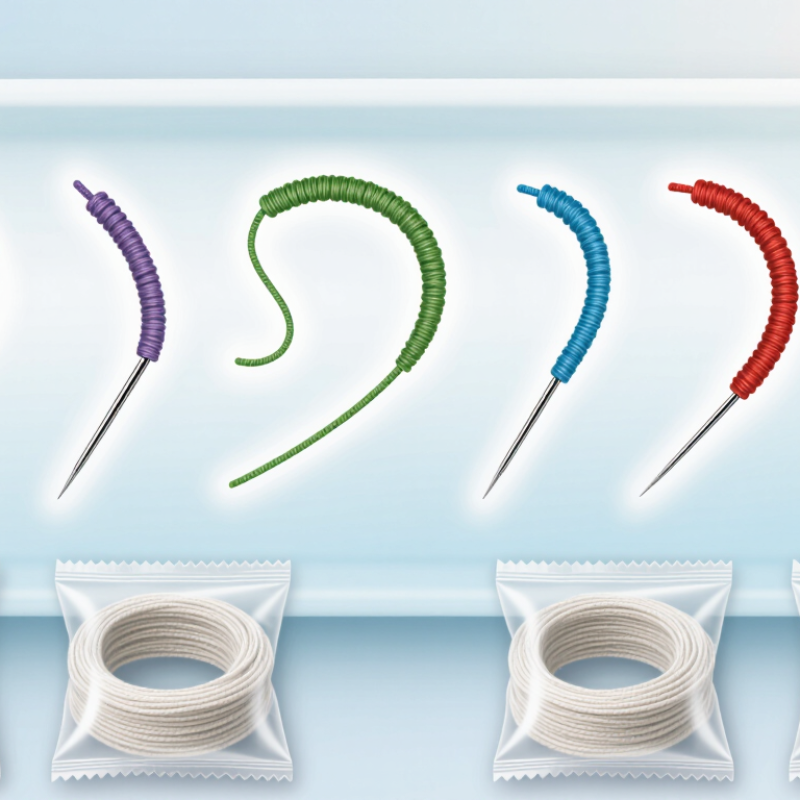
7 Best Poliglecaprone 25 Sutures for Global Buyers

Poliglecaprone 25 Sutures: Material, Structure, and Medical Uses

Poliglecaprone 25 is a synthetic, absorbable monofilament suture. It is made from a copolymer of glycolide and epsilon-caprolactone. The material loses strength gradually as water breaks down its polymer chains. This process is called hydrolysis. Unlike braided sutures, its single smooth filament has fewer surface gaps. That design can reduce fluid wicking and limit places where contaminants remain. It also passes through tissue with relatively low drag. However, handling depends on diameter, needle geometry, and storage conditions.

Clinicians commonly select it for skin closure, subcutaneous approximation, and soft-tissue repair. It supports wounds during early healing, then gradually disappears without planned removal. Its flexibility works well around curved incisions and delicate skin. Knot security still deserves attention. Monofilament memory can cause loops to loosen when technique is careless. Small details matter.

For global buyers, evaluation should include metric size, needle shape, tensile profile, absorption range, sterile packaging, and traceability. Product records and clinical instructions should be reviewed before procurement. Clinical practice shows that low tissue reaction does not replace wound assessment. Patient age, infection risk, tissue tension, and healing time can change the choice. No suture fits every procedure. That is easy to forget. Some selections look efficient on paper but perform poorly under unexpected tension. Surgeons should match the material to the procedure and local protocol.

How to Evaluate the Seven Best Poliglecaprone 25 Suture Options

7 Best Poliglecaprone 25 Sutures for Global Buyers

Evaluating the seven best Poliglecaprone 25 suture options requires more than comparing prices. This absorbable monofilament is valued for smooth passage, predictable handling, and reduced tissue drag. Buyers should examine tensile retention, absorption timing, diameter consistency, and needle attachment quality. A reliable option should match the intended procedure, tissue type, and closure period. Size markings must also follow recognized surgical standards, not merely supplier descriptions.

Tips: Request samples before placing a large order. Test knot security, needle penetration, memory, and packaging clarity. Check whether each package shows lot numbers, sterilization details, expiration dates, and storage conditions. Small details matter.

Global procurement teams should review quality certificates, product specifications, and traceability records from every candidate. Confirm that the suture remains stable after transport through humid or hot conditions. Packaging may look strong but still fail during rough handling. Price is useful, yet it should not outweigh consistent quality or dependable documentation. I have seen comparisons focus too heavily on unit cost; that approach needs more reflection. Also assess lead time, minimum order quantity, complaint handling, and communication speed. The best choice is not always the most polished catalog item. It is the option that performs consistently and can be verified.

Seven Poliglecaprone 25 Sutures Compared by Clinical Application

Poliglecaprone 25 sutures differ more by clinical use than by appearance. For facial closure, a fine 6-0 or 7-0 monofilament supports neat edges and less visible marking. Pediatric skin benefits from similar fine sizes and gentle needle geometry. A 5-0 subcuticular option suits breast, plastic, and low-tension cosmetic wounds. General skin closure commonly uses 4-0. For subcutaneous tissue, 3-0 can provide better handling and dead-space control. Selected gynecologic soft-tissue procedures may use 2-0 or 3-0, depending on load. Oral mucosa often needs a smaller, short-term absorbable format. These are seven practical comparisons, not fixed rules. Tissue tension still decides.

Poliglecaprone 25 is a monofilament with low drag and limited bacterial-hiding spaces. Typical technical data show about 50–60% tensile retention at seven days, with absorption commonly occurring within 90–120 days. Specifications vary by size and supplier. The WHO Global Guidelines for Surgical Site Infection Prevention favor absorbable sutures for many skin closures. The Lancet Commission on Global Surgery reported that roughly five billion people lacked safe, affordable surgical access. That makes predictable packaging, traceability, and sterile documentation important for global buyers. CDC surveillance data commonly place inpatient surgical-site infections near 2–5%, though rates vary by procedure.

Tips: Match suture size to tissue strength, not habit. Check needle curvature, USP size, absorption profile, and package integrity. I would request lot-specific evidence before large procurement. A smaller needle may improve cosmetics, but it can frustrate handling. This trade-off deserves review.

Global Buyer Criteria: Quality, Certification, and Supply Reliability

7 Best Poliglecaprone 25 Sutures for Global Buyers

Global buyers should score seven areas: material identity, needle attachment, tensile strength, absorption behavior, sterility, certification, and supply continuity. Poliglecaprone 25 must show consistent diameter, predictable absorption, and secure needle swaging. Small variations can matter during delicate closure. A certificate alone is not proof. Request batch-level test results, not only a polished product brochure.

The WHO Global Guidelines for the Prevention of Surgical Site Infection report infection rates of 2–5% in high-income countries and about 11% in low- and middle-income countries. That gap makes quality verification important. Buyers should review ISO 13485 manufacturing controls, ISO 10993 biocompatibility evidence, validated sterilization records, and ISO 11607 packaging performance. Check the exact product scope. Some certificates cover only a facility, not every suture configuration.

Supply reliability needs measurable evidence. Ask for historical on-time delivery, average lead time, safety-stock policy, complaint response time, and lot traceability. A dependable supplier should provide certificates of analysis, sterilization release records, and change-notification procedures. The ISO Survey 2023 shows ISO 13485 remains widely adopted across medical-device manufacturing, but certification does not eliminate operational risk. I would still inspect recent audit findings and recall history. Perfect availability is unlikely. A documented recovery plan is more credible. Request samples from different lots, then compare needle penetration, knot security, packaging seals, and handling after storage.

7 Best Poliglecaprone 25 Sutures for Global Buyers - Global Buyer Criteria: Quality, Certification, and Supply Reliability

Rank Recommended Suture Configuration Typical Clinical Use Profile Material & Construction Common USP Size Range Typical Tensile-Retention Reference Absorption Profile Buyer Quality & Compliance Checklist Supply-Reliability Priority
1 USP 3-0, reverse-cutting needle General skin closure and soft-tissue approximation where short-to-medium wound support is appropriate. Synthetic, absorbable, monofilament poliglecaprone 25; hydrolysis-based degradation. 3-0 to 5-0 Approximately 50–60% at 7 days and 20–30% at 14 days; exact values require product validation. Substantially absorbed in about 90–120 days under typical conditions. Verify USP dimensional tolerance, needle attachment strength, sterility validation, biocompatibility data, and lot traceability. Maintain safety stock for high-volume routine procedures; require lot-level certificates.
2 USP 4-0, taper-point needle Delicate soft-tissue approximation and selected subcutaneous closures requiring reduced tissue drag. Smooth monofilament surface with low capillarity compared with braided absorbable sutures. 4-0 to 6-0 Retention varies with diameter, manufacturing process, and test method; request time-point test reports. Absorption is generally complete within approximately four months. Check needle geometry, penetration force, suture memory, elongation, sterility assurance level, and packaging integrity. Request validated shelf life, storage conditions, and documented change-control procedures.
3 USP 5-0, small reverse-cutting needle Fine closure of superficial tissue where minimal permanent foreign material is preferred. Absorbable synthetic monofilament; smooth surface may help reduce bacterial wicking relative to multifilament structures. 5-0 to 6-0 Use manufacturer-specific tensile data; smaller diameters naturally provide lower absolute breaking strength. Progressive hydrolytic loss of strength followed by absorption, typically within 90–120 days. Verify knot-pull strength, colorant disclosure if applicable, biocompatibility evaluation, and sterile-barrier performance. Prioritize consistent availability of fine sizes and multiple needle options.
4 USP 2-0, taper-point needle Soft-tissue closure requiring greater initial strength than fine-gauge configurations. Synthetic absorbable monofilament with relatively low tissue drag and no permanent suture residue after absorption. 2-0 to 3-0 Typical retention is time-dependent; confirm 7-, 14-, and 21-day results using the supplier’s validated method. Usually absorbed over approximately 90–120 days, subject to tissue environment and product design. Confirm breaking strength, diameter uniformity, needle-to-suture pull, sterilization method, and regulatory status in each target market. Require forecast-based production planning and documented maximum lead time.
5 USP 4-0, blue-dyed configuration Procedures where improved visual contrast during placement is useful and the applicable market permits the selected colorant. Poliglecaprone 25 monofilament with a validated medical-grade colorant, when dyed. 4-0 to 5-0 Performance must be confirmed for the dyed configuration because processing can affect mechanical properties. Approximately 90–120 days is a common reference range; verify the exact approved claim. Request colorant identity, extractables or biocompatibility assessment, labeling compliance, and color consistency records. Confirm separate inventory controls for dyed and undyed versions to prevent picking errors.
6 USP 3-0, undyed configuration Routine closure where low visual prominence after placement is preferred and local labeling permits an undyed product. Undyed synthetic absorbable monofilament made from poliglecaprone 25. 3-0 to 5-0 Request batch-specific breaking-strength and knot-security data rather than relying only on nominal size. Hydrolytic absorption generally progresses over approximately three to four months. Verify raw-material identity, process validation, sterility documentation, packaging seal strength, and expiry dating. Use dual-source qualification or an approved alternative configuration for continuity planning.
7 USP 6-0, precision ophthalmic or microsurgical configuration Selected fine-tissue or microsurgical applications requiring a very small diameter and controlled needle profile. Fine synthetic absorbable monofilament; performance depends strongly on needle design and application-specific validation. 6-0 and finer, subject to local product registration Fine-gauge strength is application-specific; assess knot security, handling, and needle penetration together. Absorption is generally expected within about 90–120 days, but the approved claim must be checked. Demand precision dimensional inspection, needle-point consistency, sterility assurance, regulatory approvals, and validated transport packaging. Require stable allocation, controlled cold-chain or storage conditions where specified, and contingency logistics routes.

Buyer note: Poliglecaprone 25 is a synthetic absorbable monofilament suture. Tensile-retention percentages, absorption claims, sterile shelf life, packaging configuration, and market approvals are product-specific; global buyers should verify current technical files, certificates, regulatory registrations, lot-release records, and delivery-performance data before purchase.

Ordering Guide: Sizes, Packaging, Pricing, and Supplier Verification

Choosing the seven best Poliglecaprone 25 sutures depends on clinical use, tissue type, and purchasing conditions. Size selection matters. Common options range from USP 2-0 to 6-0, but availability varies by supplier. Thicker sizes may support stronger tissue handling, while finer sizes can suit delicate closure work. Confirm needle shape, curvature, length, and suture length before ordering. A familiar size can still arrive with an unsuitable needle.

Inspect the packaging carefully. Each sterile unit should show the lot number, expiry date, size, needle details, and sterilization information. Box quantities may range from 12 to 50 pieces, affecting storage and reorder planning. Ask for photographs of actual packaging, not only catalog images. Small labeling differences can reveal larger control problems. Store samples under recommended conditions, then check handling, memory, knot security, and package integrity with qualified clinical staff.

Pricing should include unit cost, minimum order quantity, freight, insurance, customs charges, and replacement terms. The lowest quotation is not always economical. Request a formal quotation with currency, lead time, payment terms, and validity dates. Supplier verification needs evidence, not confident emails. Review quality certificates, manufacturing authorization, traceability records, complaint procedures, and recent batch documents. Confirm that certificates match the legal entity and product specification. Independent sample inspection is wise, although it adds time and expense. I have seen purchasing plans focus heavily on price and overlook documentation. That mistake is easy to repeat. Keep written approval records for every batch.

FAQS

Which suture size suits facial skin closure?

Fine 6-0 or 7-0 monofilament sutures support neat edges and less visible marking. Tissue tension still matters.

What size is commonly used for general skin closure?

A 4-0 suture commonly suits general skin closure. Choose based on tissue strength, wound tension, and handling needs.

Which option may fit subcutaneous tissue?

A 3-0 suture can improve handling and help control dead space. Do not select it by habit alone.

What sizes may suit selected gynecologic soft-tissue procedures?

Depending on tissue load, 2-0 or 3-0 may be appropriate. The procedure and tissue strength should guide selection.

How does this monofilament suture behave during absorption?

Typical data show 50–60% tensile retention after seven days. Absorption commonly occurs within 90–120 days.

What quality documents should global buyers request?

Request batch-level test results, certificates of analysis, sterilization records, and packaging performance evidence. A certificate alone is not proof.

Which product details deserve close inspection?

Check material identity, USP size, needle curvature, needle attachment, sterility, and package integrity. Small differences can affect delicate closure.

How can buyers assess supply reliability?

Review lead times, on-time delivery history, safety-stock policies, complaint response, and lot traceability. Perfect availability is unlikely.

Should buyers test samples from different production lots?

Yes. Compare needle penetration, knot security, package seals, and handling after storage. Samples matter.

What trade-off can occur with a smaller needle?

A smaller needle may improve cosmetic results but frustrate handling. This balance deserves review before large procurement.

Conclusion

Poliglecaprone 25 Sutures are absorbable monofilament sutures valued for their smooth surface, low tissue drag, and predictable strength retention. This guide explains their material characteristics, structure, absorption profile, and common medical uses, helping readers understand how they perform in different soft-tissue closure procedures. It also presents seven practical options evaluated by factors such as handling, knot security, tensile support, absorption behavior, and suitability for specific clinical applications.

For global buyers, selecting the right Poliglecaprone 25 Sutures requires more than comparing product descriptions. Quality consistency, regulatory certification, sterilization records, traceability, packaging integrity, production capacity, and supply reliability should all be reviewed. The ordering section covers commonly requested sizes, needle configurations, packaging formats, pricing considerations, minimum order quantities, lead times, and supplier verification steps. By combining clinical requirements with transparent purchasing criteria, buyers can make informed decisions and establish a dependable sourcing process.


Amelia

Amelia

Amelia is a highly skilled marketing professional with a strong understanding of the company’s products, customer needs, and industry trends. Through her work, she transforms complex product information into clear, practical, and engaging content that helps readers make informed decisions. Amelia......