Choosing the 2026 best Monofilament Polypropylene Sutures suppliers requires more than comparing prices or glossy catalogs. Surgical teams need consistent materials, dependable delivery, and evidence that supports safe clinical use. Polypropylene sutures are valued for their smooth passage, low tissue reactivity, and long-term strength. Yet performance depends on more than the polymer itself. Needle design, diameter accuracy, knot security, packaging, and sterilization control can influence every procedure.
The strongest suppliers usually provide clear technical files, batch traceability, and documented quality systems. ISO 13485 certification can indicate structured manufacturing control, but it should not end the investigation. Buyers should examine product specifications, shelf-life data, sterility validation, complaint handling, and sample consistency. Ask practical questions. Can the supplier explain its raw-material controls? Are lot records available? Does the packaging remain intact after ordinary transport conditions? These details matter beside a busy operating table.
No supplier is perfect. A company may offer competitive pricing yet struggle with smaller orders or urgent replacements. Another may provide excellent clinical support but limited regional distribution. That tension deserves honest review. Experienced procurement teams often compare several suppliers, test representative samples, and consult surgeons before making a long-term decision. The final choice should reflect clinical requirements, quality evidence, communication standards, and supply resilience. This guide examines leading options for 2026 while recognizing that “best” depends on procedure type, facility expectations, and verified performance. Claims should be checked against current documentation. Markets change. Product details change, too.
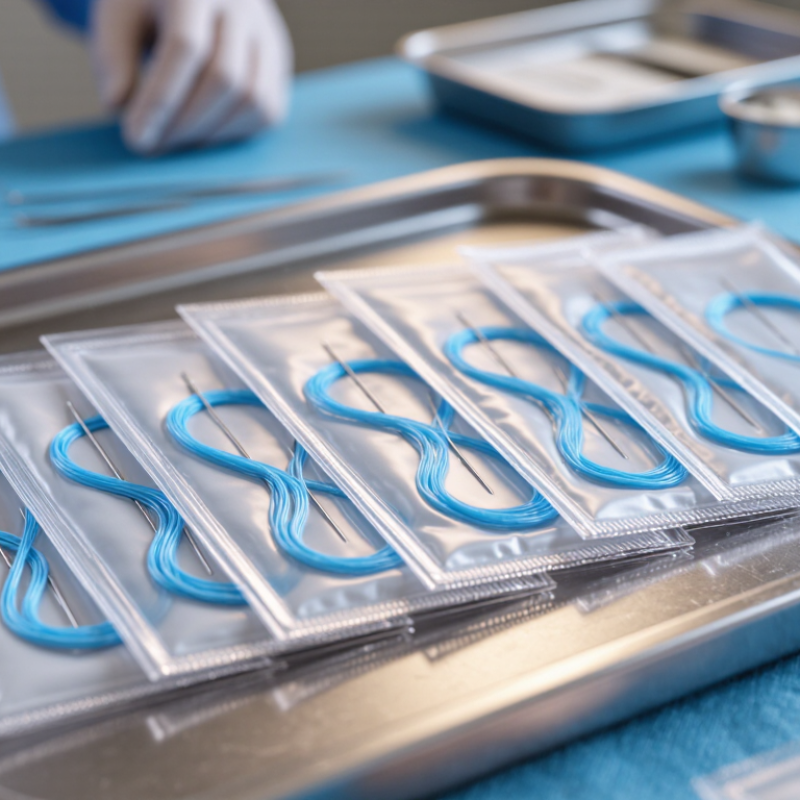
2026 Best Monofilament Polypropylene Sutures Suppliers
Monofilament polypropylene sutures are nonabsorbable materials for long-term tissue support. USP sizes range from 6-0 to No. 2. Size 6-0 suits delicate ophthalmic and vascular work, while 5-0 and 4-0 support fine skin closure. Larger sizes, including 2-0, No. 1, and No. 2, are selected for fascia, tendon, or heavier soft-tissue approximation. Exact selection still depends on tissue tension and surgeon preference.
The filament has a smooth surface and generally causes limited tissue reaction. Its low capillarity can help reduce fluid tracking along the suture path. However, polypropylene has memory, so handling technique matters. A careless throw may loosen. That detail is often underestimated. Suppliers should provide consistent diameter, secure needle attachment, sterile packaging, and traceable quality records. USP size describes diameter, not automatic clinical strength.
Grand View Research valued the global surgical sutures market at approximately USD 4.2 billion in 2023 and forecast continued growth through 2030. This trend reflects demand for reliable closure materials across general surgery, cardiovascular procedures, ophthalmology, and wound management. Buyers should compare tensile retention, knot security, elongation, and biocompatibility data rather than relying only on price. ISO 10993-based biological evaluation and applicable sterile-device controls offer useful verification points. Market reports provide direction, not a substitute for clinical judgment.
They provide long-term tissue support because they are nonabsorbable. Common uses include vascular, ophthalmic, skin, fascia, tendon, and soft-tissue closure.
Typical sizes range from USP 6-0 to No. 2. Smaller sizes suit delicate tissues, while larger sizes support higher-tension closure.
Consider tissue tension, location, procedure type, and clinician preference. USP size describes diameter, not guaranteed clinical strength.
The smooth filament usually causes limited tissue reaction and low fluid tracking. It has memory, so careless throws may loosen. It remembers.
Reverse-cutting needles suit tougher tissue. Taper-point needles may reduce cutting damage in softer tissue. Confirm curvature, diameter, radius, and attachment strength.
Request results by exact size and production lot. Review tensile retention, elongation, knot security, and needle-pull strength. Catalog claims are not enough.
Request sterilization records, bioburden trends, packaging validation, expiration evidence, and linked release certificates. An SAL of 10⁻⁶ means one possible non-sterile unit per million.
Compare finished-suture costs, including needles, sterilization, testing, freight, and documentation. Ask for recent lot records and written production timelines. Delays happen.
Request three recent lots, exact-size test reports, traceability records, and certificates. Quality certification helps, but it does not prove consistent delivery.
A strong filament may still fail if the needle connection is weak. Some files look complete but omit routine release data. I would recheck every gap.
This guide to Monofilament Polypropylene Sutures reviews USP sizes from 6-0 through No. 2 and explains their applications in soft-tissue approximation, cardiovascular procedures, and other settings requiring reliable strength with minimal tissue reaction. It also examines polypropylene’s 160–170°C melting range and how thermal behavior, flexibility, memory, knot security, tensile retention, and handling characteristics can influence clinical performance and manufacturing controls.
For 2026 supplier selection, buyers should assess documented quality systems, including ISO 13485 for medical-device manufacturing, ISO 14971 for risk management, and ISO 11135 for ethylene oxide sterilization where applicable. A practical comparison should cover tensile strength, needle configurations, sterility assurance, packaging integrity, and USP compliance. Commercial evaluation should also consider minimum order quantities, lead times, pricing transparency, technical support, and objective evidence supporting a 10⁻⁶ sterility assurance level (SAL). This framework helps purchasers identify consistent, qualified suppliers while aligning product performance, regulatory documentation, and supply reliability with clinical and operational requirements.